


UNESCO expects Vietnam to maintain leading role in multilateral initiatives

VOV.VN - UNESCO Assistant Director-General for Priority Africa and External Relation Lidia Brito has expressed high expectations for Vietnam to continue playing a leading role in multilateral cooperation, particularly in realizing the international decade of culture for sustainable development (2027-2036).
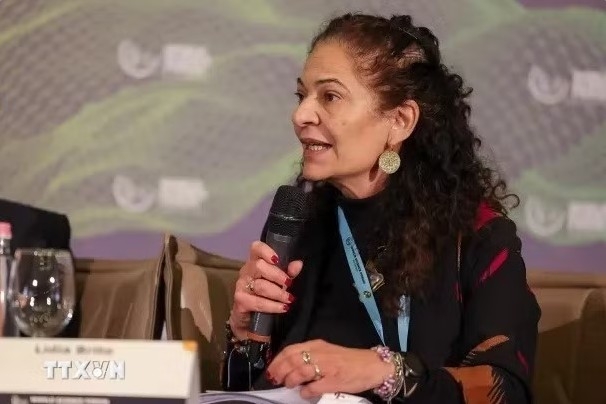
She made the statement in Paris on the occasion of the 50th anniversary of Vietnam joining the United Nations Educational, Scientific and Cultural Organization, while praising the nation's contributions across education, science, culture, and information.
Speaking to reporters, Lidia Brito emphasized that 50 years of Vietnam-UNESCO relations represent a journey of enduring and deepening partnership. The country’s joining of UNESCO in 1976, immediately following national reunification, demonstrated a clear commitment to multilateralism, education, and culture as key instruments for national reconstruction and peace-building.
According to Lidia Brito, this choice has yielded remarkable results. In heritage preservation, Vietnam currently boasts 9 World Heritage sites, 17 intangible cultural heritage elements, and 4 member cities in the UNESCO Creative Cities Network. Counting all UNESCO designations, spanning cultural and natural heritage, documentary heritage, biosphere reserves, global geoparks, and educational networks, Vietnam holds nearly 80 titles across 34 provinces and cities.
In education, Vietnam's progress from widespread literacy to universal primary education and internationally recognized learning outcomes has earned high acclaim. The country also places growing emphasis on sustainable development, innovation, digital transformation, information access, and building a resilient media environment.
Lidia Brito particularly appreciated Vietnam's increasingly active participation in multilateral mechanisms.
The country served on the UNESCO Executive Board for the 2021–2025 term, joined intergovernmental committees of the 2003 and 2005 Conventions, and held a seat in the World Heritage Committee. According to her, Vietnam actively participates in UNESCO activities while demonstrating the capacity to propose and advance initiatives with impact beyond its borders.
A prominent testimony is the initiative for the International Decade of Culture for Sustainable Development (20272036), introduced by Vietnam. Lidia Brito described this as a clear expression of the nation’s leaders in mobilizing the international community to recognize culture as an essential driver of sustainable development.
According to the UNESCO official, the key challenge is turning cultural awareness into concrete policies and resources. Over the coming decade, nations must increase investment in culture, support creative industries, safeguard cultural diversity, and integrate culture more systematically into development strategies.
UNESCO expects Vietnam to remain a driving force during the implementation of this initiative through experience-sharing, dialogue, and international cooperation. As the focal point agency, UNESCO will coordinate with member states to formulate an Action Plan for the Decade. Vietnam can lead by example by enhancing domestic investment in culture and mobilizing additional partners, including the private sector.
Lidia Brito also stressed that the International Decade needs to reinforce solidarity, with special attention given to Africa and island nations from the Pacific to the Caribbean, where cultures are directly impacted by climate change.
Touching on Vietnam's heritage conservation experience, she noted that sites such as Hue, Hoi An, Ha Long Bay - Cat Ba Archipelago, and Trang An illustrate the balance between preservation, heritage utilization, and local economic growth. Among these, the Trang An model stands out for its community involvement and sustainable tourism practices.
According to Lidia Brito, Vietnam is actively sharing its conservation expertise globally. Recently, the country hosted the Asia-Pacific Regional Dialogue on Heritage and Authenticity in Hanoi and Ninh Binh, adopting the Hanoi Document. Building upon the 2025 Africa Dialogue in Nairobi, the event brought Asia-Pacific and Global South perspectives into global discussions on heritage authenticity, helping shape the future of the World Heritage Convention. She emphasized that heritage must be preserved as a living part of social life, passed down to future generations to reinforce identity and social cohesion.
Furthermore, Vietnam stands as an important partner in South-South cooperation, particularly with African nations, a UNESCO global priority. The nation’s expertise in education, heritage preservation, and local development is attracting strong interest from African countries.
Regarding cooperation prospects, Lidia Brito stated that UNESCO is advancing the 'UNESCO at the service of the people' approach, ensuring programs deliver specific results in daily life. In education, this means supporting teachers, upgrading teaching capacity, and accompanying students. In heritage preservation, it entails training conservation officers, experts, and guides. In information, it involves supporting journalists and building capacity to counter misinformation.
For Vietnam, this orientation can be concretized through teacher training in digital technology and artificial intelligence ethics, developing sustainable livelihoods for local residents in biosphere reserves, preserving and transmitting the languages and traditional knowledge of ethnic minorities, as well as enhancing young journalists' capacity to identify misinformation, she went on.
As noted by Lidia Brito, UNESCO-Vietnam cooperation is also vividly demonstrated during difficult times. In response to the impacts of storms in 2024 and 2025, UNESCO mobilized over US$830,000 to support the protection of schools and heritage sites, while continuing to accompany Vietnam in reconstruction efforts and enhancing disaster resilience
The new phase of cooperation is expected to be concretized through the Cooperation Agreement between the Government of Vietnam and UNESCO for the 2026-2030 period, scheduled to be signed during the visit to Vietnam by UNESCO Director-General Khaled El-Enany in December 2026, alongside the UNESCO Country Strategy for Vietnam (2027-2031).
Lidia Brito also highly appreciated the increasingly active engagement of Vietnam's private sector, including enterprises such as SOVICO, IMEXCO, and Xuan Truong, in cooperative activities spanning education, culture, and science.
According to her, this represents a promising new direction of cooperation that can be further promoted in the coming time.
On the occasion of the 50th anniversary of Vietnam-UNESCO relations, Lidia Brito conveyed a message to the young generation of Vietnam, stressing that the next 50 years of cooperation will be shaped by their very own creativity, ideas, and dedication.
She encouraged Vietnamese youth to take pride in their national heritage while remaining open to the world and to scientific and technological advancements. In her view, today's youth possess unprecedented tools to learn, create, share information, and voice their perspectives, yet they also bear the responsibility to use these tools wisely and responsibly.
She affirmed that UNESCO will continue to accompany Vietnamese youth, enabling them to become active agents in the International Decade of Culture for Sustainable Development rather than mere passive observers. Following five decades of cooperation, it is the young generation that will join UNESCO in imagining and shaping the next 50-year journey.
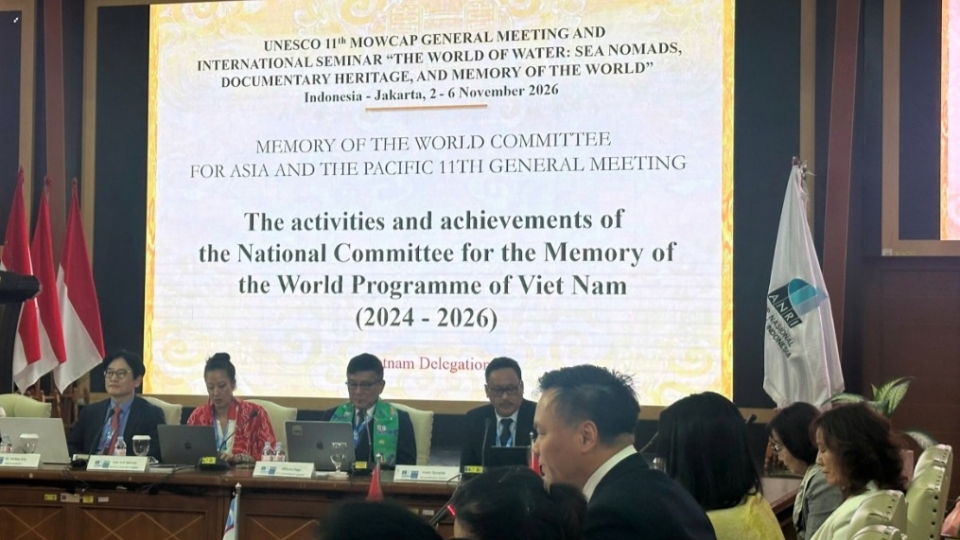
UNESCO inscribes two more centuries-old documentary heritages of Vietnam
VOV.VN - The Inscriptions on the Stelae of Pho Hien in Hung Yen province and Ma Nhai inscriptions on Non Nuoc Mountain in Ninh Binh province have been inscribed on UNESCO’s Memory of the World Asia-Pacific Regional Register, bringing Vietnam’s total to 13 documentary heritage entries.
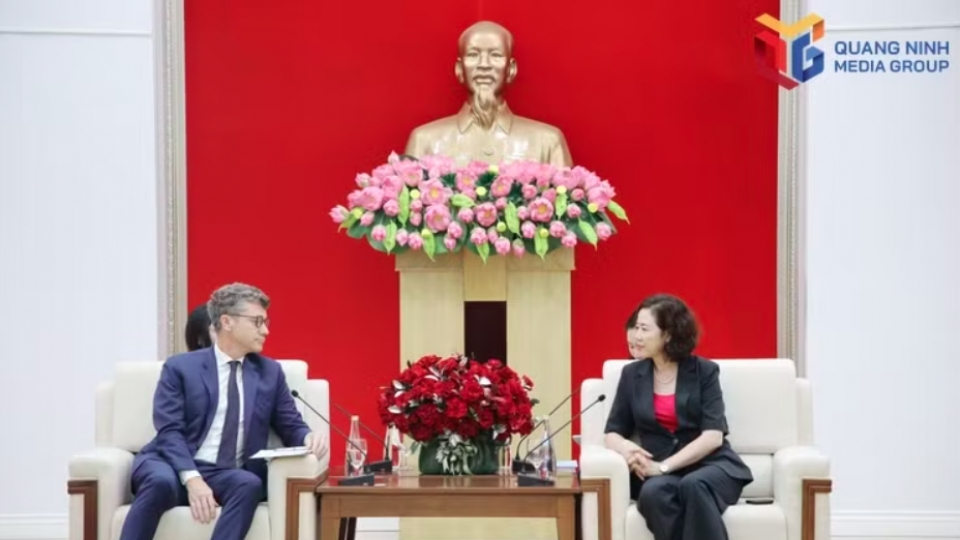
UNESCO to support Quang Ninh in digital transformation, heritage management
Vice Chairwoman of the Quang Ninh municipal People's Committee Vu Thi Mai Anh received Jonathan Wallace Baker, UNESCO Representative to Vietnam, on October 29 to discuss cooperation in digital transformation, heritage management and sustainable development.


