
Traffic congestion costs Hanoi US$1.2 billion a year

Hanoi is facing mounting urban traffic congestion as the rapid growth of private vehicles, combined with heavy inflows from neighbouring provinces, overwhelms infrastructure and directly constrains the capital’s socio-economic development.
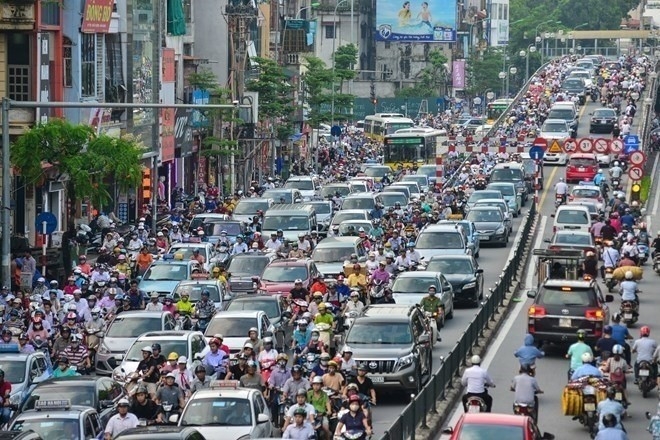
According to the Hanoi Department of Construction, the city’s population has reached 8.7 million, with a high annual mechanical growth rate of 1.96%. Yet transport infrastructure has lagged far behind demand.
Road networks have achieved just over 43% of planned capacity, while land for transport has expanded by only 0.3–0.35% per year, compared with annual private vehicle growth of 4–5% and car growth exceeding 11%.
Hanoi now has more than 9.2 million vehicles, of which motorcycles account for over 72%.
Traffic pressure peaks sharply during rush hours, when 27% of daily trips are concentrated in two, one-hour windows, 7.30–8.30am and 5.30–6.30pm.
The situation is exacerbated by roughly 1.45 million trips entering the city each day from surrounding provinces, overwhelming key gateways and ring roads that remain underdeveloped.
Dao Viet Long, Deputy Director of the Department of Construction, said traffic congestion was no longer merely a mobility problem but had become a direct obstacle to socio-economic development.
He said that congestion is estimated to cost Hanoi about US$1.2 billion each year and has driven logistics costs to nearly 17% of GDP, undermining productivity, environmental quality, and the city’s investment appeal.
Public transport has struggled to attract users, largely due to poor reliability and weak connectivity. Bus travel times can be more than double those of motorcycles on the same routes, while many passengers must walk over 500 metres to reach bus stops.
Although more than 70% of inner-city trips are under six kilometres, distances well suited to public or non-motorised transport, motorcycles remain the preferred option due to convenience.
With land for new transport infrastructure severely limited, the city has identified technology and management reform as key levers.
Proposed solutions include a unified traffic data system, smart traffic signals, integrated e-ticketing, and a single digital platform linking metro, buses, taxis, ride-hailing services and public bicycles, signalling a shift from private vehicle ownership to on-demand mobility.
Hanoi also plans to restrict private vehicles in central areas through emissions-based controls or congestion charges, alongside pilot programmes for public bicycles, shared electric motorbikes, feeder buses, and dedicated bus lanes on major corridors to improve speed and punctuality.
To support long-term change, the Department of Construction has called for a unified legal framework for data sharing and transport integration, greater investment in green mobility, and adoption of transit-oriented development (TOD) models that place public transport at the core of urban growth.
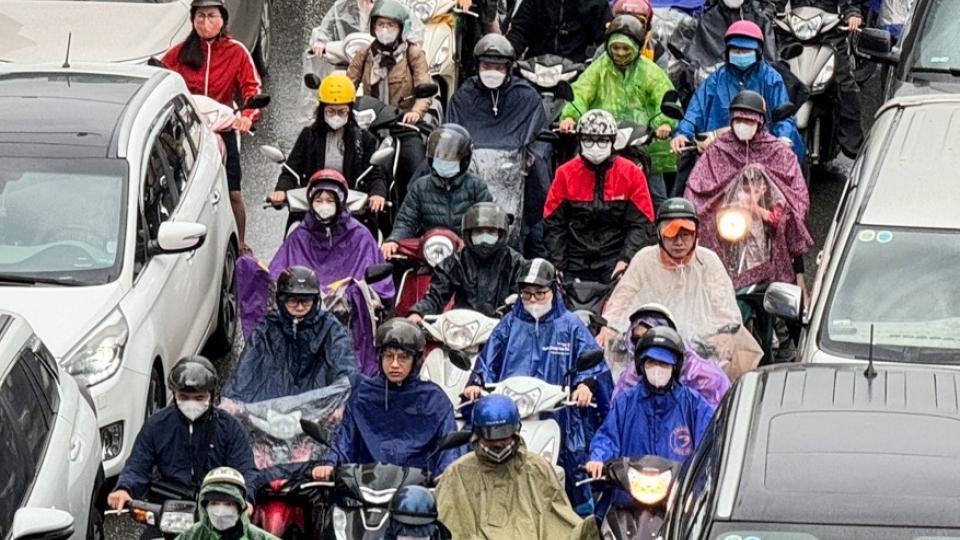
Traffic jams hit capital as Hanoians begin working week amidst drizzle
VOV.VN - Many streets throughout Hanoi on April 8 suffered heavy traffic congestion for hours from the early morning as drizzly conditions hit the capital.
