


Strong cold air mass to sweep across Northern Vietnam next week

VOV.VN - Northern Vietnam is forecast to experience two successive cold air surges in early November, with a stronger spell expected on November 8–9, bringing temperatures down to below 13°C in mountainous areas.

According to the National Centre for Hydro-Meteorological Forecasting, the first cold air surge is expected on November 5–6, followed by a stronger spell around November 8–9.
On November 5, northern Vietnam will be mostly cloudy and sunny during the day, with relatively high temperatures. However, scattered showers and thunderstorms may develop in mountainous and midland areas from the night of November 5 through November 6 as a weak cold air mass moves in.
In Hanoi, daytime temperatures on November 5 are forecast to reach 29–31°C. The first cold air surge will not cause a significant drop in temperatures, although some areas may experience cooler conditions.
The second, stronger cold air surge is forecast to affect the region around November 8–9, bringing scattered showers and thunderstorms across northern Vietnam. From November 9, temperatures in the region and north-central Vietnam are expected to fall noticeably, with minimum temperatures generally ranging from 16°C to 19°C. Some mountainous areas in the north could see temperatures drop below 13°C.
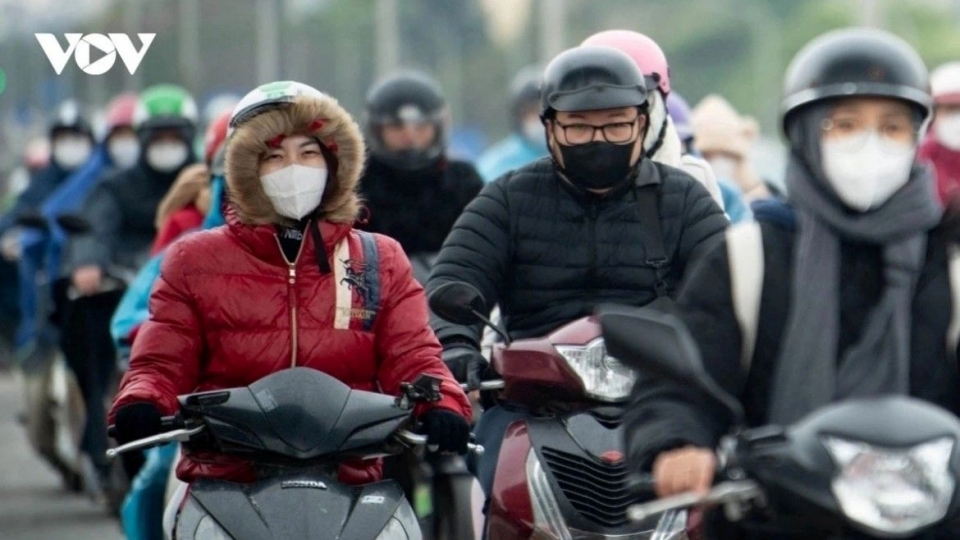
The weather will turn cold across northern Vietnam, with colder conditions in mountainous areas. This will be the first widespread cold spell of the 2026–2027 winter season.
Cold air activity expected to remain relatively weak in November
According to the National Centre for Hydro-Meteorological Forecasting’s monthly climate outlook, cold air masses affecting northern and central Vietnam in November 2026 are likely to be weaker than the long-term average.
Average temperatures nationwide are forecast to be 1–2°C above the long-term average for the month, while southern Vietnam is expected to record temperatures 0.5–1°C above average.
However, the overall trend towards warmer temperatures does not rule out short-lived but strong cold air surges, which could cause rapid temperature drops, particularly in the northern mountainous areas.
Rainfall is also set to vary across the country. In northern Vietnam, monthly rainfall is anticipated to be 15–30% above the long-term average, while central Vietnam and the Central Highlands may receive 20–40% less rainfall than usual.
Although tropical cyclone and tropical depression activity over the East Sea will be below the long-term average in November, the risk of moderate to heavy rainfall remains, particularly in central and southern Vietnam.
Other hazardous weather conditions, including thunderstorms, whirlwinds, lightning, hail and strong gusts, may also occur nationwide.
Residents in northern Vietnam, particularly those in mountainous areas, are advised to follow weather forecasts and warnings closely and prepare for changing temperatures in the coming days.
Cold air mass to ease heat in the north, temperatures fall to 19–22°C
VOV.VN - Northern Vietnam is still seeing temperatures of up to 34–35°C, but a cold air mass is forecast to move in from the evening of October 4, bringing rain and a marked drop in temperatures, with lows of 19–22°C expected in the region during the cold spell.


