Singapore, Vietnam see growing opportunities for AI and innovation cooperation

VOV.VN - Following the state visit by Party General Secretary and State President To Lam to Singapore, Vietnamese experts and intellectuals in Singapore have said bilateral relations are entering a period of new opportunities for deeper cooperation in science and technology, artificial intelligence (AI), semiconductors and innovation.
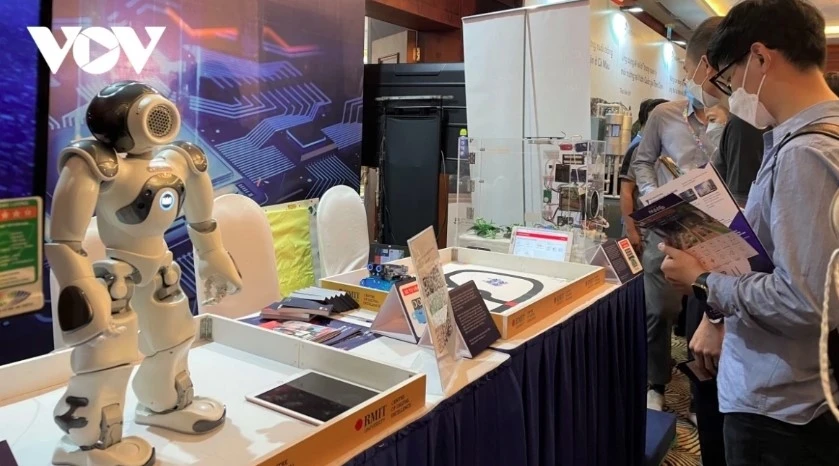
According to experts in Singapore, the recent elevation of bilateral ties to a Comprehensive Strategic Partnership has created a favourable political and institutional foundation for expanding cooperation in strategic technology sectors, which are increasingly emerging as new drivers of growth in the region and around the world.
Dr. Ha Son Tung, Deputy Head of the Advanced Optical Technologies Department at Singapore’s Agency for Science, Technology and Research (A*STAR), said Vietnam and Singapore currently have favourable conditions to strengthen cooperation, particularly in science, technology and innovation.
According to Tung, Singapore is one of the Asian countries that began developing strategic technology industries at an early stage. The city-state launched its semiconductor development strategy in the 1970s and has recently introduced a new-generation semiconductor strategy to adapt to the rapid development of AI and advanced technologies.
“Singapore offers many practical lessons that are highly relevant to Vietnam, particularly in technology governance, the development of research ecosystems and the training of highly skilled talent,” he said.
Tung noted that geographical proximity, cultural similarities and increasingly close economic ties provide a strong basis for broader research collaboration between the two countries in the years ahead.
In addition to building on the success of the Vietnam-Singapore Industrial Parks (VSIP) model, he said the two countries could expand cooperation into high-tech sectors through direct research projects involving scientific and technological institutions from both sides.
He identified talent development for the AI and semiconductor industries as a particularly important priority. According to Tung, human resources are always the decisive factor in strategic technology sectors, making cooperation in talent training and the sharing of experience in developing a highly skilled technology workforce especially valuable for both countries.
Another notable advantage for Vietnam is its growing community of overseas Vietnamese professionals working in Singapore. Many Vietnamese experts now hold key positions at multinational technology corporations, leading universities and major research institutes in Singapore.
This community could serve as a “strategic bridge”, helping advance research partnerships, technology transfer and resource connectivity between the two countries, Tung added.
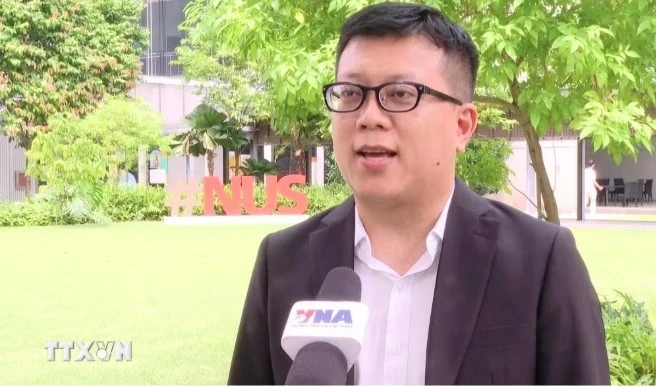
Meanwhile, Associate Professor Dr. Luu Anh Tuan from the College of Computing and Data Science at Nanyang Technological University (NTU) said the potential for cooperation between Vietnam and Singapore in AI, digital transformation and digital governance is considerable.
According to Tuan, Singapore has accumulated extensive practical experience in building a digital transformation ecosystem and deploying AI applications at the national level, while Vietnam benefits from a young, dynamic workforce and a strong capacity to adopt new technologies.
He said that if the two sides deepen exchanges of experience and jointly develop practical AI applications, such cooperation could become an important driver of technological progress not only for Vietnam and Singapore but also for the wider region.
According to the experts, at a time of intensifying global competition in technology, stronger cooperation between Vietnam and Singapore in AI, semiconductors and innovation would bring not only economic benefits but also help enhance the competitiveness and adaptability of both countries in the face of future technological change.
Experts and researchers in Singapore also expressed hope that To Lam’s visit will provide fresh political momentum for bilateral science and technology cooperation, while enhancing closer links among researchers, technology businesses and research institutions in both nations.
With bilateral relations continuing to deepen and both sides placing greater emphasis on innovation, cooperation in AI and advanced technologies is expected to become one of the most prominent pillars of Vietnam-Singapore relations in the coming time.
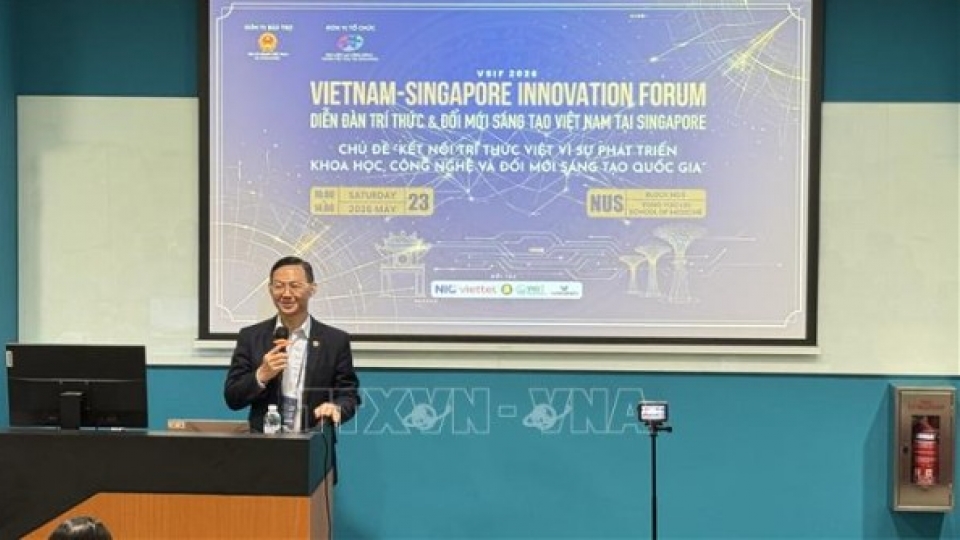
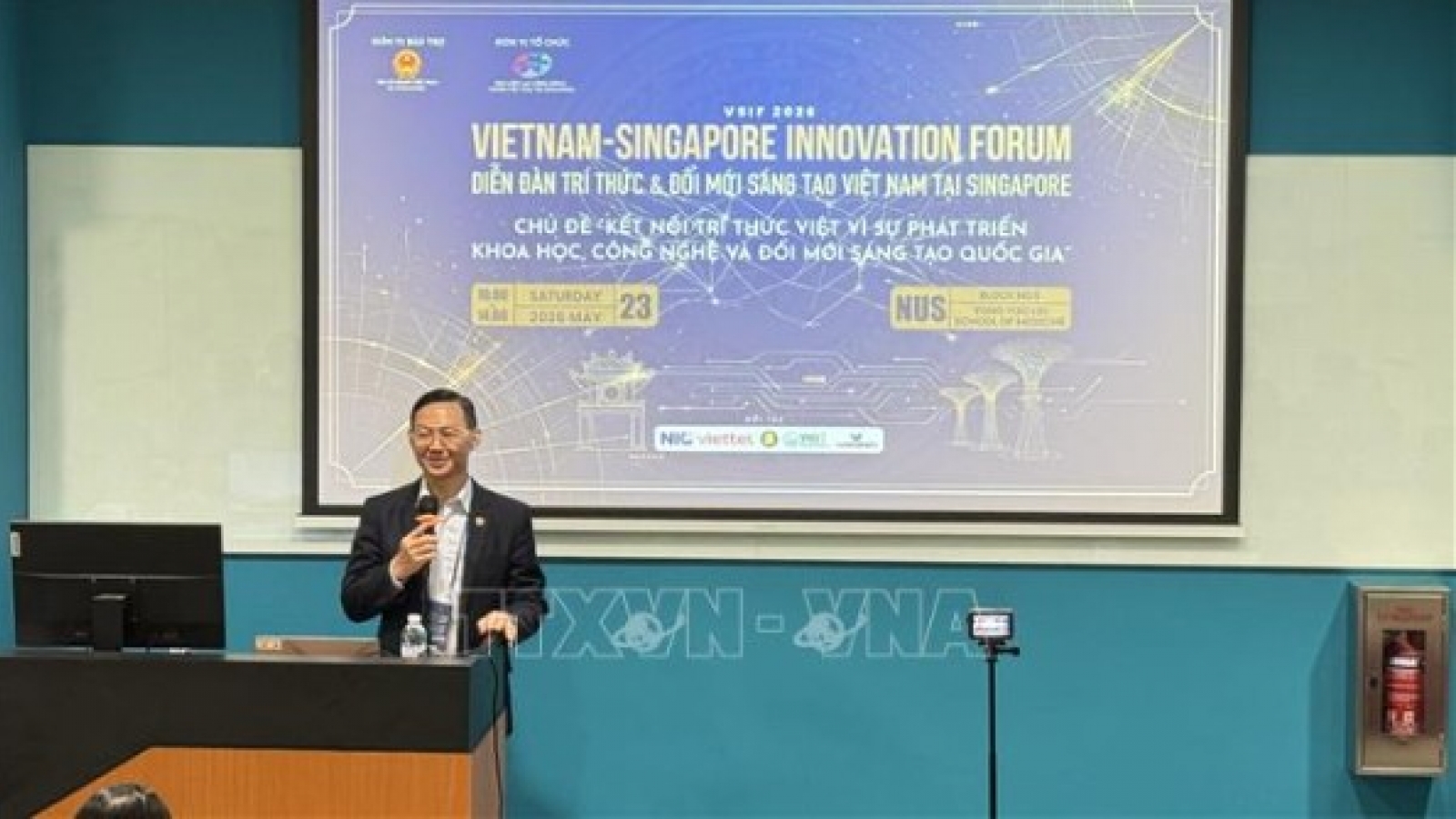
Vietnam-Singapore Innovation Forum promotes science, technology links
VOV.VN - The Liaison Committee of the Vietnamese Community in Singapore, in coordination with the Vietnamese Embassy in Singapore, on May 23 organised the Vietnam-Singapore Innovation Forum to create a platform for promoting science, technology and innovation initiatives in support of Vietnam’s future development.