
Severe cold grips northern Vietnam, with temperatures below 3°C in high mountains

VOV.VN - A fresh spell of cold air is affecting northern Vietnam and the North Central region, pushing temperatures sharply lower. Much of the North is experiencing severe cold, with hazardous conditions in mountainous areas, while the North Central region remains cold, with severe cold in some areas.

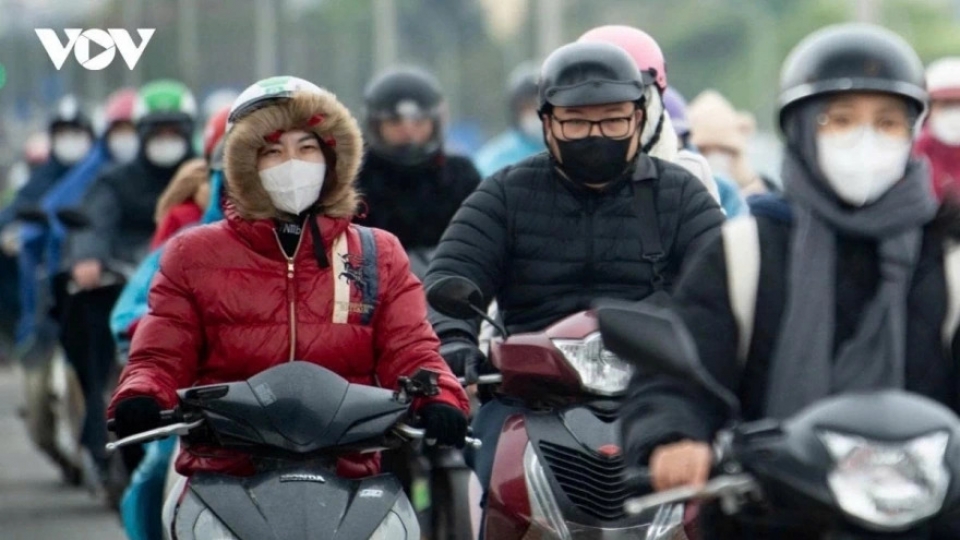
According to the National Center for Hydro-Meteorological Forecasting, minimum temperatures across northern Vietnam range from 9 to 12 degrees Celsius, dropping to 6 to 9 degrees in midland and mountainous areas, with some high mountain locations falling below 3 degrees Celsius. In the North Central region, lows generally range between 11 and 14 degrees Celsius. Hanoi is dry, with severe cold and minimum temperatures of around 10 to 12 degrees Celsius.
The cold air mass has covered most of northern Vietnam and the North Central region and is forecast to extend further into the central region over the next 24 to 48 hours. Over land, northeasterly winds remain moderate, strengthening along coastal areas.
At sea, the Gulf of Tonkin is experiencing strong northeasterly winds of force 6 (39-49 km/h), occasionally force 7 (50-61 km/h), with gusts reaching force 8-9 (62-88 km/h), leading to rough seas.
Similar conditions are affecting the northern East Sea, including the Hoang Sa (Paracel) archipelago, as well as several offshore areas along central and southern Vietnam, posing risks to maritime activities.
Under the influence of the cold air, areas from Quang Tri to Da Nang and parts of the central region are expected to see rain and showers, with localized moderate to heavy rainfall and thunderstorms. Thunderstorms may bring lightning, hail and strong gusts. Mountainous areas in the North should watch for frost and rime ice.
The spell of severe and hazardous cold may affect public health and increase disease risks, while also causing damage to agriculture, particularly livestock and crops. Localized heavy rain could trigger flooding in low-lying areas, flash floods in small rivers and streams, and landslides on steep slopes. Strong winds and high waves are likely to disrupt fishing vessels and other marine activities.
Northern Vietnam braces for severe cold spell, temperatures drop to 5°C
VOV.VN - Northern Vietnam is set to face a strong cold spell in a couple of days, with temperatures in some mountainous areas expected to fall below 5°C, according to the National Centre for Hydro-meteorological Forecasting.
