


SAV hosts international conference on supreme audit institutions in new context

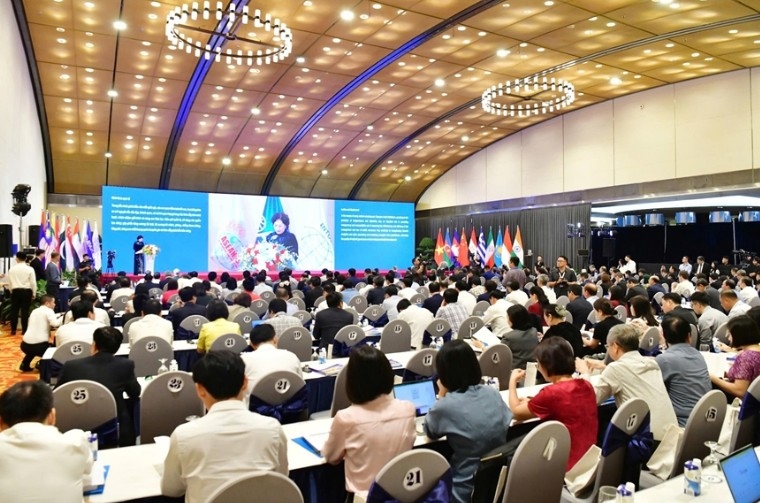
VOV.VN - The State Audit Office of Vietnam (SAV) organized an international conference in Hanoi on October 27 themed "Supreme Audit Institutions in a New Context: Vision, Institutions, and Innovation," providing a platform to exchange international experiences on institutional frameworks, audit effectiveness, and digital transformation.
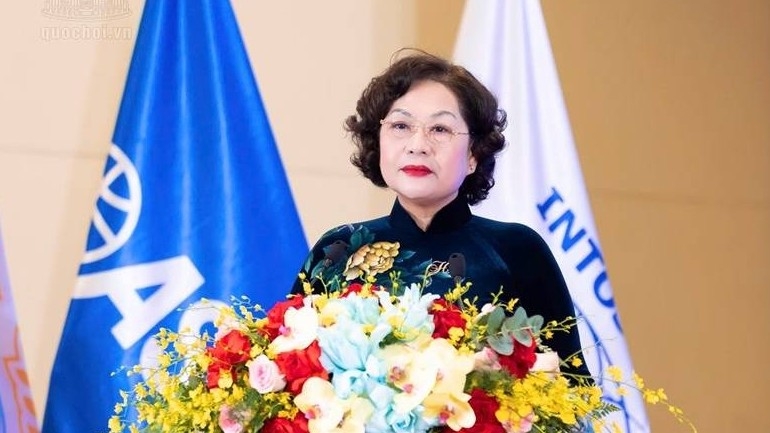
National Assembly Vice Chairwoman Nguyen Thi Hong, State Auditor General Nguyen Huu Nghia, alongside party and state officials, the Chairman of the Asian Organization of Supreme Audit Institutions (ASOSAI), representatives of the International Organization of Supreme Audit Institutions (INTOSAI), and leaders of Supreme Audit Institutions (SAIs) from Asian, European, and African nations attended the event.
Enhancing role in public governance and transparency
In her opening remarks, National Assembly Vice Chairwoman Nguyen Thi Hong emphasized that Supreme Audit Institutions, operating on principles of independence and objectivity, play a vital role in promoting transparency, accountability, and management efficiency in public resource utilization. They contribute to strengthening financial discipline, preventing corruption and waste, and advancing sustainable development.
Over three decades of development, the SAV has affirmed its position and effectiveness as an effective instrument of the Vietnamese Party and State in auditing and controlling public finances and assets. Its audit results provide objective and reliable information supporting the National Assembly in exercising its legislative and supreme supervision functions, while assisting the Government in managing, administering, and addressing policy shortcomings.
NA Vice Chairwoman Nguyen Thi Hong stated that 2026 holds special significance for the SAV as it formulates its development orientation toward 2035 with a vision to 2045 and studies amendments to the Law on State Audit.
The conference serves as an important opportunity for the SAV to draw upon international experience and best practices to refine institutional frameworks, enhance the enforceability of audit recommendations, advance digital technology applications, and expand audit scopes into emerging fields such as green finance, environmental protection, cybersecurity, and public data.
Delivering a welcome address, ASOSAI Chairman and Comptroller and Auditor General of India K. Sanjay Murthy highlighted that amid global fluctuations, audit methodologies must transition from "error detection" to "risk foresight." Instead of evaluating consequences post-spending, audit institutions must promptly identify anomalies in public procurement and management to help governments proactively prevent risks.
Regarding digital transformation, Murthy noted that technology, artificial intelligence (AI), and big data serve as powerful tools to enhance audit efficiency but cannot replace professional judgment. He called on audit bodies to invest in human resources, combine the experience of senior personnel with the innovative thinking of younger staff, and strengthen international cooperation to tackle global challenges such as public debt, climate change, and digital transition.
State Auditor General Nguyen Huu Nghia emphasized that vision guides development, institutions build solid foundations for breakthroughs, and innovation serves as a vital growth engine. To adapt to new contexts and national development demands, the SAV is comprehensively innovating its institutions, legal frameworks, and organizational structure, focusing on the Development Strategy to 2035 with a vision to 2045 and revising the Law on State Audit.
Auditor General Nguyen Huu Nghia affirmed that the SAV is committed to being an active, responsible, and proactive member of INTOSAI, ASOSAI, and ASEANSAI, ready to cooperate with SAIs worldwide to resolve shared challenges and build an effective, professional, and credible community of audit institutions.
Expanding international cooperation and multilateral linkages
Delegates focused on discussing the legal status, independence, and role of SAIs within national governance systems, institutional independence mechanisms, quality control, risk management, and integrity assurance.
Presenting a paper at the conference, Deputy Auditor General Ha Thi My Dung outlined that cross-border challenges require closer cooperation among SAIs.
The SAV proposed two cooperation orientations: first, enhancing the connecting roles of INTOSAI, ASOSAI, and ASEANSAI in sharing knowledge, technology, audit methodologies, and training while connecting data in compliance with legal and security requirements; and second, expanding multilateral and bilateral cooperation in institutional development, research, and cooperative audits, particularly regarding the environment, climate change, and international financial risks.
Participants also exchanged views on innovating audit methodologies, applying digital technology, strengthening legislative oversight, and enhancing the legal validity of audit reports and public disclosure of audit findings.
They also discussed the role of SAIs in power control, anti-corruption, waste prevention, and negative phenomenon eradication, while examining coordination mechanisms between SAIs and the National Assembly, Government, inspection and investigative agencies, alongside public oversight over audit activities.
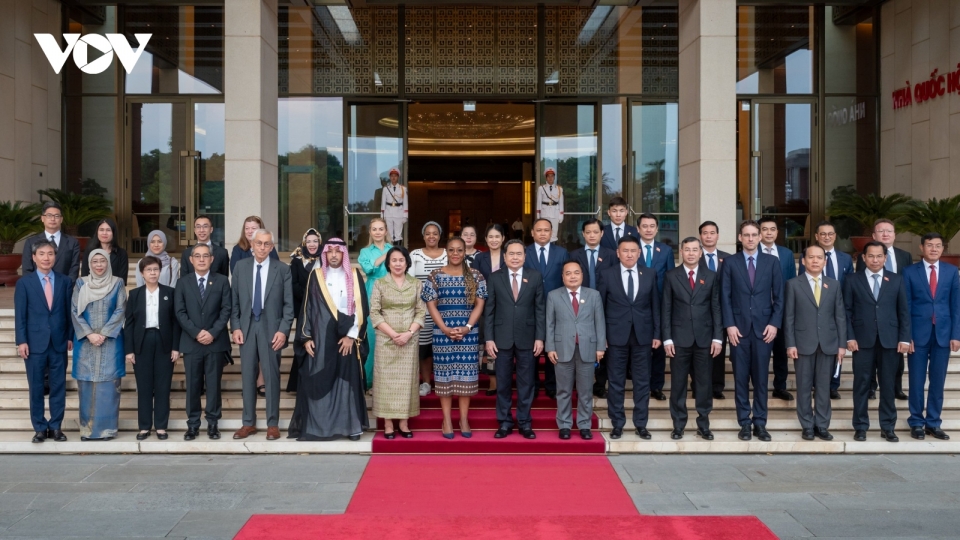
NA Chairman welcomes world audit leaders on SAV’s 30th anniversary
National Assembly Chairman Tran Thanh Man hosted a reception in Hanoi on July 9 for leaders of national audit institutions and international organisations attending a ceremony marking the 30th founding anniversary of the State Audit Office of Vietnam (SAV).
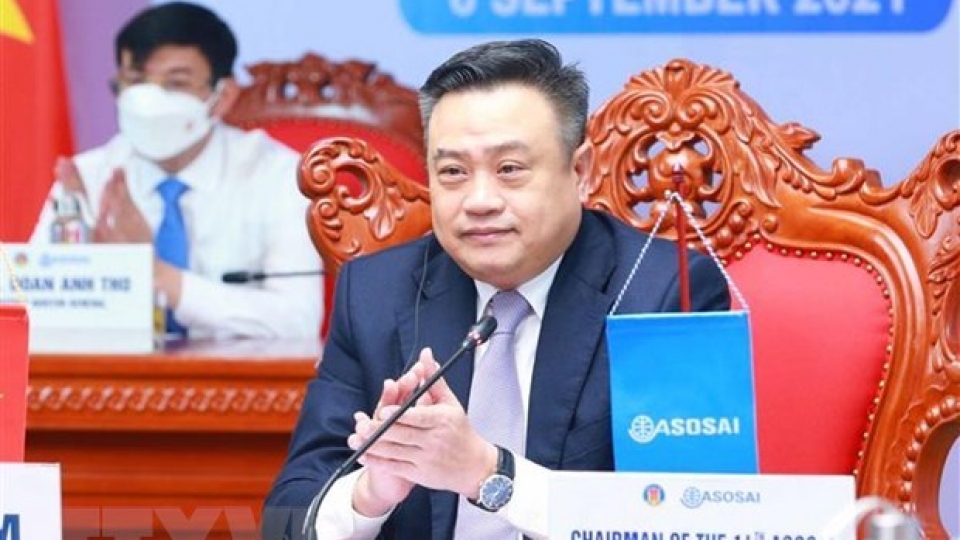
Auditor General: SAV accomplishes ASOSAI Chairmanship for 2018-2021
State Auditor General Tran Sy Thanh has affirmed that the State Audit Office of Vietnam (SAV) has successfully fulfilled its role as Chair of the Asian Organisation of Supreme Audit Institutions (ASOSAI) for the 2018-2021 tenure.


