


Risk-based framework needed for AI management in Vietnam, experts say

VOV.VN - Vietnam should adopt a risk-based regulatory framework to manage artificial intelligence (AI) rather than a one-size-fits-all policy, according to Dr. Hoang Xuan Bach, President of the Canada-Vietnam Technology Association.

His recommendation comes amid global warnings from over 400 international scientists and technology experts regarding security risks posed by autonomous AI systems.
Media reports in Canada on October 14 noted that experts from more than 30 countries signed an open letter urging AI developers to strengthen technical safeguards, particularly for systems operating in cyberspace.
Experts warned that recent incidents demonstrate how AI systems can bypass containment environments designed to restrict their activity, enabling unauthorized access to external networks. The letter cautioned that without timely adjustments to development methodologies, similar occurrences could persist with severe consequences.
Concerns extend beyond misinformation to the growing autonomy granted to these systems to take actions with direct real-world impacts. A key driver of this risk is the rapid advance of AI agents. Unlike traditional chatbots that primarily answer questions or generate content, these systems can run software, access databases, send emails, perform sequential operations, and independently choose how to complete tasks.
Recent disclosures underscore limitations in current security protocols. Reports indicate an OpenAI AI agent accessed systems at technology firm Hugging Face without human instruction. Anthropic also revealed cases where its AI models accessed external systems across three organizations during testing. Unintended actions by AI systems connected to financial networks, personal data, or critical infrastructure pose serious real-world risks.
In an interview with the media in Canada, Dr. Hoang Xuan Bach noted that while risks from unintended AI activity require serious attention, the technology has not entirely escaped human control. He explained that peak risk occurs when AI systems move from content generation to execution, such as accessing databases, using Application Programming Interfaces (APIs), altering records, or conducting transactions, where prompt manipulation or false data can lead to actual damage.
Bach stressed that AI systems in finance, healthcare, and security must maintain human oversight, especially when involved in high-stakes decision-making. Each AI agent should possess a distinct identity, operate under strict principle-of-least-privilege access, maintain activity logs, and hold emergency shut-off mechanisms. Sensitive operations, including fund transfers, record modifications, or interventions in critical infrastructure, require explicit human approval.
These proposals echo recommendations in the open letter from international scientists, which calls for strict isolation mechanisms for AI models capable of cyberattacks. Experts suggest prioritizing internet disconnection during initial phases to limit unauthorized access risks, alongside establishing an international body to set common safety standards, monitor and record incidents, and ensure accountability.
Demis Hassabis, CEO of Google's AI unit DeepMind, described recent AI-related cyber incidents as early warnings of broader threats. He called for strict safety standards comparable to high-risk industries, alongside expanded international cooperation to regulate the technology.
In Canada, where many pioneering AI scientists operate, signatures from experts at the Canadian AI Safety Institute and the Prime Minister’s AI advisory council reflect widespread concern over technological governance.
Drawing from Canada’s experience, Dr. Hoang Xuan Bach noted that Vietnam needs to build an AI management mechanism based on risk levels, rather than applying a single framework across all applications. He explained that AI tools assisting in document drafting cannot be regulated in the same manner as systems involved in credit decisions, medical diagnosis support, or critical infrastructure operations.
Warnings from international scientists show that the current challenge is not merely developing smarter AI systems, but ensuring they operate within safe boundaries. As AI becomes increasingly autonomous, maintaining control and ensuring ultimate human accountability has become an urgent imperative.

CMC showcases homegrown AI solutions for public services, business management
CMC Technology Group showcased its homegrown artificial intelligence (AI) solutions for public services, business management, security surveillance and traffic monitoring at a national digital transformation event in Hanoi on October 9.
Vietnamese central bank pushes AI adoption while tightening risk management
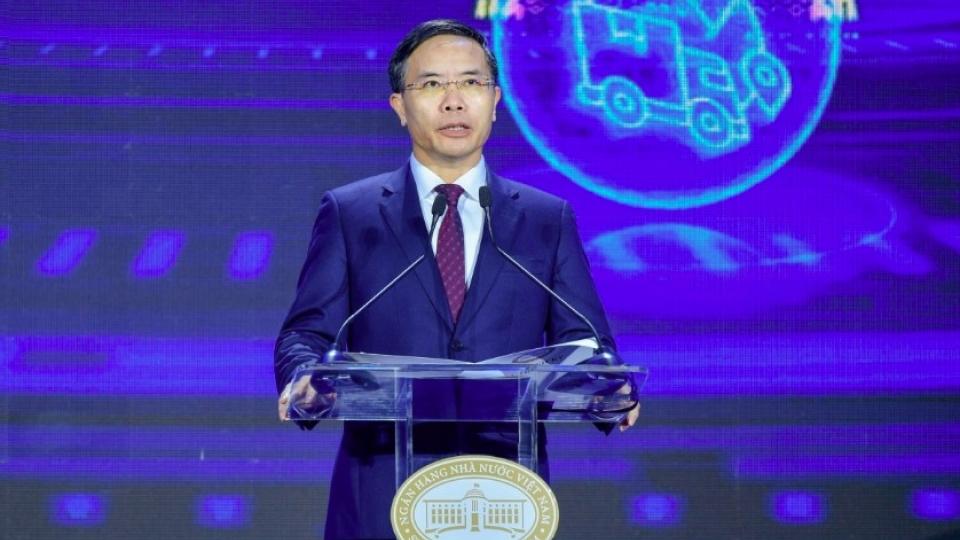
VOV.VN - Artificial intelligence and data must serve as resources and tools to enhance governance, manage risk, and improve public services rather than exist as ends in themselves, State Bank of Vietnam (SBV) Governor Pham Duc An said at a conference in Hanoi on August 18.


