Rising kidney failure case among young people raise alarms in Vietnam

VOV.VN - Chronic kidney disease, once predominantly seen in older adults, is now increasingly affecting younger people in Vietnam, raising serious concerns across the healthcare system and the socio-economic sphere.

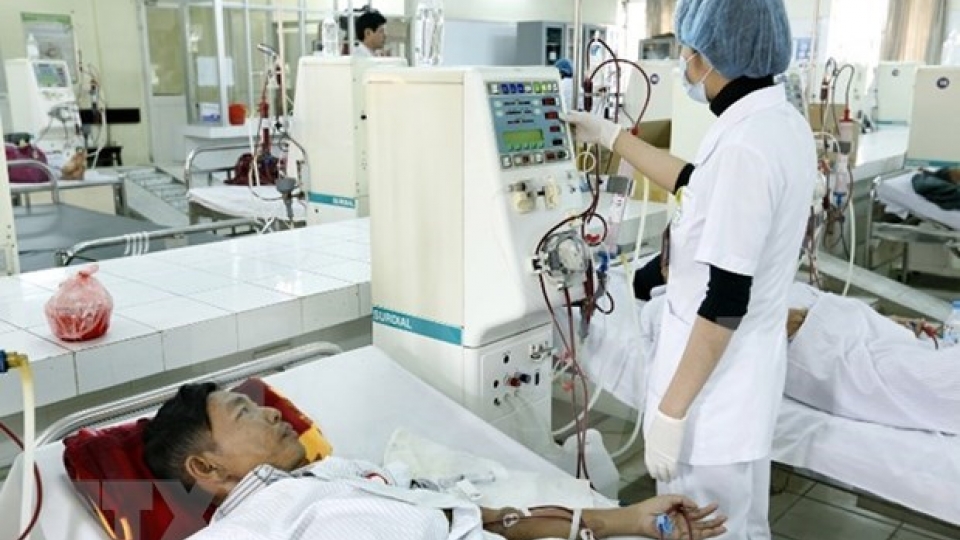
Data from the Centre for Nephrology–Urology and Dialysis at Bach Mai Hospital show that 30–40 new patients are diagnosed with kidney failure each day, including many under the age of 30.
According to Director of the Centre Dr. Nghiem Trung Dung, a significant proportion of young patients are admitted only after the disease has progressed to its final stage, requiring emergency dialysis and often accompanied by cardiovascular and respiratory complications. Late diagnosis sharply limits treatment options while significantly increasing costs and health risks.
A similar trend has been recorded at Cho Ray Hospital in Ho Chi Minh City, where nearly 500 patients began dialysis in the first three months of the year, around 15% of them under 35.
Reports from other localities showed the same pattern. At Viet - Tiep (Vietnam-Czechoslovakia) Hospital in Hai Phong City, patients under 40 accounted for 32% of those undergoing dialysis, while Hai Duong General Hospital reported that nearly 11% of its dialysis patients are under 40. In response to the rising demand, many hospitals have been forced to operate dialysis machines up to four shifts a day.
Young patients often face a heavier burden, as the disease strikes during their prime working years. Medical sources noted that some patients are diagnosed only when chronic kidney disease has already reached stage five, the most severe level, making lifelong dialysis or kidney transplantation unavoidable. Even after transplantation, patients typically require lifelong medication and regular follow-up care, with serious consequences for their livelihoods and family finances.
Health experts attribute the rise in kidney failure among younger people to conditions such as glomerulonephritis, nephrotic syndrome, hypertension and early-onset diabetes, as well as increasingly unhealthy lifestyles.
They link severe kidney damage in young patients to prolonged sleep deprivation, irregular diets, heavy reliance on fast food, physical inactivity and the use of stimulants.
Dr Nguyen Van Thanh, deputy head of the nephrology and urology department at the Hanoi Medical University Hospital, warned that everyday habits can rapidly damage kidney function. Insufficient water intake, delaying urination, high-salt diets, excessive consumption of meat, sugar and fat, along with smoking, alcohol abuse and indiscriminate use of medication, are cited as major risk factors.
The misuse of NSAID painkillers is reported to significantly raise the risk of acute kidney injury, while prolonged use of proton pump inhibitors or laxatives may contribute to chronic kidney disease.
Particular concern has been raised over unregulated dietary supplements, weight-loss products and traditional remedies that contain banned substances such as sibutramine, phenolphthalein or corticosteroids. Dr Thanh noted that these products can cause acute kidney failure, metabolic disorders and even death if used over time.
In its early stages, kidney failure often develops silently, with symptoms such as frequent nighttime urination, mild morning swelling, foamy urine, persistent fatigue and itchy or darkened skin frequently overlooked. As a result, many young people miss the critical window for early intervention. Once the disease advances, treatment options are largely limited to dialysis or transplantation, both costly, long-term solutions that place heavy pressure on the healthcare system.
Doctors recommend the public adopt healthier lifestyles, including balanced diets, reduced salt intake, limited alcohol consumption, adequate sleep, sufficient water intake and regular physical activity. They also stress the importance of avoiding self-medication and undergoing routine health checkups, including annual kidney function tests, particularly for those at higher risk.
The growing number of young kidney failure patients is widely seen as a warning sign of the health consequences of modern lifestyles. Experts say early prevention and greater public awareness are essential not only to protect individual health but also to ease the long-term burden on families and society.
8,000 new kidney failure patients recorded in Vietnam annually
An expert has recommended people take regular check-ups to detect kidney-related diseases as an estimated 5 million people in Vietnam suffer from kidney issues, and the number rises by about 8,000 each year.