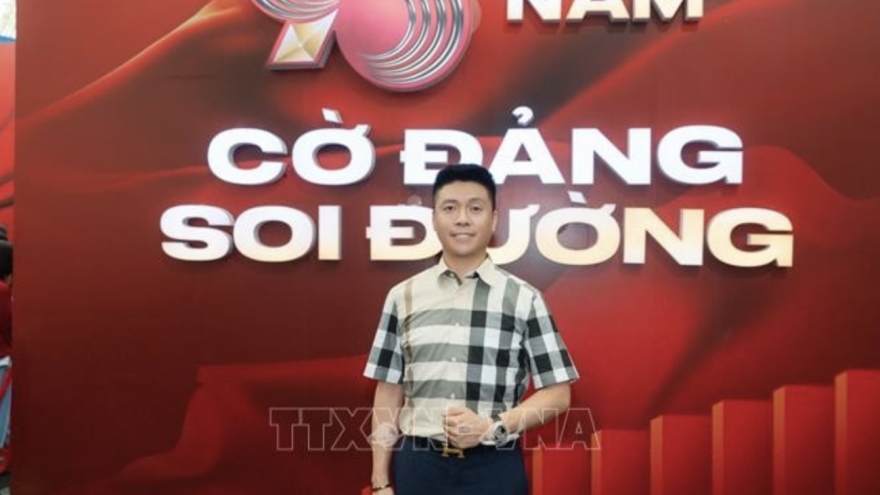
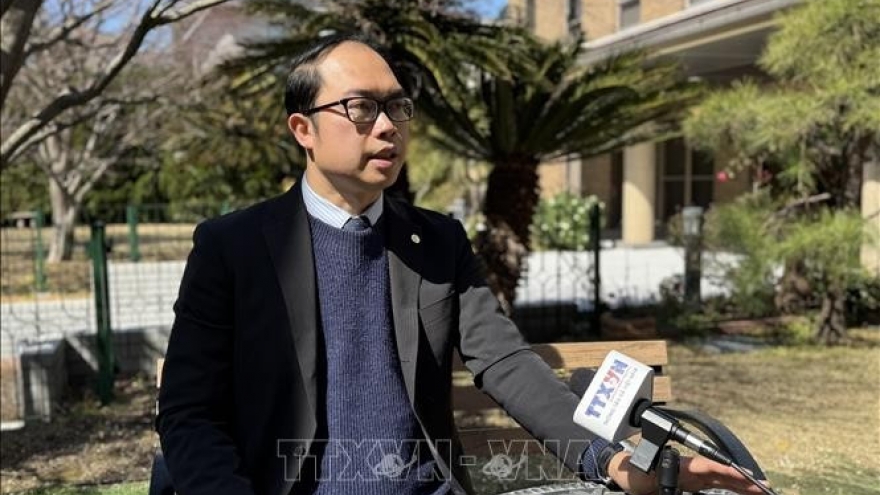
OVs keen to support Vietnam’s development

Ha Son Tung, Deputy Head of the Advanced Optical Technologies Department at Singapore’s Agency for Science, Technology and Research (A*STAR), has praised the Party and State for creating open and democratic forums through which overseas Vietnamese (OVs) can directly contribute opinions on major national issues.
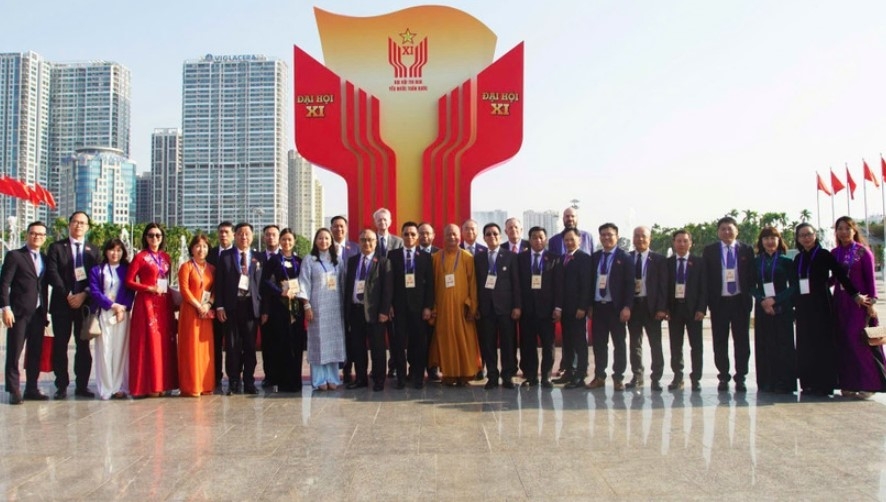
Tung, who is also project leader at the National Semiconductor Technology Centre, cited as a clear example the recent consultation process on the draft documents for the upcoming 14th National Party Congress, which received a large number of substantive contributions from Vietnamese expatriates worldwide in a short period of time. Feedback was gathered both online and via Vietnamese representative offices abroad, helping OVs feel that, despite geographical distance, they remain an inseparable part of the nation.
He stressed that such activities reflect the Party and State’s consistent and humane policy towards OVs, as set out in the Politburo’s Resolution No. 36-NQ/TW (2004) on OVs affairs, as well as subsequent directives such as Directive No. 45-CT/TW (2015) and Conclusion No. 12-KL/TW (2021). These documents affirm that OVs are an integral part of the nation and an important resource for national construction and defence.
The Party and State, he said, not only listen but also provide mechanisms enabling Vietnamese abroad to participate substantively in policy-making — from contributing to Party Congress documents to major socio-economic development resolutions. This openness and trust reinforce great national unity and strengthen the emotional and cultural bonds between OVs and their homeland.
Tung noted that expatriate communities have always responded positively and enthusiastically to calls from the homeland. During the consultation on the 14th Party Congress documents alone, thousands of submissions were sent by Vietnamese people across all continents, focusing on areas such as science and technology, innovation, digital transformation, education and culture. This demonstrates the strong desire among OVs — both established communities and the younger generation — to contribute to the country’s development.
He added that many overseas experts are willing to join innovation networks, help train high-quality human resources, or invest in strategic sectors including semiconductors, artificial intelligence and renewable energy. Others desire to support the preservation of national identity, the teaching of Vietnamese to younger generations, and act as bridges for friendship and cooperation with host countries.
With increasingly favourable State policies, OVs believe they will be able to make even more practical contributions, working together with the nation towards the shared aspiration for a prosperous and happy Vietnam, he stated.
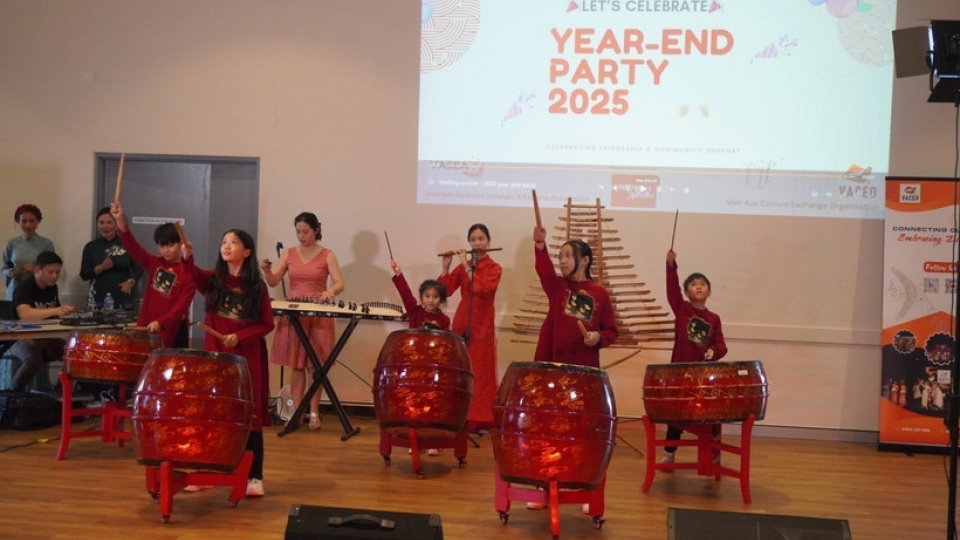
Gathering honours knowledge, culture, community spirit of OVs in Australia
The Vietnam-Australia Scholars & Experts Association (VASEA) and Vietnam-Australia Cultural Exchange Organisation (VACEO) held their 2025 year-end review programme in Sydney on December 14, honouring knowledge, culture and the strong sense of community among Vietnamese people in Australia.