New initiative for lead exposure in Vietnam

VOV.VN - The village of Dong Mai in the Red River Delta northern province of Hung Yen, Vietnam was the site of a severe epidemic of lead poisoning first confirmed in 2007 by a group of researchers from the Blacksmith Institute.
 |
The cause of the lead poisoning was decades of informal car battery processing in the village. In this process, lead plates were removed from battery casings by hand and cleaned of lead oxide and sulphide dusts that accumulated on their exteriors.
These dusts were very fine and easily inhaled. Because they contained no inherent commercial value they were regularly discarded in area soils, where they encountered children.
The earnings from the repurposing of the ingots from the batteries enabled the creation of a lead industry within the village.
The findings by the Blacksmith Institute and later confirmed by US researchers from the University of Washington, spearheaded the need for change in the area. The problem was, the villagers had been there for generations, and there was no place for them to go, and no place for the soil to be replaced.
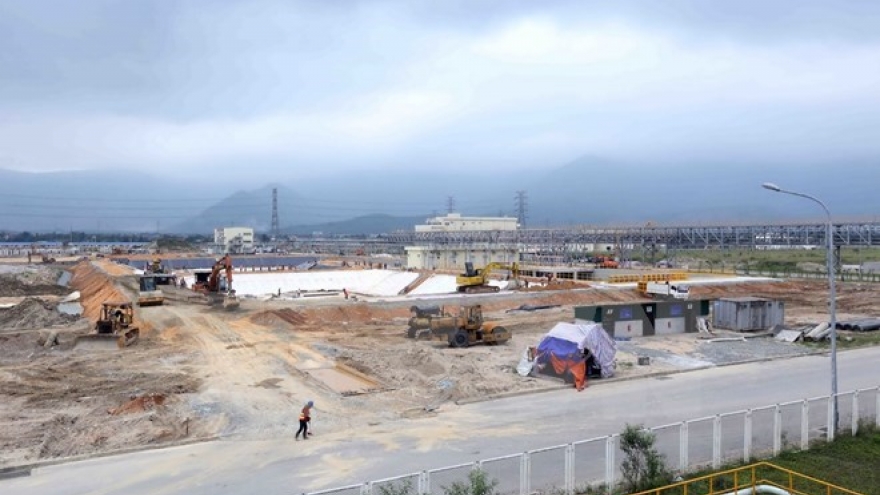
In 2008, an industrial area was constructed by the Vietnam Environment Administration that was located one kilometre south of Dong Mai, and most industrial activity was relocated.
Another initiative headed by Blacksmith staff involved the cleaning of some 39 home interiors that was a modified protocol used by Blacksmith successfully elsewhere that was slightly modified for Dong Mai.
These cleanings were used as demonstrations for other villagers to follow in the cleaning of their own homes. Testing carried out with the use a handheld X-ray Florescence instruments in all 39 homes indicated significant declines in surface lead levels.
Similar declines were also noted during spot checks of homes cleaned by residents. However, because lead is very immobile in the environment, surface lead levels in Dong Mai remained dangerously elevated.
Other measures to mitigate the risk posed by contaminated soil carried out by the Blacksmith staff included a project to cover soil first with five centimetres of sand and second with a geotextile layer.
This was then in turn covered by either 20 centimetres of sand or a layer of 20 centimetres of compacted clean soil, pavers (bricks), or concrete.
In early June 2017 researchers announced they have found an additional solution, which is Pektin, a compound found in citrus fruit. When given to individuals, they found that the Pektin could help absorb some of the lead in the blood, and was able to pass through the urine.
Pektin is a soluble fibre found in most plants. It is most abundant in apples, plums and the peel and pulp of citrus fruits. In food, it is most commonly used to thicken jams, jellies, and preserves.
Other scientific studies have shown that Pektin may have a potential role in cancer care. Those studies done on animals showed that Pektin can slow or stop the spread of prostate, breast, and skin cancer, particularly to the lungs.
Previous findings indicated that the blood lead levels of villagers in Dong Mai had declined by 35% and were expected to continue to decline with time. With this finding related to Pektin, the downward trend is now expected to accelerate.