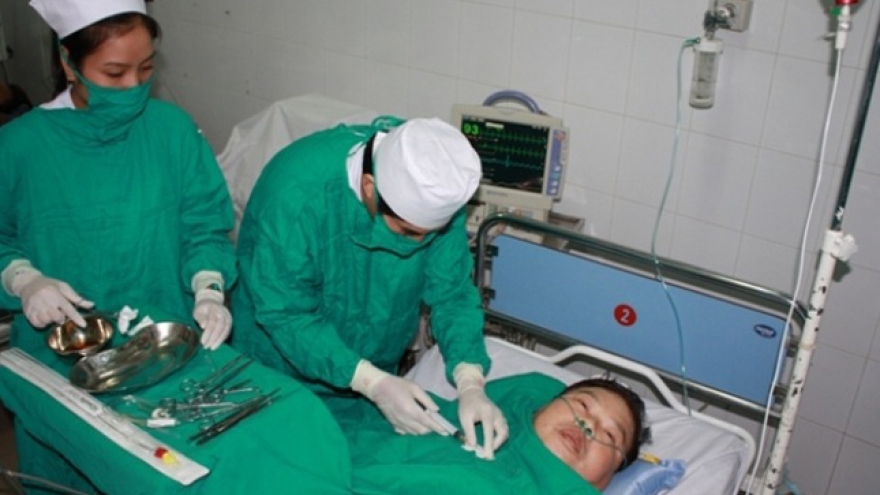
New critical care manual helps reduce ‘golden hour’ response time

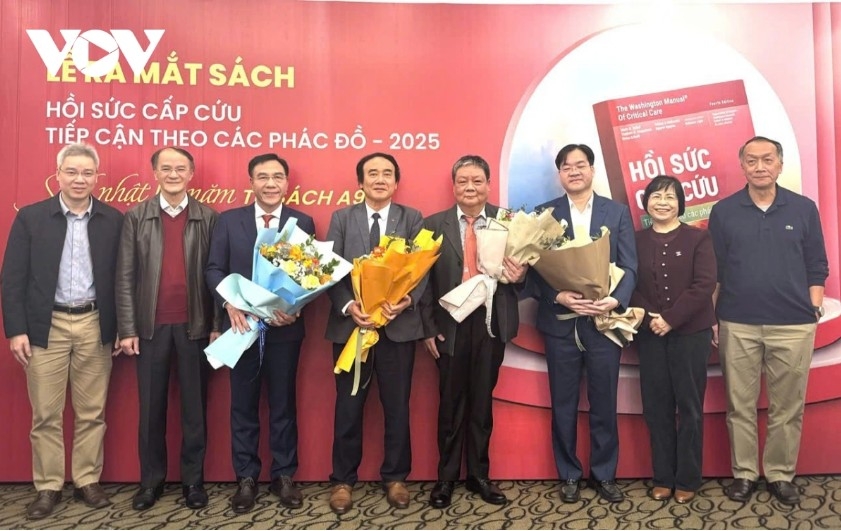
VOV.VN - A newly released critical care manual was introduced in Hanoi at the start of the Lunar New Year 2026, marking 15 years of the “A9 Book Series-Bach Mai Hospital,” a project translating internationally recognized medical reference books into Vietnamese.
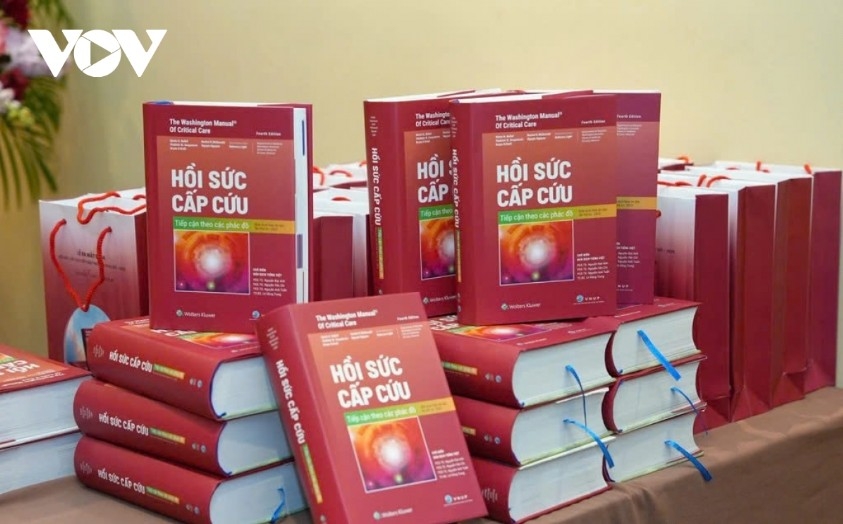
The Vietnamese edition titled Hồi sức cấp cứu – Tiếp cận theo các phác đồ (Critical Care -A Protocol-Based Approach) is based on the fourth edition of The Washington Manual of Critical Care Medicine by Professor Marin H. Kollef, a leading global expert in critical care medicine.
The translation and editorial team comprises four principal authors and 21 contributors, including Assoc. Prof. Dr. Nguyen Dat Anh, Assoc. Prof. Dr. Nguyen Van Chi, Assoc. Prof. Dr. Nguyen Anh Tuan and Dr. Le Hong Trung.
The publication incorporates important updates in the management of critically ill patients, including individualized treatment of sepsis, extracorporeal membrane oxygenation (ECMO), advanced hemodynamic monitoring and bedside imaging. The content has been comprehensively revised, supplemented with professional peer review and refined based on feedback from previous editions.
Nguyen Dat Anh said that in critical care practice, where minutes and hours can determine life or death, updating knowledge and applying modern techniques are essential to saving patients.
Nguyen Van Chi noted that the book combines practical guidance with in-depth coverage across major areas of critical care, including shock, respiratory and cardiovascular conditions, neurology, infections, toxicology, obstetrics and nutrition. Its protocol-based approach helps clinicians shorten information search time and make accurate treatment decisions.
Nguyen Anh Tuan added that alongside diagnostic and treatment protocols, the book provides foundational knowledge in physiology, anatomy and core medical principles. It is intended for clinicians, medical students, nurses and healthcare workers at various levels, thus contributing to improved care for critically ill patients.
According to Le Hong Trung, who serves as a co-editor and representative of the translation team, the publication continues the academic spirit of the A9 Book Series, an initiative developed over 15 years within Vietnam’s critical care community. Between 500 and 1,000 copies are expected to be printed and prioritized for frontline critical care physicians in northern Vietnam before broader nationwide distribution.
Danang hosts int’l seminar on critical care medicine
(VOV) - Nearly 600 foreign and domestic delegates on April 16 gathered in central Danang city for a seminar on emergency critical care medicine.