Natural disasters forecast to remain unpredictable next year

The year 2025 is recorded as one of the most complex and extreme years for natural disasters in Vietnam, particularly typhoons, heavy rain and flooding. Forecasts indicate that natural disasters next year will continue to evolve unpredictably.
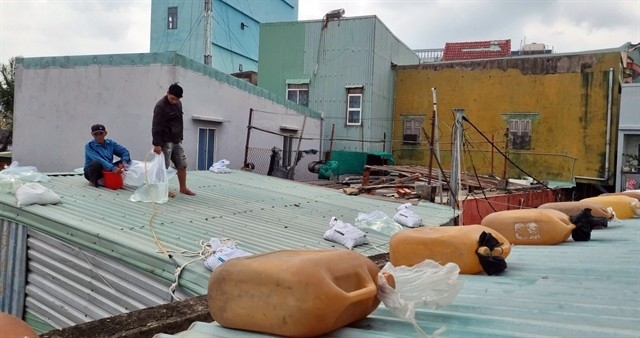
The information was revealed by Hoang Phuc Lam, Deputy Director of the National Centre for Hydro-Meteorological Forecasting.
As of the end of last month, the East Sea had seen 15 typhoons and six tropical depressions, making it the year with the highest number of typhoons and tropical depressions on record, surpassing the previous record of 20 in 2017.
Alongside this, during October and November, the northern and central regions experienced repeated episodes of widespread heavy rain.
In the north, from October 6–8, influenced by typhoon Matmo and its remnants, the northeast region, particularly Tuyen Quang, Thai Nguyen and Hanoi, saw heavy to very heavy rain.
In the central region, two notable prolonged heavy rain events stood out. The first occurred from October 23 to November 3 across provinces from Ha Tinh to Quang Ngai.
The Bach Ma station alone recorded up to 1,740mm of rain on October 27, the highest daily rainfall ever observed in Vietnam. The second event took place from November 16–21, affecting provinces from Quang Tri to Khanh Hoa.
The prolonged heavy rain caused severe widespread flooding, with peak flood levels on many rivers exceeding historical records. No year has ever recorded both exceptionally large floods and historical floods occurring simultaneously on 20 rivers.
Lam noted that whenever strong storms capable of directly impacting the mainland form, forecasting experts must hold continuous meetings and discussions to provide appropriate assessments amid numerous uncertainties.
A memorable recent case was Typhoon Koto. On the morning of November 25, when it was still a tropical depression over the central Philippines, many regional and global forecasting centres predicted it would intensify into a typhoon.
“If we do not warn early, people may not have time to respond, leading to greater losses. But if we warn early and the typhoon does not materialise, it can easily cause panic among residents and the disaster response forces,” Lam said.
He added that late-season typhoons often interact with cold air and operate at low latitudes, making forecasting particularly challenging.
Unpredictable developments
Regarding next year, Lam said that a weak La Niña state could be maintained in the early months, potentially transitioning to neutral conditions in the latter half of the year.
During the peak winter months of January and February, the north might be affected by strong cold air outbreaks, causing severe cold spells across wide areas. Frost and black ice must be anticipated, especially in the northern mountainous provinces. Conversely, the Central Highlands and the south might see off-season rain episodes during the dry period.
According to Lam, the number of storms and tropical depressions next year is forecast to be around the long-term average. Heatwaves are also likely to occur at a frequency similar to the long-term average, concentrated in the north and central regions from April to August with a peak in June and July and in the Central Highlands and the south from February to May with a peak in March and April.
For the rainy season, the north, south and Central Highlands are expected to start around the long-term average, roughly mid-May. In the central region, it will begin around late August in the north and late September in the south.
Amid increasingly evident climate change, with more dangerous and extreme weather phenomena such as short-duration heavy rain, flash floods and landslides, Lam emphasised that authorities and residents must regularly monitor and update hydro-meteorological forecasts and warnings to proactively implement timely prevention and response measures.
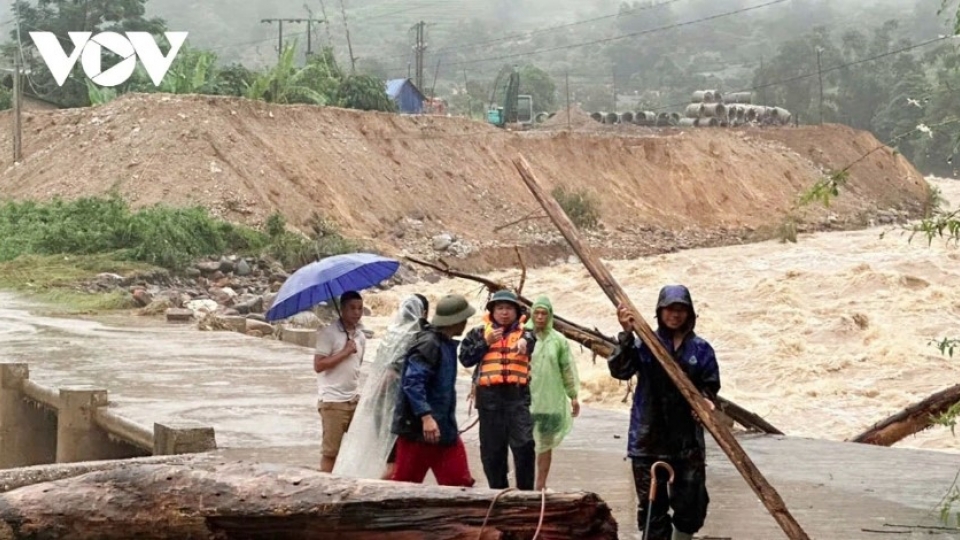
Natural disasters leave 513 dead in Vietnam in 11 months
VOV.VN - According to details given by the Ministry of Agriculture and Rural Development (MARD), this year the nation has so far endured nine storms, 232 heavy rains, inundations, flash floods, and landslides, leaving a total of 513 people either dead or missing.