
More than 70 million motorcycles to undergo emissions testing from June 30

VOV.VN - From June 30, all motorcycles currently in operation in Vietnam will be required to undergo emissions testing under a new national technical regulation.
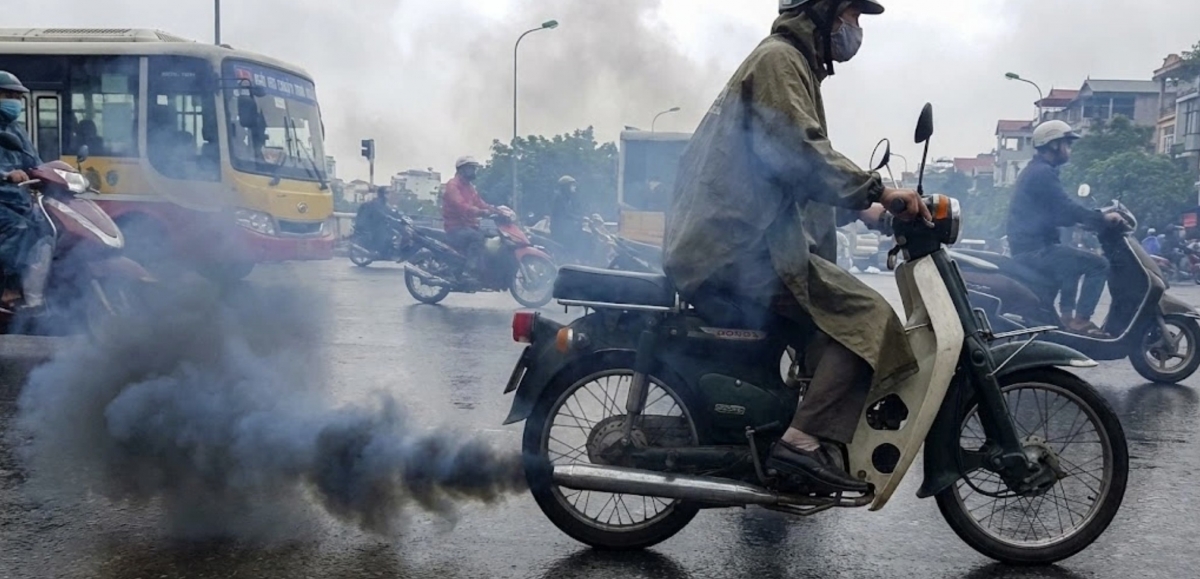
The requirement is set out in Circular No. 92/2025 issued by the Ministry of Agriculture and Environment, which takes effect on June 30. The specific implementation roadmap will be decided by the Prime Minister.
The regulation does not apply to vehicles under the management of the Ministry of National Defence and the Ministry of Public Security.
Under the new standards, motorcycles operating on public roads must comply with four maximum permissible limits for two key pollutants: hydrocarbons (HC) and carbon monoxide (CO). Specific threshold values are provided in the annex attached to the Circular.
Emissions testing must be conducted at qualified facilities certified in accordance with road traffic safety regulations. Testing equipment must meet Vietnamese technical standards.
Assigned by the Government, the Ministry of Construction will organise nationwide motorcycle emissions inspections. Where necessary, testing methods will follow national technical regulations issued by the ministry.
Vietnam currently has more than 70 million motorcycles in operation. An estimated 5,000 qualified facilities will be required to carry out inspections.
The move is part of a broader strategy to curb air pollution, as several major Vietnamese cities frequently rank among the most polluted cities in the world.
As the country advances its green transition agenda, reducing transport emissions is not only an environmental objective but also a public policy test, requiring coordinated infrastructure and support mechanisms to enable businesses and citizens to take part.
Khuong Kim Tao, former Deputy Chief of the Office of the National Traffic Safety Committee, said managing and monitoring motorcycle emissions is a necessary measure.
“Motorcycle emissions testing will affect people’s daily lives, and difficulties may arise during implementation. However, to protect the environment, there is no alternative but to control vehicle emissions step by step in order to improve environmental quality. Public communication and adequate technical preparation will be essential for the programme’s success,” he said.
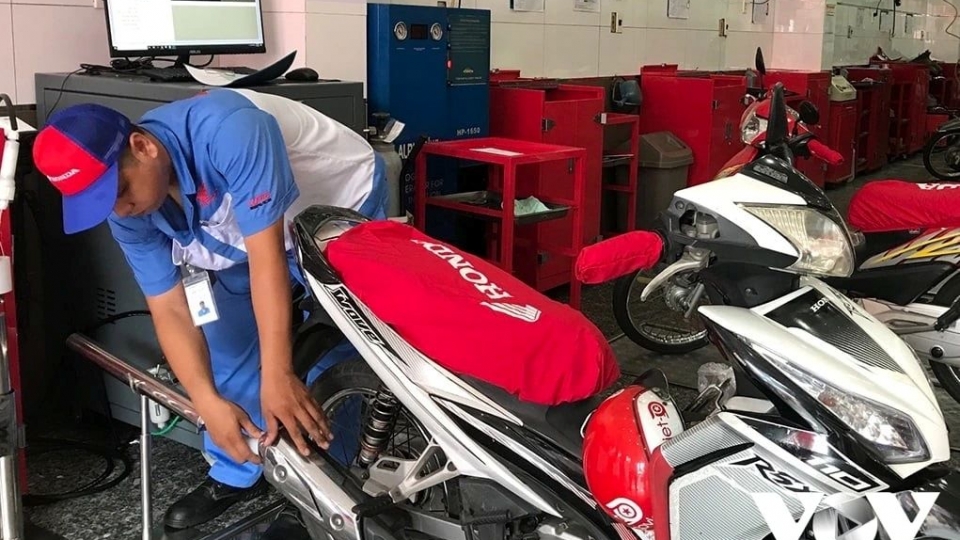
Vietnam to begin motorcycle emissions inspections from mid-2026
VOV.VN - Vietnam will begin enforcing mandatory emissions inspections for motorcycles and mopeds from June 30, 2026, under a new regulation issued by the Ministry of Agriculture and Environment.
