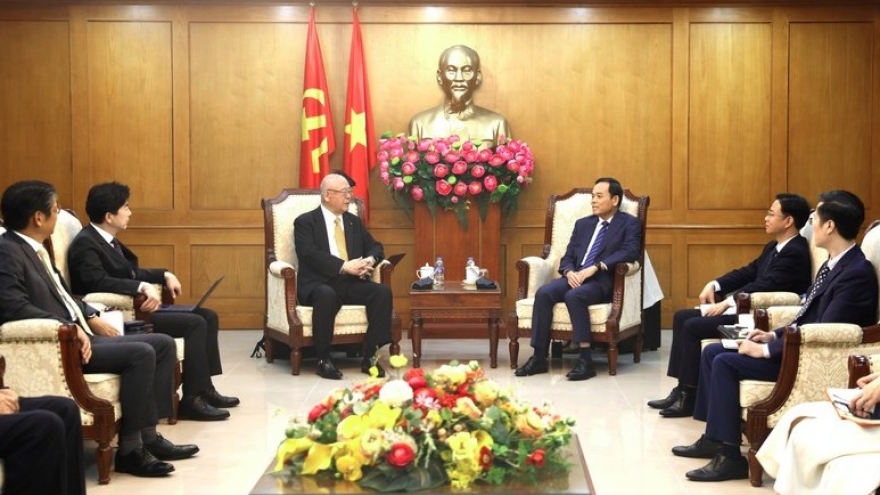
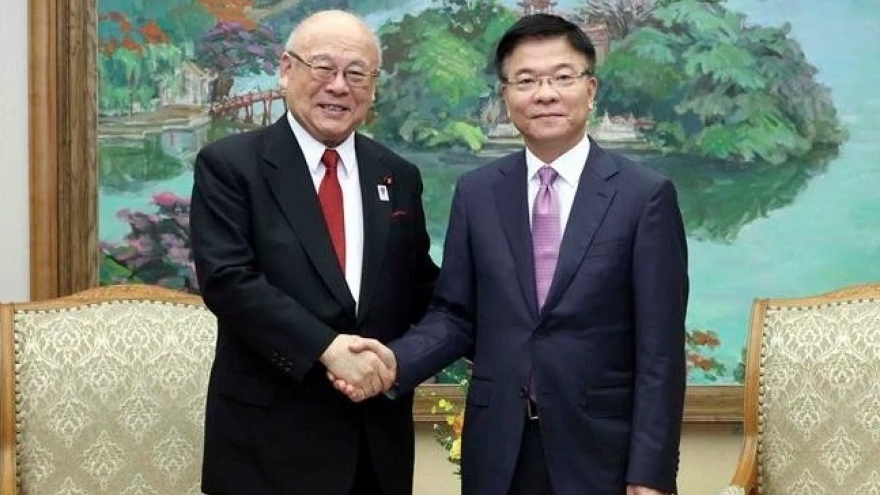
Japanese scholar devotes more than half a century to Vietnam studies

VOV.VN - For more than half a century, Prof. Dr. Furuta Motoo, the first rector of Vietnam – Japan University, has dedicated his academic career to studying Vietnam, shaping a unique approach he calls “understanding the world through Vietnam.”
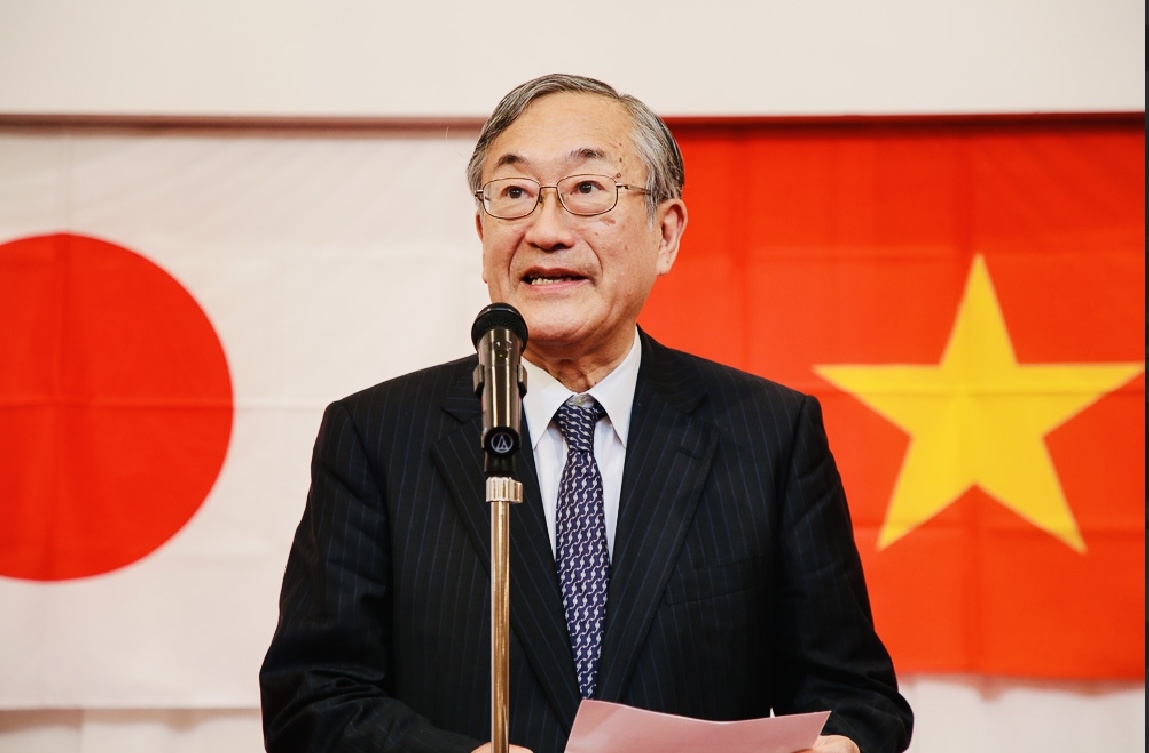
In his final lecture titled Over 50 Years of Vietnam Studies, delivered at a gratitude ceremony on March 24, Prof. Dr. Furuta shared his scholarly journey, from a university student to becoming one of the leading experts on Vietnam’s history and society.
Throughout his research, Furuta has focused on modern and contemporary Vietnamese history, the history of the Communist Party of Vietnam, international relations, and political and social transformations in the country.
His interest in Vietnam began during his student years at the University of Tokyo at a time when the Vietnam War dominated global attention.
“It seemed the whole world was revolving around Vietnam,” he recalled. Motivated by the idea that understanding Vietnam could provide insights into global dynamics, he chose Vietnam as the focus of his research.
A turning point came in 1973, when Japan and Vietnam established diplomatic relations. A year later, Furuta began studying Vietnamese at the Tokyo University of Foreign Studies and made his first visit to Vietnam in late 1974. Vietnam subsequently became the centre of his academic career.
By the late 1970s, after extended residence in Vietnam, he realised his earlier perceptions of the country were far from reality. He then adopted a regional studies approach, analysing Vietnam within its historical and global context while paying close attention to local social characteristics. This perspective is reflected in his acclaimed works on Vietnamese history in a global context.

One of Furuta’s notable findings emphasises the “bottom-up strength” of Vietnamese society - the flexibility, adaptability, and grassroots initiatives that sustain the country’s social vitality.
His research also included a major study of the 1945 famine. Between 1988 and 1995, he collaborated with scholars from the Vietnam Institute of History to survey 23 villages from Quang Tri to the northern region, reconstructing the scale of the famine. This work is recognised as one of the most reliable studies on the 1945 famine and earned the State Prize for Science and Technology.
Furuta noted that Japanese scholars’ participation in this research not only advanced scientific understanding but also fostered mutual trust between Vietnam and Japan.
Beyond research, Professor Furuta played a crucial role in educational collaboration. He laid the foundation for Vietnam – Japan University, a major joint education project under Vietnam National University, Hanoi. Many Vietnamese scholars regard him as an academic bridge between the two countries, dedicating his career to studying, interpreting, and sharing knowledge about Vietnam with the world.
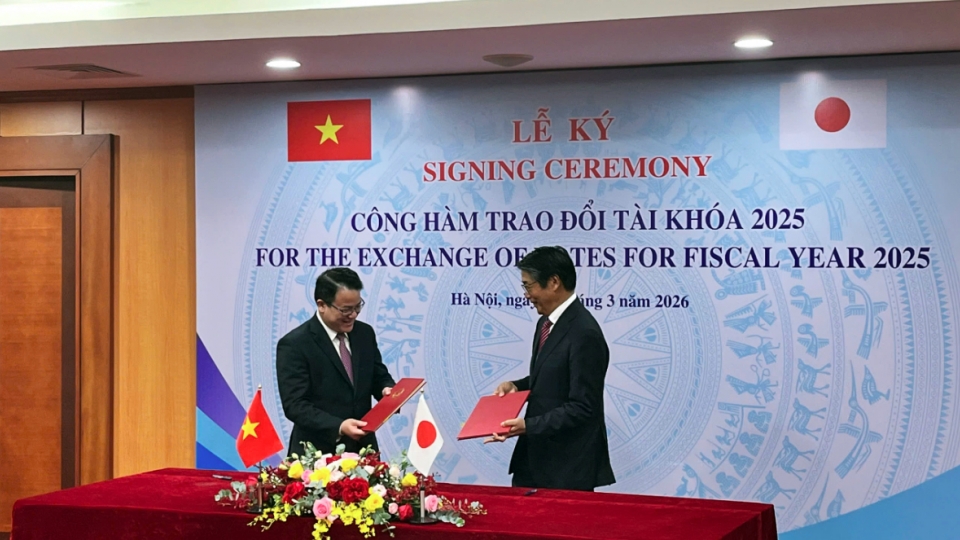
Japan extends US$600 mln in ODA loans to support Vietnam climate projects
VOV.VN - Japan has agreed to provide more than US$600 million in official development assistance (ODA) loans to support Vietnam’s green transition and climate resilience, under exchange notes signed in Hanoi on March 20.