


Japanese expert advises Vietnam on quantum technology strategy

VOV.VN - Speaking on Japan’s development experience and bilateral cooperation prospects, Professor Takeuchi suggested that quantum sensing could serve as a suitable initial focus for Vietnam, given its broad civilian applications and lower investment requirements compared to quantum computing.
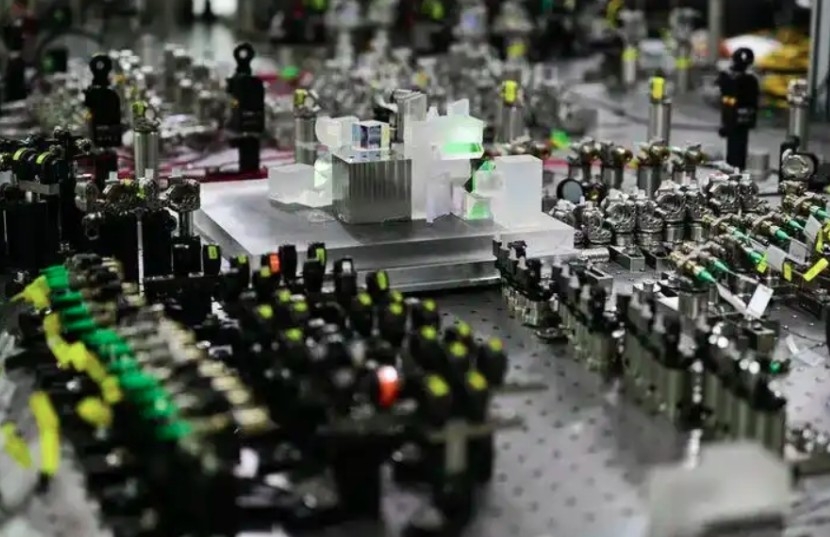
Japan prioritizes three main areas: quantum computing, quantum communication, and quantum sensing, tailoring support based on research costs, technology maturity, and practical viability. Quantum computing currently attracts substantial capital, driven by the heavy investment required for equipment, cooling systems, and long-term research. However, developing quantum computers powerful enough to solve problems beyond classical systems remains challenging, while applications with clear societal benefits have yet to be widely realized.
In contrast, quantum sensing offers diverse development avenues, ranging from atomic and diamond-based sensors to ultra-precise optical clocks and gravitational wave measurement systems. Several applications are already deployed in practice, with development costs generally lower than those of quantum computers, making it an advantageous entry point for nations building research capacity.
Regarding quantum communication, Quantum Key Distribution (QKD) technology has reached commercialization and undergone multi-site network testing, such as Tokyo’s QKD network. However, developing quantum repeaters to prevent eavesdropping at relay points still faces technical hurdles.
Drawing from Japan’s experience, Professor Takeuchi emphasizes that technology choices must align with specific national objectives. To prioritize workforce training, Vietnam could consider accessing quantum computers via the cloud, developing algorithms, or building shared infrastructure. For long-term research capacity, developing hardware should be weighed against available resources and practical demands.
He points out that quantum computing, communication, and sensing share core scientific and technological foundations, meaning investments in basic research and workforce development yield benefits across multiple application areas. Vietnam needs a team capable of evaluating technology, setting priorities, and shaping policies suited to domestic conditions, rather than chasing capital-intensive trends.
In Japan, responsibilities are divided among regulatory agencies across research stages: the Ministry of Education, Culture, Sports, Science and Technology (MEXT) supports basic research and workforce training; the Ministry of Economy, Trade and Industry (METI) promotes industrialization, especially in quantum computing; and the Ministry of Internal Affairs and Communications (MIC) oversees quantum communications. Research programs alongside the Quantum Innovation Hubs (QIH) network, led by RIKEN, connect universities, research institutes, and enterprises.
Japanese universities not only conduct research but also train specialists for industry, government, and academia. Joint corporate-doctoral programs are also expanding, strengthening the link between research and practical demands.
Acknowledging his limited familiarity with Vietnam’s current research and training capacity, he stressed that Vietnamese experts themselves must identify the specific workforce needs of the country. He particularly highlighted the role of Vietnamese researchers trained at leading laboratories in Japan, the United States, and Europe in applying international experience to choose development paths in line with Vietnam's specific conditions and national interests.
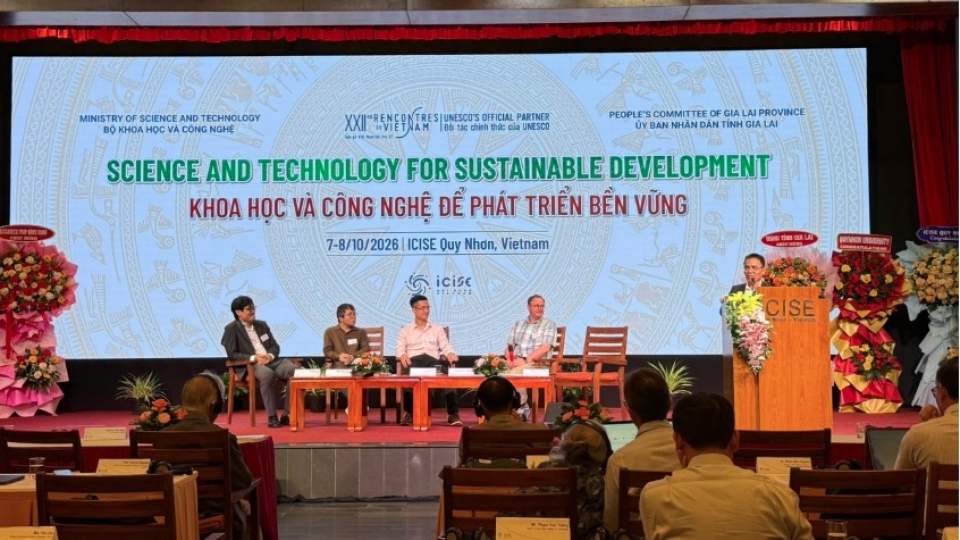
Vietnam must invest in labs, talent to compete in quantum technology
VOV.VN - Quantum technology is among 10 strategic technology groups prioritized for national development. To engage more deeply in this field, Vietnam must shift from its strengths in theory, computation, and simulation to building experimental capacity, focusing primarily on laboratories and human resources.
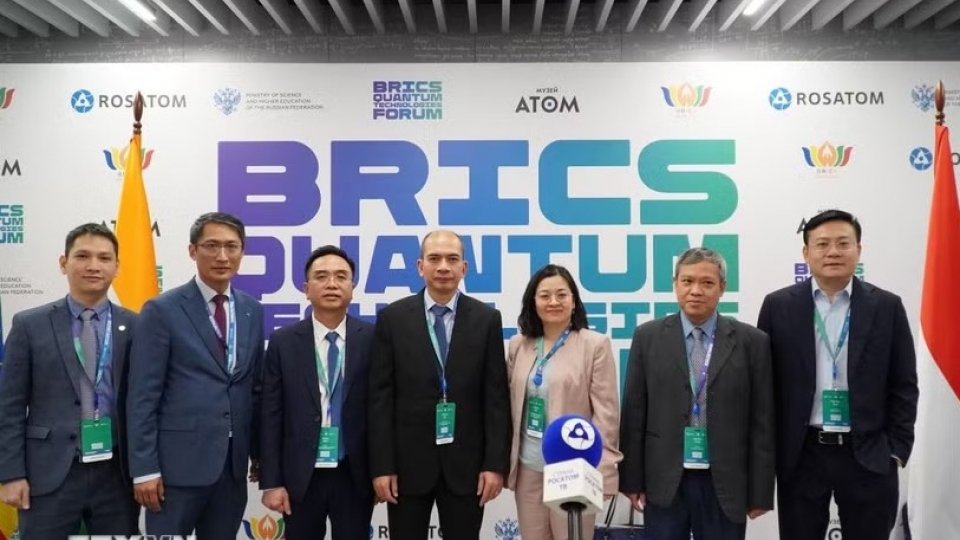
Vietnam promotes international cooperation in quantum technology
VOV.VN - A delegation from the Vietnam Academy of Science and Technology (VAST), led by Professor Dr. Tran Tuan Anh, attended the first BRICS Quantum Technology Forum that took place in Moscow on June 7-8.


