Hanoi starves for breath of fresh air

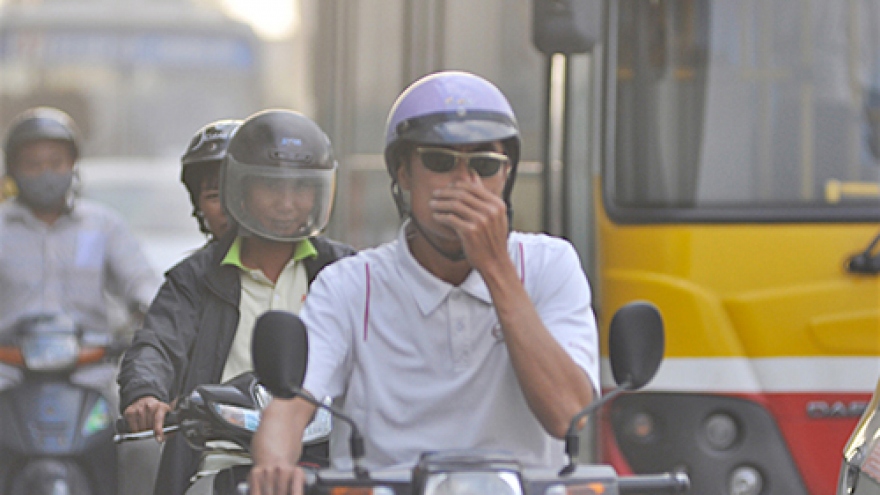
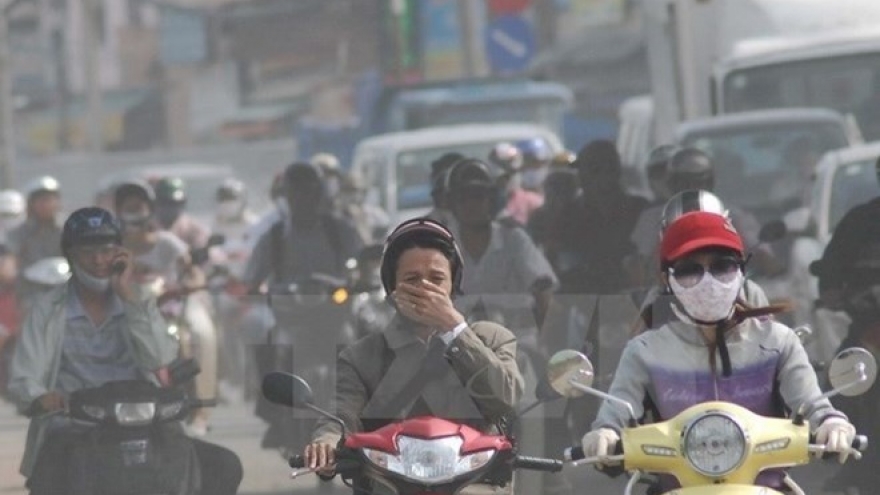
Hanoi’s air quality has been at an acceptable level less than two days a week, according to a newly released document.
 |
They compared air quality parameters in the 2017 six first months and in the same period of 2016.
Based on the report, from January to June, Hanoi suffered 139 days of excessive PM2.5 level, according to the international standards.
PM, or particulate matter, is the term for a mixture of solid particles and liquid droplets found in the air. PM2.5 particulates are about one thirtieth as thick as the width of a human hair. They can easily pass through lung tissue and absorbed into the bloodstream, causing adverse health effects.
The data showed no relation between the concentration of pollutants and peak traffic hours. This means air quality has been affected by different pollution sources, especially energy industry.
Nguyen Thi Anh Thu, GreenID’s environment expert, said that though the air quality was being improved, millions of Hanoi people had rarely had a breath of fresh air.
The National Technical Regulation on Ambient Air Quality issued by the Ministry of Natural Resources and Environment in 2013 limits the values of PM 10 and PM 2.5 concentrations in both short-term (24 hours) and long-term (one day) exposures. However, this standard is still significantly lower than those used by WHO and the EU.
Vietnam spends about US$780 million annually on public health costs caused by air pollution.
Children are the most vulnerable. According to UNICEF, air pollution kills 600,000 children under five years old a year in the world and causes serious health diseases.
Exhaust gas from thermal power plants contains many pollutants, especially SO2, CO, NOx and dust which can spread out to urban areas. If all coal-fired power plants in Vietnam were built in accordance with the VII power plan with an increasing capacity of around 40,000 MW by 2030, this would be a major threat to current air quality.
“Many countries including China and the Republic of Korea are closing thermal power plants because of their consequences on human health. It’s time for us to consider the developmental path in order not to sacrifice our children’s living environment and fresh air. By using recycled energy, we can balance goals of economic development, environmental protection and community health,” said Nguy Thị Khanh, Director of GreenID.