


Dong Van Karst Plateau recommended for UNESCO Global Geopark designation extension

VOV.VN - The UNESCO Global Geoparks Council on November 3 unanimously recommended awarding a "Green Card" to the Dong Van Karst Plateau in Tuyen Quang province, proposing a four-year extension of its UNESCO Global Geopark designation.

This decision, made during the 11th Session of the UNESCO Global Geoparks Council in Paris from November 2-4, marks the highest rating in the periodic re-validation process and the fourth consecutive time the site has successfully passed re-evaluation.
Ambassador Nguyen Thi Van Anh, Permanent Delegate of Vietnam to UNESCO, highlighted the unanimous consensus as international recognition of persistent efforts by local authorities and residents in preserving geological and cultural heritage while promoting sustainable tourism and local livelihoods, particularly for ethnic minority communities.
Sophie Justice, Chair of the 11th Session, praised the quality of management and heritage preservation at Dong Van, particularly the active participation of local residents and respect for indigenous culture, recommending continued focus on education, tourism, and long-term management.
Council member Sarah Gamble applauded the landscape and management team, encouraging Vietnam to strengthen connections with the UNESCO Global Geoparks Network, partner with universities, and share practical experiences at international forums.
Trinh Hai Son, Director of the Institute of Geosciences and Mineral Resources, stated that Vietnam has fulfilled three of the five recommendations from the previous assessment and is working on the remaining two alongside new guidance, citing positive progress in infrastructure, native cultural promotion, and the "One Commune One Product" (OCOP) program.
Kristof Vandenberghe, Head of Earth Sciences and Geo-hazards Risk Reduction at UNESCO, cited Dong Van as an outstanding example of local residents fully committing to accompany the geopark, understanding the importance of conservation, actively protecting it, and taking pride in those values.
The Council reviewed 13 new applications, 61 extension requests, and four boundary modifications during the session, with recommendations set for official approval by the UNESCO Executive Board in April 2027.
However, the international designation also requires maintaining standards in conservation, management, and sustainable development, with empowering local people, preserving ethnic cultural identities, improving tourism quality, and strengthening international connectivity serving as key factors for the Dong Van Karst Plateau to maintain its standing within the UNESCO Global Geoparks Network.

Vitality on Dong Van Karst Plateau – a UNESCO Global Geopark
VOV.VN - Covering more than 2,300 square kilometres in northern Vietnam, the Dong Van Karst Plateau, recognised as a UNESCO Global Geopark in 2010, is known for its dramatic limestone mountain landscapes and geological formations dating back hundreds of millions of years.
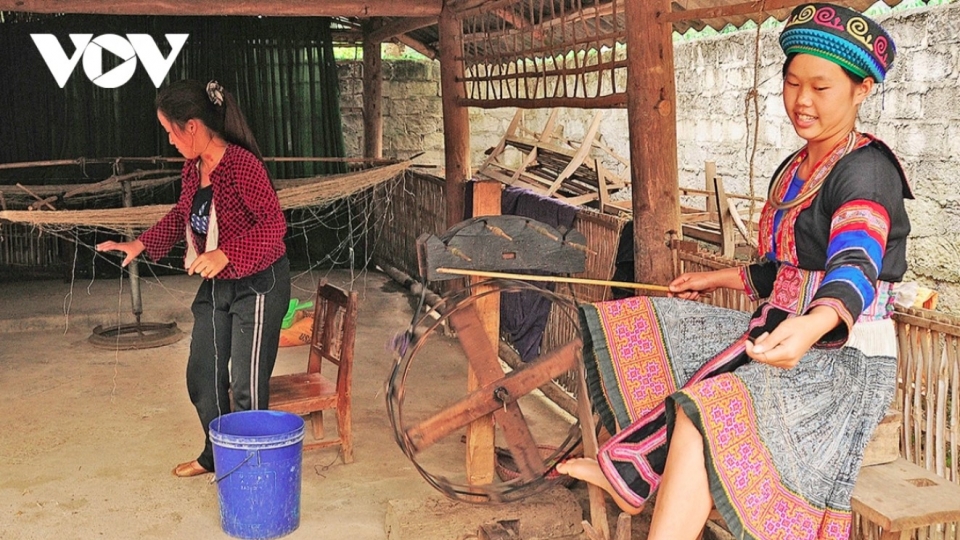
The Mong legacy of linen weaving on Dong Van Karst Plateau
VOV.VN - Lung Tam, a village nestled among misty rocky peaks and shrouded in clouds year-round on the Dong Van Karst Plateau in Ha Giang province, is renowned for its age-old tradition of brocade weaving of the Mong ethnic community.

A glance at Dong Van Karst Plateau UNESCO Global Geopark
VOV.VN - Located in the northern mountainous province of Ha Giang, Dong Van Karst Plateau has recently been declared a member of the UNESCO Global Network of National Geoparks for the third time.

