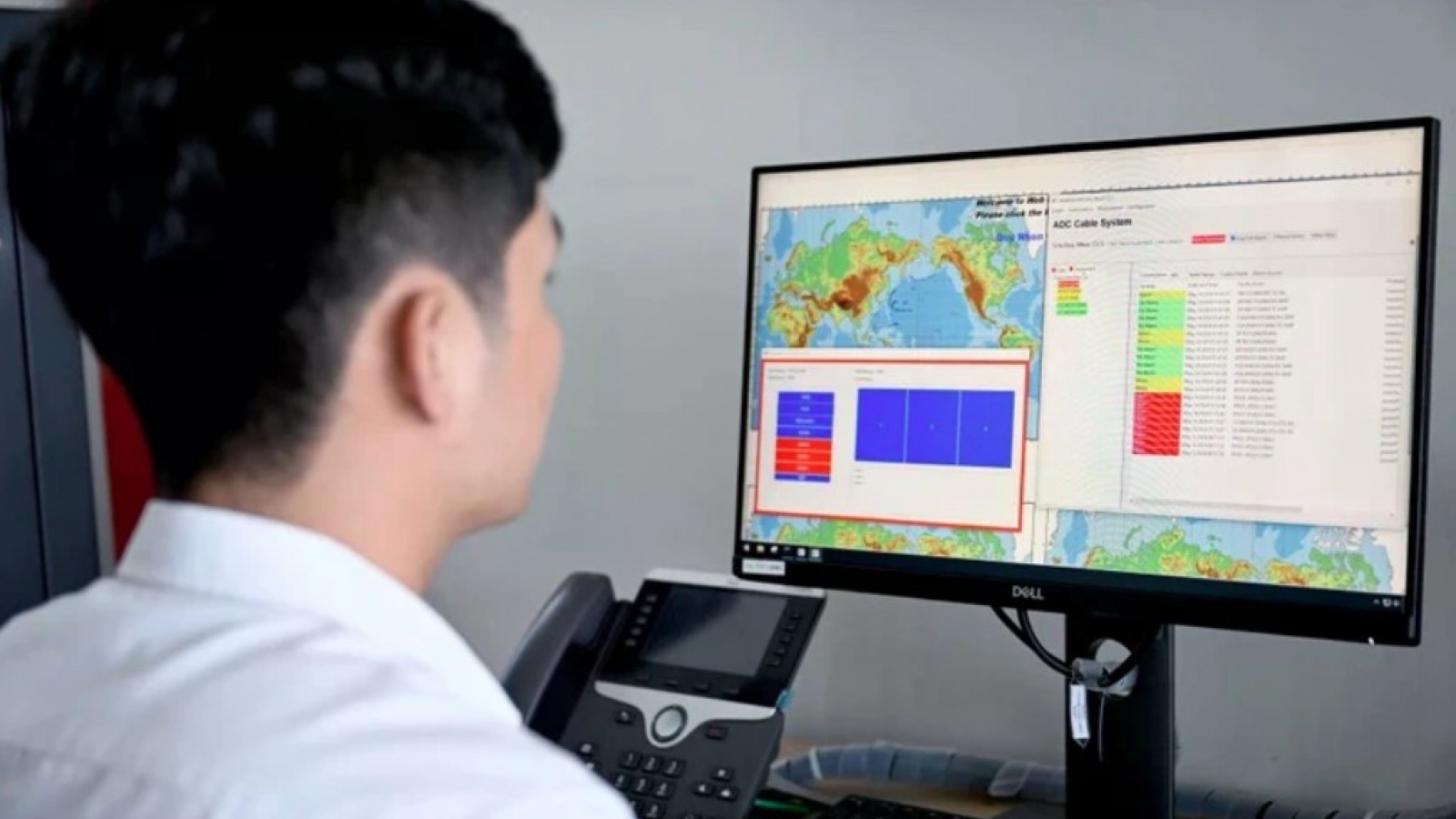
Construction starts on first submarine cable project led by Vietnam

VOV.VN - A consortium co-led by Viettel and Singtel on November 26 broke ground in Ho Chi Minh City on the Vietnam-Thailand-Singapore (VTS) subsea fiber-optic cable system, the first international submarine cable project initiated by a Vietnamese enterprise with direct leadership in route planning and design.
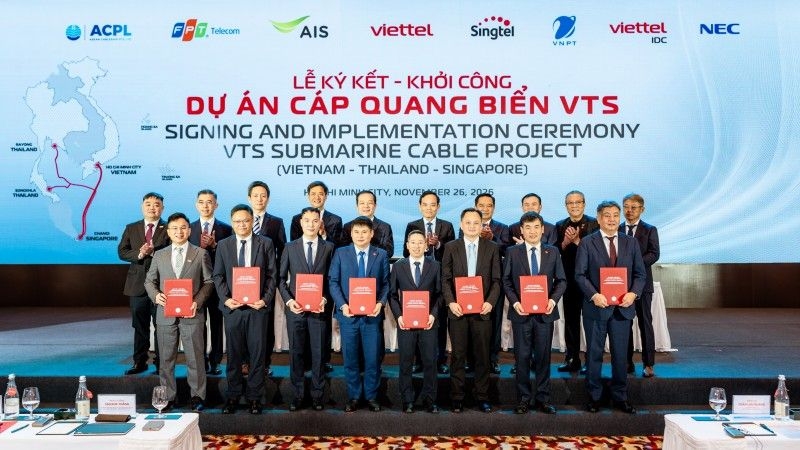
Alongside Viettel and Singtel of Singapore, the project involves AIS of Thailand, VNPT, FPT Telecom and Viettel IDC, and will be built by Japan's NEC Corporation and Singapore's ASEAN Cableship. The VTS system is scheduled for completion in the fourth quarter of 2030.
According to Viettel, the cable system will span about 2,500 km in total. Its main trunk will link Ho Chi Minh City directly with Changi in Singapore, with branches to Rayong and Songkhla in Thailand as well as Pedra Branca in Singapore. Viettel will operate the landing station in Ho Chi Minh City, Singtel will handle Changi, and AIS will run the stations in Rayong and Songkhla.
The roughly 1,200 km Vietnam-Singapore main trunk will reach 240 Tbps, about 2.5 times the total capacity of international cable lines currently operated by Vietnam. It will consist of eight fiber pairs using next-generation wavelength division multiplexing (WDM) technology, with a minimum design capacity of 18 Tbps per fiber pair.
Round-trip latency between the two countries is projected at about 12 milliseconds, about 50 % lower than the average on existing cables, to support faster responses in financial transactions and artificial intelligence applications.
Under the construction plan, the entire VTS cable will be buried beneath the seabed, with the main trunk buried 3 meters deep compared with the usual 1 to 1.5 meters. Viettel said the greater depth will help limit damage from fishing activities and ship anchoring, which cause most subsea cable faults.
In a press release, Viettel Chairman and General Director Tao Duc Thang said building a subsea cable takes years. Vietnam cannot wait for capacity shortages before investing or leave digital economy growth overly exposed to factors beyond its control, prompting Viettel to initiate the VTS project.
According to Deputy Minister of Science and Technology Pham Duc Long, the project marks a shift from mainly using international connectivity infrastructure to actively building it. The project will expand international connectivity capacity and help Vietnamese engineers gradually master subsea cable technologies, from operation and maintenance to emergency response and repair, he added.

New ADC submarine cable route officially put into operation
VOV.VN - The new ADC (Asia Direct Cable) international undersea cable route that boasts the largest bandwidth capacity in Vietnam was officially put into operation on December 19.