Cold snap pushes temperatures below 5C in parts of northern Vietnam

VOV.VN - A strong cold air mass swept across northern Vietnam on February 9, bringing rain and scattered thunderstorms to the north, the north-central region and parts of central Vietnam.
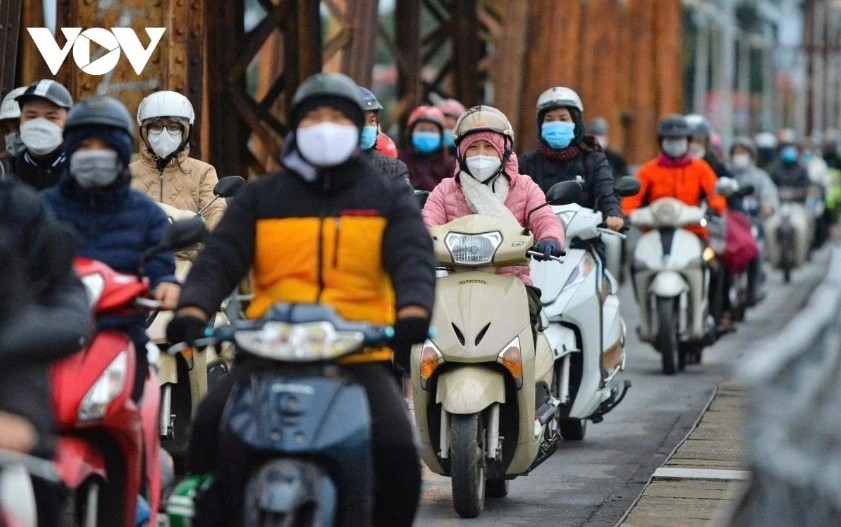
Morning temperatures across northern Vietnam ranged from 11-13°C, while mountainous areas recorded 7-10°C, with some locations dropping below 5°C. In the north-central region, minimum temperatures stood at 13-16°C.
According to the National Center for Hydro-Meteorological Forecasting, northeastern winds reached level 6 (39-49 km/h), with gusts of levels 7-8 (50-74 km/h) at Bach Long Vi. At Phu Quy, wind gusts were measured at level 7 (50-61 km/h).
Over the next 24-48 hours, the cold air is forecast to extend to other parts of central Vietnam. Northeasterly winds over land are expected at levels 2-3 (6-19 km/h), strengthening to levels 3-4 (12-28 km/h) in coastal areas. Northern and north-central Vietnam are likely to continue experiencing rain and showers, with isolated thunderstorms.
Northern Vietnam is set to remain under severe cold conditions, with hazardous cold persisting in mountainous areas. From Thanh Hoa to Hue, cold weather will prevail, with some northern areas facing severe cold spells.
Minimum temperatures are projected at 11-14°C across northern Vietnam, 7-10°C in mountainous regions, and below 5°C in high-altitude areas. The north-central region is expected at 13-16°C, while areas from Quang Tri to Hue will see lows of 16-19°C.
In Hanoi, rain and showers were reported on February 9, accompanied by severe cold, with minimum temperatures of 11-13°C.
Forecasters warned that on February 9, areas from Ha Tinh to Da Nang, as well as eastern parts of provinces stretching from Quang Ngai to Gia Lai, could see moderate to heavy rain and thunderstorms, with risks of whirlwinds, lightning and strong gusts.
In northern mountainous areas, the risk of frost and snowfall remains. Prolonged cold spells may affect livestock, poultry and crops, while localized heavy rain raises the risk of flooding, flash floods and landslides. Strong winds and high waves at sea could disrupt fishing activities and other maritime operations.

Cold snap hits northern Vietnam, temperatures drop below 10°C
VOV.VN - A strong northeast monsoon is set to bring a cold spell to northern and north-central Vietnam from the afternoon and night of March 15, causing temperatures to plunge below 10°C in several areas, according to the National Center for Hydro-Meteorological Forecasting.