


Cold air intensifies, temperatures to fall below 9°C in highlands

VOV.VN - A strengthening cold air mass is forecast to affect northern Vietnam through the night of November 19 and November 20, bringing cold conditions across the region and temperatures below 9°C in some high mountain areas.
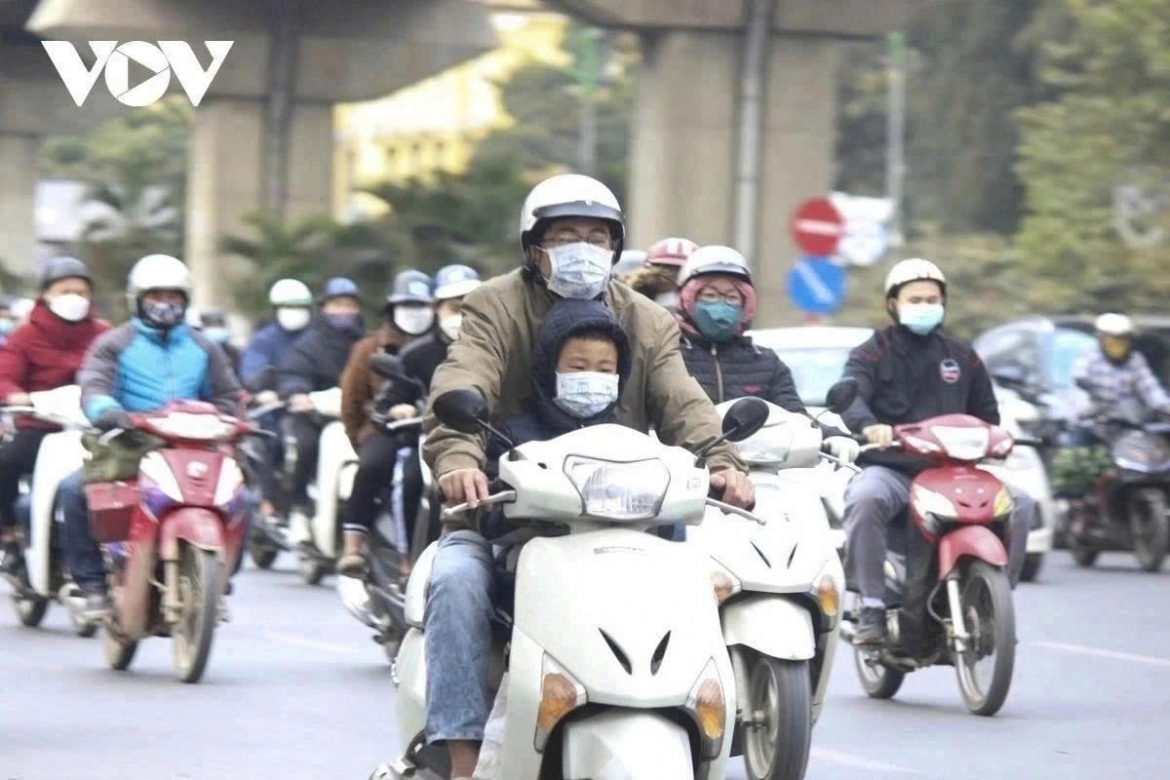
According to the National Centre for Hydro-Meteorological Forecasting, the cold air mass reached the remaining areas of the northwestern region and some parts of the north-central region by the afternoon of November 19. Rain, showers and isolated moderate to heavy downpours accompanied by thunderstorms were reported in northern localities and from Thanh Hoa to Quang Tri in the central region.
The cold air mass is forecast to strengthen further during the night of November 19 and November 20, extending its influence to other parts of the central region and some areas of the South-central region. Northeasterly winds on land are expected to be at 12-19 km/h, reaching 20-38 km/h along the coast, locally 39-49 km/h with gusts of 50-61 km/h.
The weather is expected to remain cold across northern and north-central Vietnam, with some mountainous areas in the north experiencing severe cold. Minimum temperatures during this cold spell are forecast at 14-17°C in northern Vietnam, 11-14°C in mountainous areas and below 9°C in some high-altitude locations. In the north-central region, minimum temperatures are set to range from 16-18°C.
The meteorological agency has also warned of moderate to heavy rain, with locally heavy downpours, from the afternoon of November 19 through the night of November 21 in areas from Quang Tri province to Da Nang city and Quang Ngai province. Residents are advised to watch out for flash floods and landslides in mountainous areas, as well as flooding in low-lying locations.
The National Centre for Hydro-Meteorological Forecasting reported, winter 2026-2027 in Vietnam is expected to be warmer than the long-term average, as the very strong El Niño phenomenon is forecast to persist.
Average temperatures in November 2026 could be 1-2°C above the long-term average, while those in December 2026 and January 2027 are forecast to be 0.5-1.5°C higher.
Cold air activity is projected to be weaker than usual, with severe and extreme cold spells likely to occur later than normal. The number of days with severe and extreme cold in northern and north-central Vietnam is also forecast to be below the long-term average.
However, the agency cautioned that strong cold air surges could still bring sharp temperature drops for short periods, particularly in the northern mountainous areas.

Cold spell hits northern Vietnam, bringing cold weather and heavy rain
VOV.VN - A cold front began affecting northern Vietnam on the morning of November 18 before spreading to the north-central and central regions, bringing cold weather, localized heavy rain, and thunderstorms, according to the National Center for Hydro-Meteorological Forecasting.


