AI opens prospects for Vietnam-Canada cooperation in healthcare

VOV.VN - Canada is promoting the development of precision healthcare platforms leveraging big data on genetics and artificial intelligence (AI) to improve treatment quality and enhance the efficiency of the public health system. This approach is identified as a long-term strategic pillar for the country and opens oppo

Experts highlighted these developments during a recent workshop organized by the Canada-Vietnam Chamber of Commerce in Montreal, following the Canadian government’s announcement of the 2025 Precision Health Initiative. The initiative is designed to build a genetic database to support research and treatment, integrating genetic data with health records, environmental factors, and lifestyle information. This integration will enable physicians to predict disease risks, select appropriate medications, and tailor treatment plans to individual patients.
Anne Nguyen, Head of AI at the Quebec Innovation Council, said that AI is creating new opportunities amid an aging population and rising healthcare demand. Canada is shifting from a generalized healthcare model to personalized care, with AI playing a central role.
According to Nguyen, the Quebec Innovation Council advises provincial and federal authorities on AI policy and drives innovation by analyzing the business ecosystem. Collecting genetic data at the community level will help identify rare diseases in smaller population groups that are often overlooked in traditional research. AI accelerates analysis, identifies disease causes, and supports the development of more precise treatment approaches.
Brian D. Keane, CEO of DiaGen AI, emphasized that while AI has long been applied in medicine, its true impact has surged in the past five years with the emergence of advanced models such as those from OpenAI.
He added that many companies are focusing on rare diseases and cancer, areas with global significance. DiaGen is developing new molecules and peptides to detect cancer and myocardial infarction, prioritizing unmet medical needs, particularly in countries with limited healthcare infrastructure like Vietnam.
AI can enhance efficiency for doctors and researchers by reducing time and costs, identifying complex disease patterns, and revealing why certain drugs fail, paving the way for new treatments. However, Keane stressed that AI’s full potential depends on access to comprehensive and diverse datasets.
The CEO of XCS AI, Brian D. Keane, also pointed out that the greatest challenge lies not only in deploying AI but in collecting suitable datasets. Limiting data collection to a single community risks excluding populations with different genetic, cultural, and behavioral characteristics. This process is resource-intensive and requires coordinated efforts across multiple organizations and communities.
This need opens opportunities for Canada to expand cooperation with other countries, including Vietnam. Vietnam is advancing digital transformation in healthcare, implementing electronic medical records, and applying data in medical practice, making it a potential partner in precision healthcare.
Anne Nguyen stressed that the key link between Canada and Vietnam lies in expertise. Vietnam has a rapidly developing technology base and is positioning itself within the digital health ecosystem.
The two countries have opportunities for cooperation in training, development, AI application, and genetic analysis. Canada brings experience in compiling and analyzing genetic data, while Vietnam offers a large and genetically diverse population. This complementarity could help Vietnam narrow the technological gap and enhance treatment for rare diseases, an area prioritized by many nations.

Vietnam, Canada boast great opportunities for nuclear energy cooperation
VOV.VN - Canada's Indo-Pacific Strategy's goal of promoting nuclear energy technology exports is seen as potentially relevant to Vietnam amid the Canadian side restarting its nuclear power programme to address energy needs and meet emissions reduction targets.
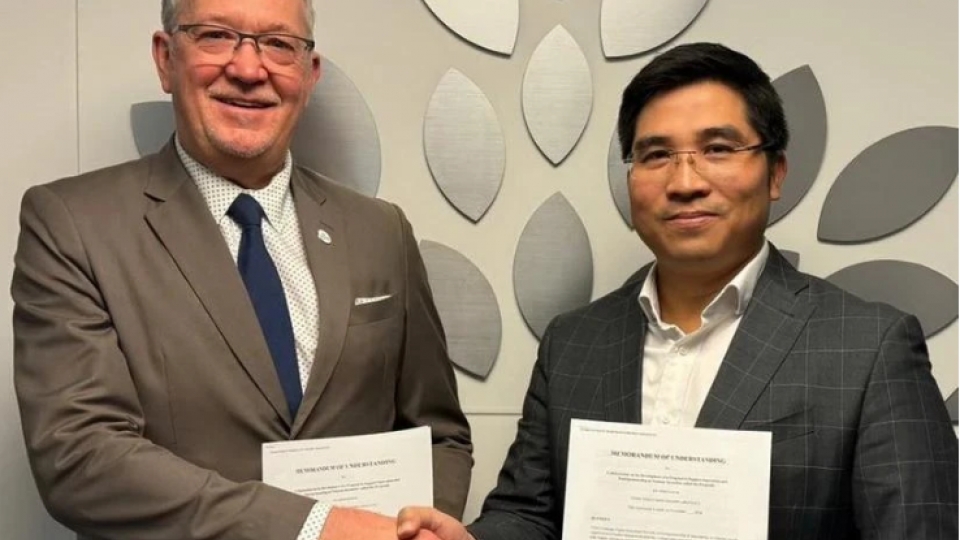
MoU signed to foster Vietnam-Canada cooperation in science, technology
In preparation for cooperation in training human resources in science and technology, a delegation of the Vietnam Higher Education Network of Entrepreneurship & Innovation (VNEI) has recently signed a Memorandum of Understanding (MoU) with the Colleges and Institutes Canada (CICAN) on the occasion of their participation in the Canadian Bureau for International Education Conference.