Politburo maps out vision for Ho Chi Minh City as global city by 2075

VOV.VN - Party General Secretary and State President To Lam has signed Politburo Resolution No. 09- on the construction and development of Ho Chi Minh City in a new era.
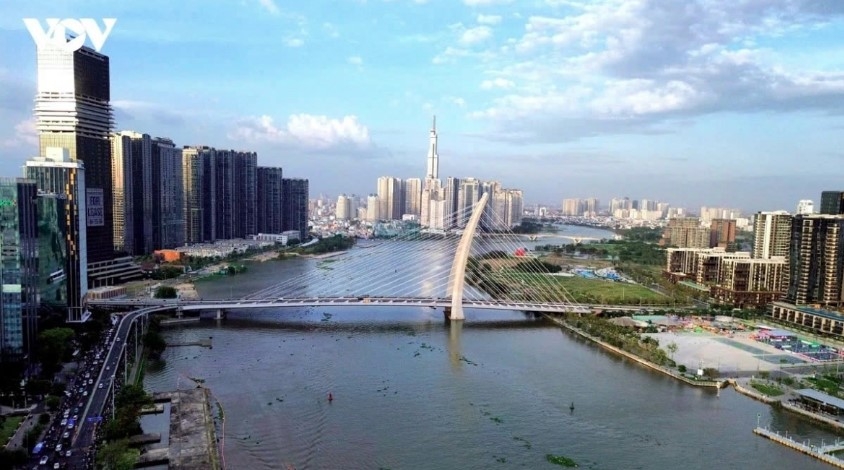
Under the resolution, by 2030 Ho Chi Minh City is envisioned as a civilised, modern, dynamic and innovative metropolis serving as a centre for economics, culture, society, science, technology, innovation, logistics and international integration.
The southern metropolis is expected to play a leading role in Vietnam’s industrialisation and modernization and strengthen its standing in Southeast Asia.
By 2045, it is expected to become a leading Asian hub for economics, culture, science, technology and innovation, while developing into an attractive global destination with a high quality of life and deep international integration.
Looking ahead to 2075, marking 100 years since the liberation of the South and national reunification, Ho Chi Minh City is envisioned as a smart, modern and global city with comprehensive development, green and sustainable growth, a high quality of life and strong resilience to climate change, on par with leading cities worldwide.
The resolution targets minimum annual GRDP growth of 10% during the 2026-2030 period. By 2030, GRDP per capita is projected to reach at least US$14,000, while the digital economy is expected to account for around 40% of GRDP.
The city also aims to complete about 200 kilometres of urban railways, maintain a Human Development Index (HDI) of around 0.9 and largely address flooding, environmental pollution, traffic congestion and drug abuse.
During the 2031-2035 period, annual GRDP growth is set at a minimum of 10%, with GRDP per capita reaching at least US$25,000 and the digital economy accounting for around 60% of GRDP.
For the 2036-2045 period, Ho Chi Minh City will continue targeting minimum annual GRDP growth of 10%, with GRDP per capita reaching at least US$75,000. The city is about to finalize its urban railway network and achieve net-zero emissions.
Between 2046 and 2075, the city aims for minimum annual GRDP growth of 6%, with GRDP per capita hitting at least US$100,000 by 2075. Indicators on social equity, environmental protection and HDI are expected to remain above 0.9.
The resolution outlines eight groups of key tasks and solutions for the city’s development in the new period, focusing on a growth model driven by science, technology, innovation, digital transformation, labour productivity and competitiveness.
Ho Chi Minh City will take the lead in digital transformation, green transition, energy transition, structural transformation and human resource development.
Under the resolution, the metropolis will further develop its marine economy in a modern, multi-sector and sustainable direction, focusing on seaports, logistics, international maritime services, oil and gas, energy, high-quality marine and island tourism, and high-tech aquaculture.
The city is also set to become a national marine economic centre and a regional and international hub for finance and logistics.
Another notable proposal is the drafting and promulgation of a Special Urban Law aimed at creating special institutional mechanisms and a more coherent legal framework to help the city maximize its potential, mobilize resources and support rapid and sustainable development.
The resolution also emphasizes greater decentralization and delegation of authority to Ho Chi Minh City across multiple sectors, while allowing it to proactively pilot new mechanisms and policies under a controlled “sandbox” model.
In addition, Ho Chi Minh City will formulate a master plan with a 100-year vision, develop satellite urban areas featuring modern and smart infrastructure and high levels of digitalization, and establish special administrative-economic units to expand development space and strengthen climate resilience.
The resolution also calls for comprehensive development in culture, education and high-quality human resources, with Ho Chi Minh City positioned as a major national centre for education and training and striving to build an advanced education in Asian before 2030
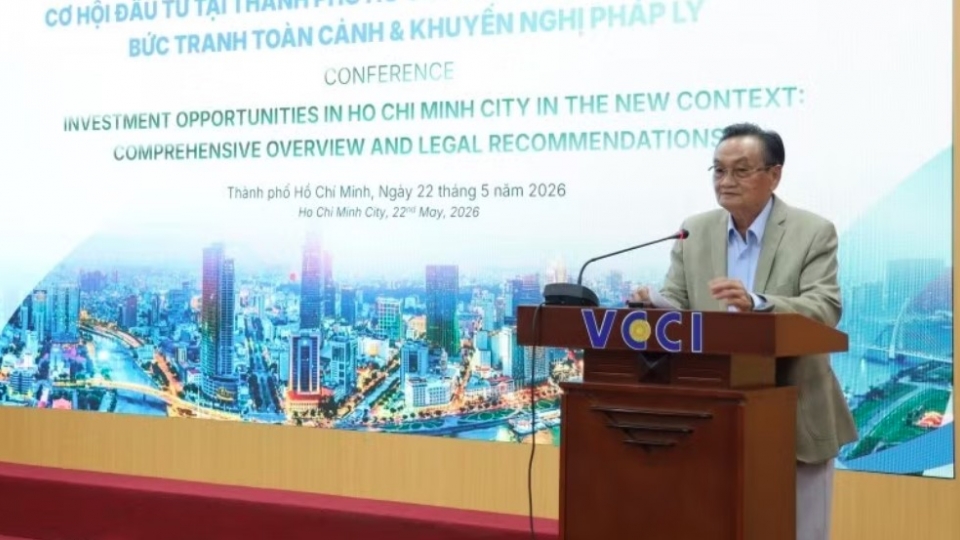
Ho Chi Minh City holds unprecedented strategic advantages for development
VOV.VN - Ho Chi Minh City now holds unprecedented strategic advantages for development as logistics infrastructure, seaports, finance, trade, industry and innovation converge to create new growth momentum, participants heard at a conference held in the city on May 22.

Ho Chi Minh City boosts tourism appeal through culinary, cultural experiences
An increasing number of travel and tourism businesses in Ho Chi Minh City are launching new products that combine culinary experiences with Vietnam’s rich ethnic cultural heritage, in response to evolving traveller preferences and efforts to stimulate tourism demand.