People-centered breakthrough underpins Vietnam’s competitiveness

VOV.VN - During the 2021-2025 period, Vietnam recorded strong economic growth and an improved national standing, with people identified as the decisive factor behind these achievements.

Experts say developing high-quality human resources, valuing talent and empowering younger generations represents a decisive breakthrough shaping the country’s long-term competitiveness.
According to a draft political report for the 14th National Party Congress, Vietnam’s economy posted average annual growth of about 6.3% during 2021-2025, placing the country among the fastest-growing economies in the region and globally.
In 2025 alone, gross domestic product exceeded US$514 billion, with economic growth reaching 8.02%, 1.47 times higher than in 2020, ranking Vietnam 32nd worldwide. GDP per capita stood at around US$5,000, putting the country in the upper-middle-income group and earning positive assessments from several reputable international organizations.
The report identifies people as one of the decisive factors behind these results, noting that Party and State policies on comprehensive human development have become more complete and substantive. Initial progress has been made in identifying, attracting, training and retaining talent. Vietnam’s Human Development Index rose by 14 places to 0.766, a level classified as high human development. Notably, the national happiness index climbed 33 places compared with the start of the term, with Vietnam ranked 46th out of 143 countries.
These outcomes reaffirm the soundness of the renewal path and the Party’s leadership in implementing the Resolution of the 13th National Party Congress, providing a solid foundation for sustained and higher-quality development in the next phase.
People decisive in national development
Vu Thi Phuong Hau, Associate Professor and Head of the Institute of Cultural Development at the Ho Chi Minh National Academy of Politics, said the development of high-quality human resources and the attraction of talent are decisive to national competitiveness and development capacity.
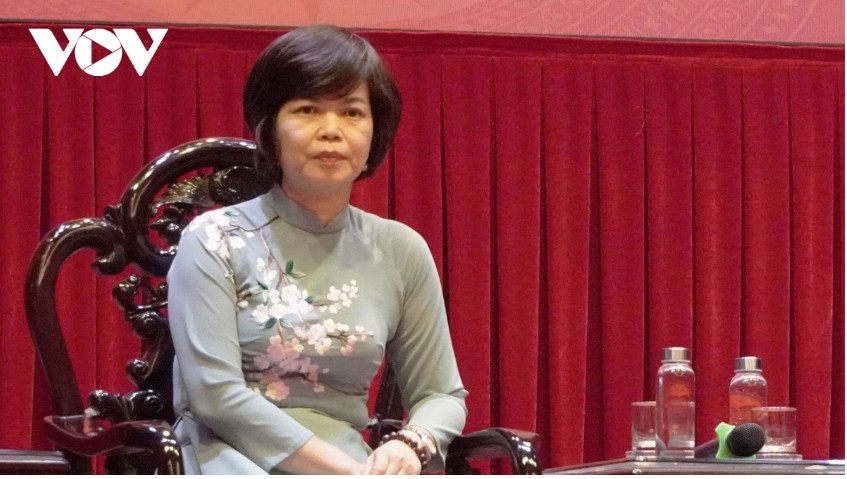
She noted that the documents of the 13th National Party Congress clearly identified three strategic breakthroughs, with human resource development and talent attraction forming a central pillar.
“Attracting and developing high-quality human resources must be regarded as the decisive link and the key to all development breakthroughs, creating strong momentum for national development in the new context,” Hau said.
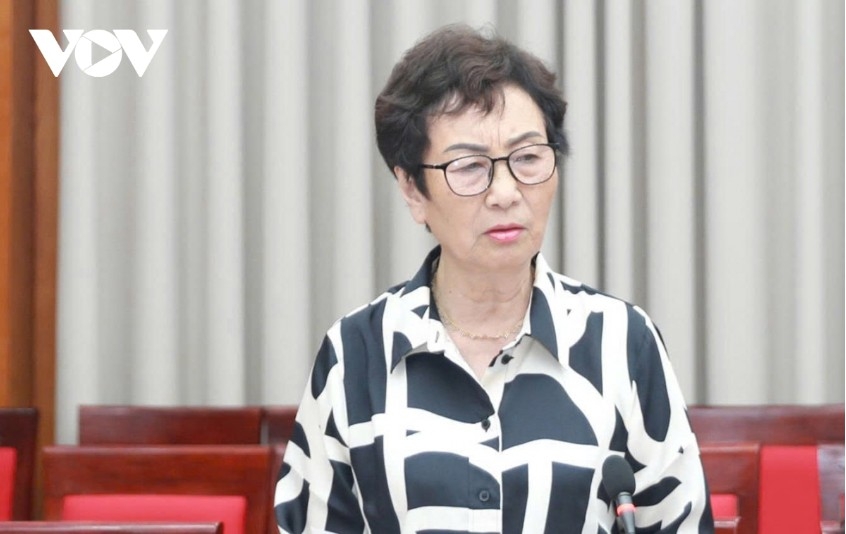
Sharing a similar view, Bui Thi An, Chairwoman of the Hanoi Women Intellectuals Association and vice chairwoman of the Economic Advisory Council of the Vietnam Fatherland Front Committee in Hanoi, said that amid deeper international integration and digital transformation, science, technology and innovation must be treated as core drivers of national development, on par with economic and cultural growth.
“Sustainable development is not possible if we continue to rely on other countries’ technologies,” An said. “Without mastery of knowledge and science and technology, there can be no independent and self-reliant economy. People are decisive; all other factors are merely tools.”
She called for expanding the scope of talent attraction beyond domestic sources to include overseas Vietnamese, foreign experts with strong capabilities and Vietnamese professionals engaged in international cooperation.
“With appropriate mechanisms, clear criteria and an environment that allows talent to contribute fully, Vietnam can master technology and knowledge,” An said. “If we want fast and sustainable progress, we must rely on Vietnamese intellect and Vietnamese people. That is the right path to realizing the aspiration for a prosperous and happy nation.”
From selecting candidates to creating roles for talent
From another perspective, Phan Minh Duc, Associate Professor and Deputy Head of the Department of Science Management and International Cooperation at the Academy of Journalism and Communication, focused on improving human resource quality, attracting talent and placing younger generations at the center of development strategies.
He said the draft Political Report clearly outlines a strategic breakthrough in human resource development, with particular emphasis on high-quality talent and merit-based utilization, reflecting the country’s development needs amid digital transformation, deeper international integration and intensifying global competition.
Effective implementation, however, requires clear identification of the core actors in the human development process, namely Vietnam’s younger generations, Duc said.
By 2030, Generation Z, those born between 1996 and 2009, will be aged 22-35, a prime period for professional development and contribution. This cohort will form the core young workforce, playing a central role in science and technology, innovation and digital transformation strategies.
“Generation Z is not merely a user of technology but an active digital actor and a model digital citizen,” Duc said. “They are at the forefront of spreading digital values and advancing digital government, the digital economy and digital society.”
He also proposed a long-term strategy to prepare Generation Alpha, those born between 2010 and 2025, who will reach adulthood around 2045, when Vietnam aims to become a high-income developed country. Shaping their mindset, capabilities and values should begin in the 2026–2031 term through education reform, digital skills development and innovative learning environments.
Duc said a human resource breakthrough does not lie in expanding mass training, but in shifting toward in-depth education based on a STEAM approach, expanding STEM by integrating social sciences and humanities.
The goal is to cultivate well-rounded citizens with creative capacity, social awareness and core digital skills. “Breakthrough development requires breakthrough cadres-individuals with a constructive mindset, the courage to act and the ability to inspire innovation,” he said.
To achieve this, Vietnam needs to move from the mindset of “selecting people to fit positions” to “creating positions that allow talent to thrive,” while establishing systems to identify, nurture and utilize individuals with creative capacity, open thinking and strong social responsibility.
Performance evaluation mechanisms also need to be revised to prioritize effectiveness, creativity and value creation rather than procedural safety. Officials willing to innovate, take responsibility and lead digital transformation and public governance reform should be empowered, protected and encouraged.
At the same time, Duc stressed the need to strengthen power supervision mechanisms to prevent abuse, without undermining incentives for innovation.
From these perspectives, he concluded that a human resource breakthrough cannot be separated from reforms in cadre management. “If we want breakthrough cadres, they must be nurtured and shaped early, starting from the grassroots,” Duc said.
Only through strategic, systematic and long-term investment in people, he added, can Vietnam build a good public administration, a dynamic political system and a genuinely innovative nation.

PM directs solutions to achieve 2025 economic growth target
The Prime Minister urged the promotion of industrial production in tandem with market restructuring, product diversification, and the development of supply and production chains.