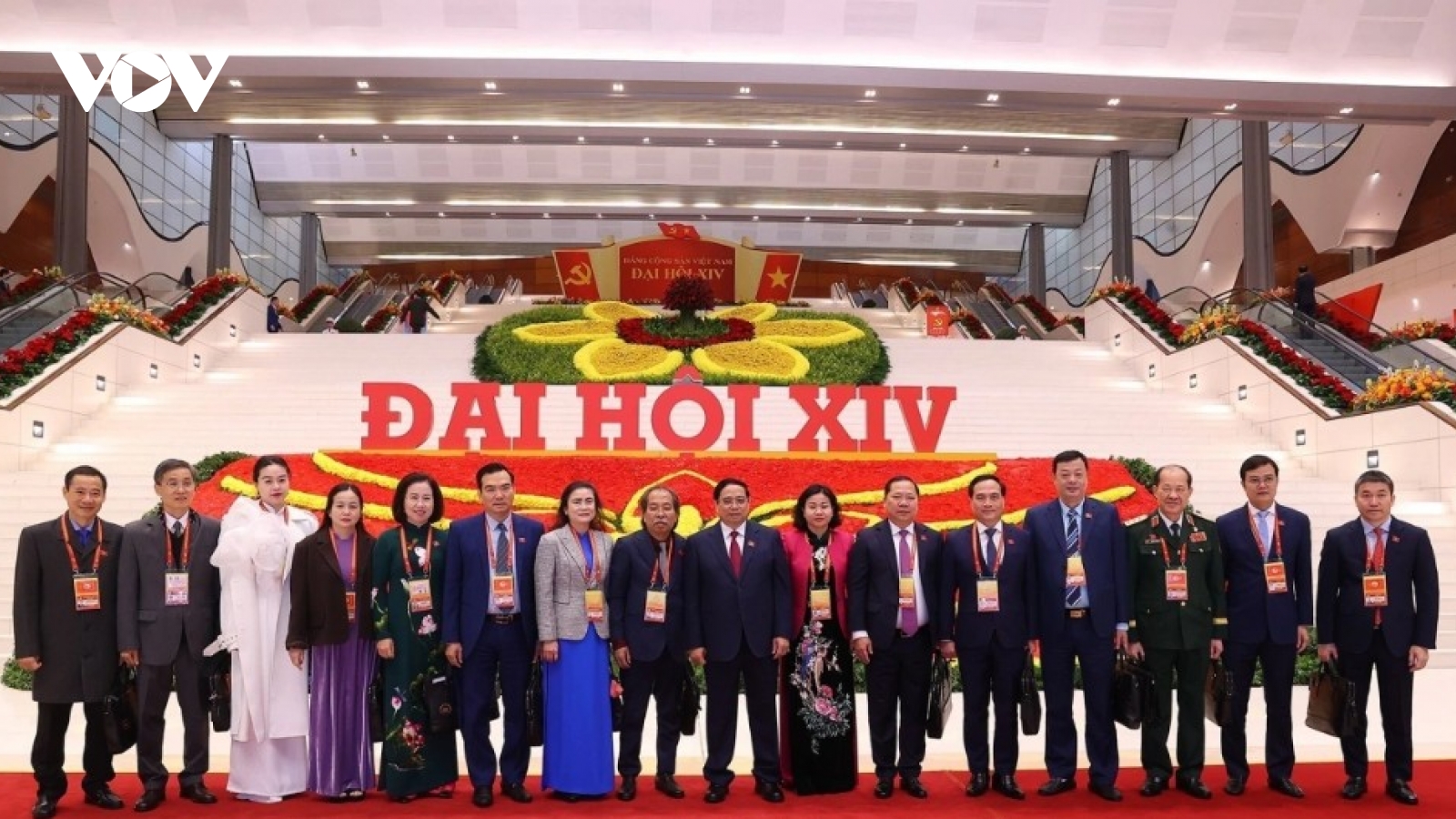
Expectations for strategic breakthroughs in science and technology at 14th Party Congress

VOV.VN - The 14th National Party Congress is expected to adopt breakthrough decisions that open the way for strong and sustainable national development. Science and technology, innovation and digital transformation have been identified as the central drivers of the new growth model.

Politburo member, Chairman of the Central Theoretical Council and President of the Ho Chi Minh National Academy of Politics Nguyen Xuan Thang said that documents submitted to the 14th National Party Congress clearly state that to build comprehensive national strength, particularly economic strength, special attention must be given to establishing a new growth model. In this context, priority is placed on science and technology, with science and technology, innovation and digital transformation identified as the main driving forces.
Only when science and technology, innovation and digital transformation truly become the central drivers of the growth model, he said, can the Vietnamese economy achieve breakthroughs in productivity, quality and competitiveness, thereby laying a solid foundation for rapid and sustainable development in a new era.
“We must adapt to major global shifts such as digital transformation, the green transition and the energy transition, with particular emphasis on science and technology, taking science and technology, innovation and digital transformation as the major drivers. Only then can we improve economic quality and competitiveness,” Thang said.
“Double-digit growth cannot be achieved by relying solely on input resources or low-level comparative advantages such as labour, natural resources and land. These traditional drivers must also be renewed through science and technology and innovation,” he added.
Technology, he emphasized, must be applied to new areas such as the digital economy, green economy and circular economy, as well as to sectors including semiconductors, artificial intelligence and cloud computing. These are fields that can enable Vietnam to achieve growth in line with long-term development goals.
Pham Duc Long, Deputy Minister of Science and Technology, said the Congress has set a target for the digital economy to account for 30% of GDP by 2030. At present, the digital economy contributes only about 14% of GDP, despite Vietnam being assessed as one of the fastest-growing digital economies in Southeast Asia and across Asia.
Achieving this target, Long said, requires viewing the digital economy as a new mode of economic organisation and operation, functioning in a digital environment.
“At present, science and technology, innovation and digital transformation are identified as driving forces. However, science and technology often take many years to generate value and exert an impact on the economy. In this phase, we need to focus on innovation and digital transformation,” he said.
“Therefore, the documents must clearly articulate nationwide innovation linked with comprehensive digital transformation to enhance national strength. We must focus from the outset because double-digit growth is required from 2026. Without innovation and without close linkage to digital transformation, it will be very difficult to achieve double-digit growth in the coming period,” Long stressed.
Bui Thanh Toan, a delegate from the Dak Lak provincial Party organisation, said that when science and technology, innovation and digital transformation are placed in their proper central position within the development strategy, they will provide an important foundation for localities, including Dak Lak, to better tap their potential and advantages. This, he said, would contribute to faster and more sustainable growth and improve overall economic competitiveness.
“I expect Party Congress XIV to create three major breakthroughs. The first is institutional, with strong and specific mechanisms and policies to promote the development of science and technology, innovation and digital transformation,” Toan said.
“This is a very new field that requires creativity but also carries certain risks. The second breakthrough concerns resources, with priority given to allocating resources for technological development, particularly strategic technologies, and for completing digital infrastructure from the central level down to provinces and localities,” he added.
From the perspective of youth movement activities, Bui Duc Giang, Secretary of the Phu Tho provincial Youth Union, said Vietnamese youth are facing unprecedented development opportunities as the country promotes digital transformation, science and technology, and international integration.
Emerging fields such as the digital economy, artificial intelligence, green technologies and innovative start-ups are opening up broad space for young people to assert themselves and contribute to national development, he said.
“This presents both a major opportunity and a huge challenge for the younger generation. In the era of science and technology and digital application, young people will be a very important force, with heavy responsibilities,” Giang said.
“After attending the Congress, we will devise appropriate plans and tasks to meet the needs and aspirations of young people, defining these as core political tasks,” he added.
Nguyen Hai Phu, Secretary of the Tay Ninh Provincial Youth Union, said he is particularly concerned about policies on digital transformation, including how to create the best possible conditions and increase investment in the digital economy and digital technologies. These measures, he said, would help people in general and young people in particular gain faster access to digital technologies, enabling them to move forward with confidence along their chosen paths.
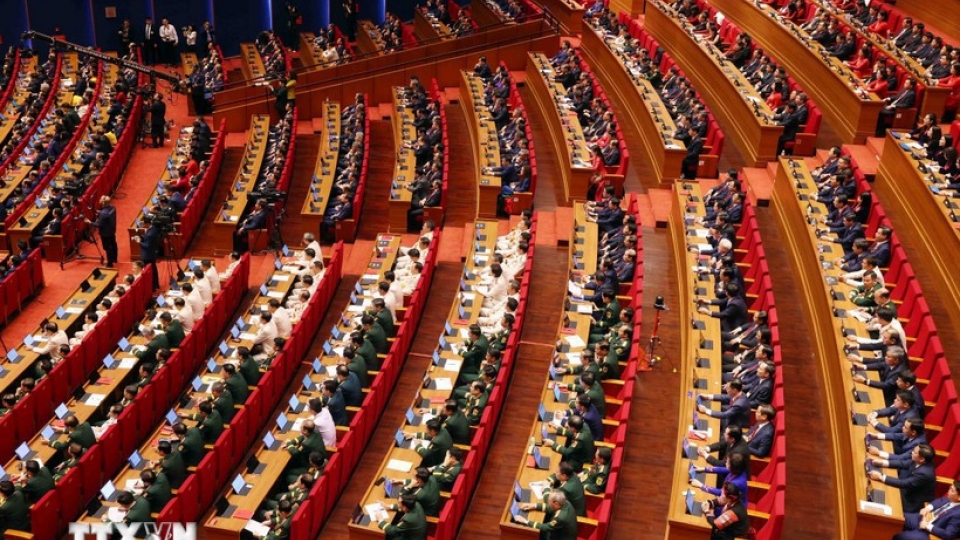
14th National Party Congress: Inspiring growth trajectory of Vietnam
The 14th National Congress of the Communist Party of Vietnam is widely viewed as a historic event, marking a significant turning point in the country’s development process and the continued advancement of its renewal cause.
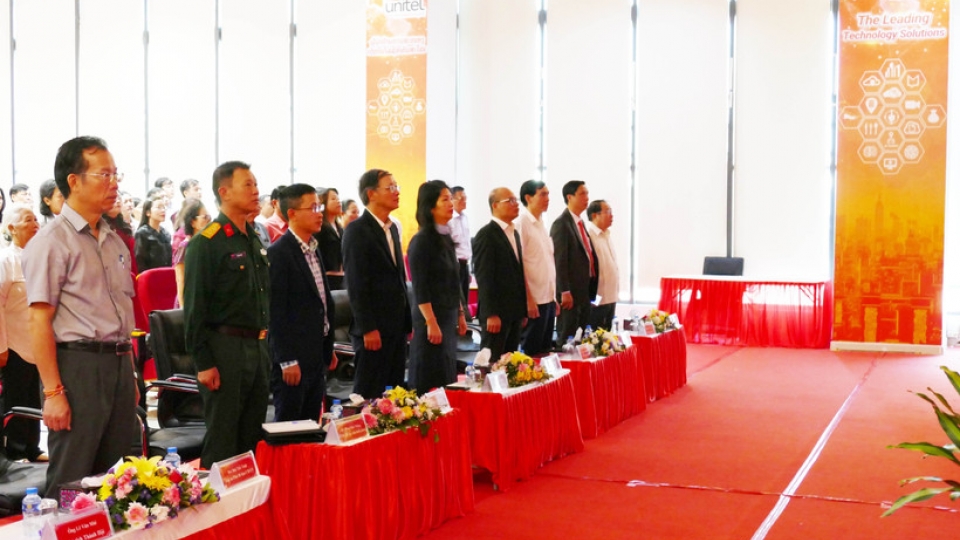
14th National Party Congress: Renewed momentum for OVs to contribute to homeland
The Party Committee of the Vietnamese Embassy and other representative offices in Laos on January 20 organised a live viewing of the opening session of the 14th National Congress of the Communist Party of Vietnam (CPV) in Vientiane.