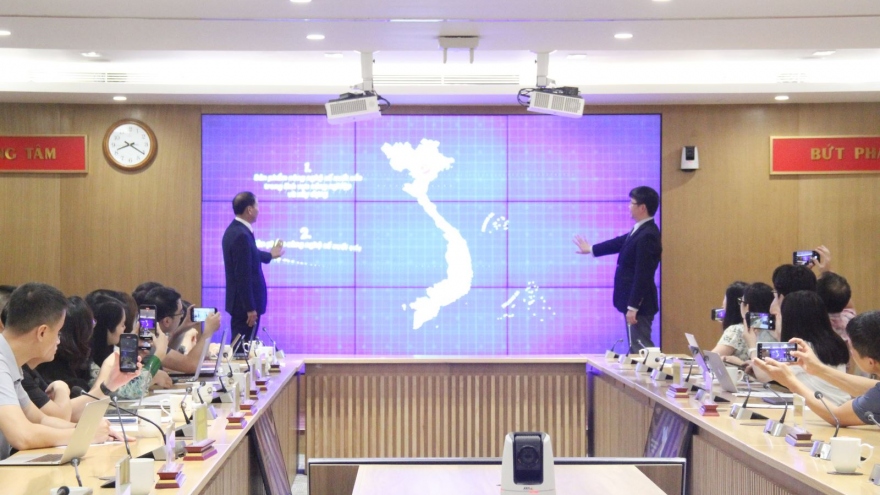
Enabling “Make in Vietnam” products to compete in global market

VOV.VN - 2026 marks a pivotal year for Vietnam as the country begins to realise its aspiration of reaching farther and achieving sustainable development. Along that path, Vietnam needs “Make in Vietnam” products that can make their mark on the international market.
Lack of incentive mechanisms
Vietnam is facing a historic opportunity to pursue its national aspiration of reaching farther. On that journey, opportunities and challenges exist side by side. With a strong spirit of national enterprise, many businesses are working day by day to bring products bearing Vietnamese brands to regional and international markets.
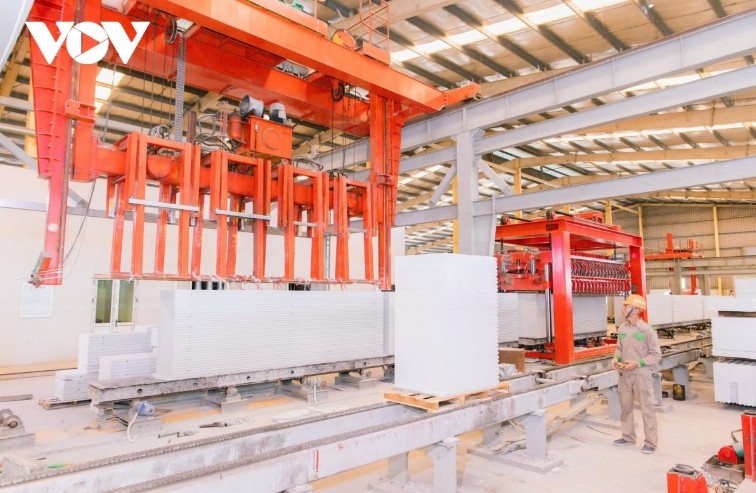
Speaking in the final days of the Year of the Snake 2025, Vu Van Chien, General Director of Song Da Cao Cuong Joint Stock Company, which produces green and environmentally friendly construction materials, said the company is a pioneer in Vietnam in mastering autoclaved aerated concrete technology. Its main products include AAC blocks and ALC panels, widely used in civil and industrial construction, and exported to Southeast Asian markets such as the Philippines and Singapore.
These are entirely “Make in Vietnam” products, researched, designed and manufactured by the enterprise itself, with full mastery of the technology. They meet national standards and are equivalent to international standards applied in Germany and China, as well as several standards of Japan and the US.
However, developing “Make in Vietnam” products is not easy, especially in sectors that require high technology and large capital. A number of obstacles remain, including the lack of strong incentive mechanisms. Investment in technology, research and development, and workforce training is often large, and not every enterprise can meet such requirements.
“In the new era, Vietnamese enterprises are facing both opportunities and challenges to affirm their capabilities and bring their products to international markets. We very much need State support in the form of preferential-interest loans and investment guarantees to expand and upgrade plant capacity, as well as support for R&D, technology transfer and high-quality workforce training. There should be policies to reduce corporate income tax and export tax for enterprises whose ‘Make in Vietnam’ products have already made a mark in the international market. In particular, priority should be given to the use of ‘Make in Vietnam’ products in major projects, helping enterprises secure stable markets for long-term investment,” Chien said.
At present, the number of “Make in Vietnam” products capable of reaching the global market remains limited.
According to Nguyen Thi Minh Giang, Co-founder and General Director of Newing Training and Consulting, more than 97% of Vietnamese enterprises are small and medium-sized. Most face two dead ends: one is “moving sideways,” meaning stagnation; the other is having opportunities for development but lacking the resources to make a breakthrough. For that reason, Vietnamese products face many challenges on their journey to the international market.
Institutions and policies as the launchpad
On the “Make in Vietnam” journey, access to the international market is a major challenge. It requires Vietnamese products to meet high standards and have long-term strategies for branding and distribution channels.
Prof. Dr. Hoang Van Cuong, a member of the National Assembly Committee for Economic and Financial Affairs, said that to have “Make in Vietnam” products reach the global stage, there must be joint efforts and linkages among enterprises to upgrade together and develop together, creating products capable of occupying global markets. Such linkage should not be limited to domestic enterprises, but must also connect domestic producers with foreign investors in Vietnam and international consumers.
Vietnam has signed many cooperation agreements and free trade agreements to facilitate access to the international market. However, such access is still largely driven by enterprises themselves through investment promotion conferences, trade fairs and exhibitions.
“We still do not have programmes and strategies truly focused on promoting and connecting markets to help enterprises bring products to the world. Vietnamese enterprises also lack specific information about international market demand and standards. If these issues are not handled well, it will be difficult for Vietnamese products to reach the global market. There should be leading enterprises playing a guiding role, connecting others and mastering the value chain. The State should focus on providing capital, technology and investment support to those leading enterprises so that they can lead the way for others,” Prof. Cuong said.
“Make in Vietnam” is not the story of a single enterprise, but reflects expectations for a new cooperation model in which businesses can link up, share resources and create common value, said Pham Thi Ngoc Thuy, Director of the Office of the Private Economic Development Research Board (Board IV).
“What enterprises want is not an ‘ask-and-give’ mechanism, but a model of public-private co-creation, where the State and businesses jointly participate in designing and implementing development strategies.
Enterprises expect to work with the State to design strategic programmes, projects and policies with high feasibility, turning national opportunities from paper into action and real results,” she said.
“Make in Vietnam” is a journey to build a new position for Vietnamese enterprises in international markets. It represents the resolve and intellect of Vietnam. To achieve this, institutions and policies must serve as a launchpad, enabling enterprises to think boldly, act decisively, innovate and invest in research and development, master technology and create high-value products. Society also needs to use and trust “Make in Vietnam” products, thereby helping to build a domestic market with strong purchasing power that encourages enterprises to grow.
A new spring is arriving across the country, bringing new momentum, new impetus and a strong aspiration for national prosperity and happiness. The pink of peach blossoms and the green of new buds signal confidence and hope as the nation steps firmly into a new era.
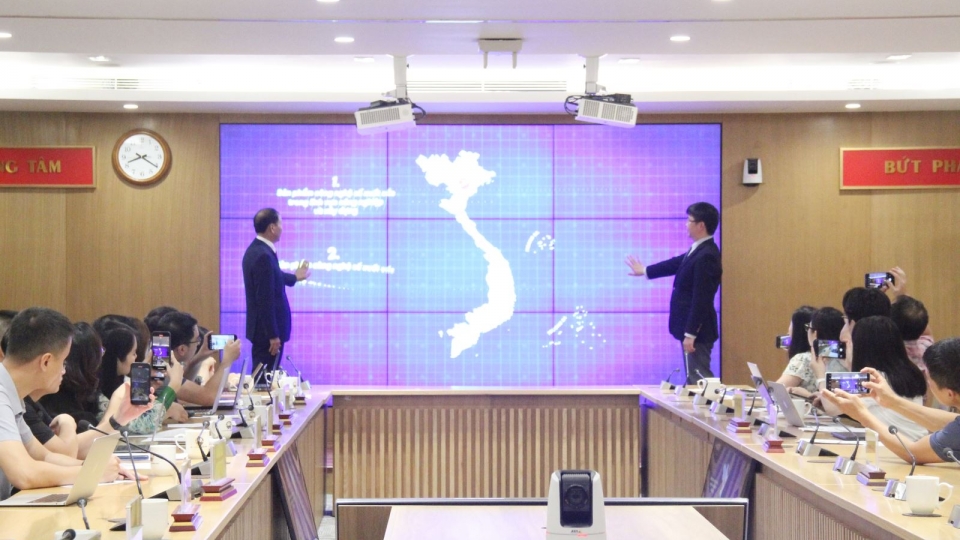
“Make in Vietnam” Digital Technology Product Award 2024 launched
VOV.VN - The "Make in Vietnam" Digital Technology Product Award 2024 was launched in Hanoi on August 22 to honour outstanding digital technological products in multiple fields.