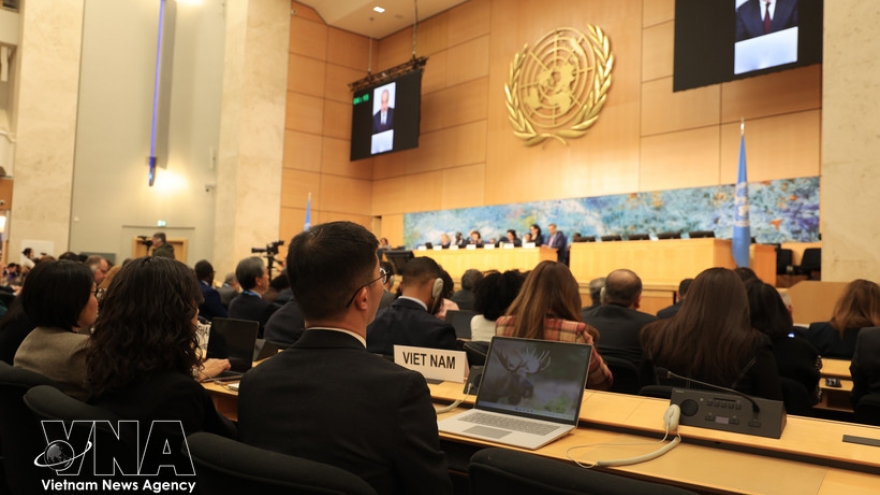
Vietnam’s re-election shows recognition of its human rights promotion efforts

VOV.VN - On October 14, 2025, Vietnam-a member of the United Nations Human Rights Council for the 2023-2025 term-was re-elected by the United Nations General Assembly as a member of the Human Rights Council for the 2026-2028 term with 180 votes, the highest in its electoral group (Asia-Pacific).
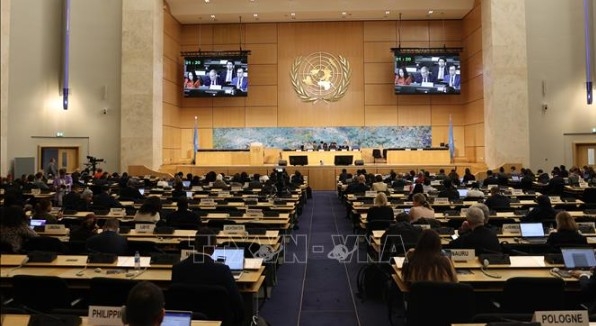
Vietnam’s re-election reflects the objective and positive assessment of the international community of its commitments, efforts and achievements in protecting and promoting human rights. These include efforts to reform the development model, streamline the state apparatus, implement a two-level local government system, and issue and implement policies to improve people’s living conditions, especially in education and healthcare.
These efforts have helped build trust with other countries and led to objective and positive evaluations of Vietnam. This also helps refute distorted allegations about the human rights situation in Vietnam circulated among some political and media circles in the West, contributing to counter attempts by hostile forces to exploit human rights issues for activities aimed at undermining the country.
Affirming Vietnam’s role and position
According to Nguyen Vu Minh, Deputy Director of the Department of International Organizations, Ministry of Foreign Affairs, when running for the 2026-2028 Human Rights Council term, Vietnam put forward 12 voluntary pledges.
During the campaign, Vietnam affirmed that as a member of the Human Rights Council for 2026-2028, it will coordinate with countries, international organisations and relevant stakeholders in the Council’s work, guided by the principle of “Respect and Understanding - Dialogue and Cooperation-All human rights, for all people”, along with eight priority areas identified from the 2023-2025 term. These include: improving the effectiveness of the Human Rights Council while upholding respect for the United Nations Charter and international law in line with the Council’s mandate; human rights in the context of climate change; combating violence and discrimination and strengthening the protection of vulnerable groups; promoting gender equality; human rights in digital transformation; the right to health; the right to work; and the right to access quality education and human rights education.
The implementation of these pledges and priorities will help affirm Vietnam’s role and position as an active and responsible member of the international community.
These commitments, priorities and cooperation principles build on the voluntary commitments of the 2023-2025 term and the outcomes of the fourth cycle of the Universal Periodic Review (UPR IV) for Vietnam in 2025. They also supplement and more clearly reflect the country’s foreign policy line set out at the 14th National Party Congress, strategic resolutions of the Politburo to bring Vietnam into a new era, and Conclusion No. 125 of the Secretariat on accelerating the implementation of Directive 25 dated August 8, 2018, on enhancing and elevating multilateral diplomacy to 2030.
Holding a seat on the Human Rights Council for 2026–2028 therefore carries not only external significance but also domestic importance, contributing to advancing the implementation of major and strategic policies across multiple areas of national development and people’s well-being, including through introducing these policies and mobilising support from international partners.
Contributions to maintaining and reinforcing international solidarity
This is the third time Vietnam has served as a member of the Human Rights Council. During the 2023-2025 term, Vietnam was seen as a responsible and constructive member with many initiatives and effective contributions to the Council’s work, gaining high trust from other countries.
Many of its initiatives responded to shared concerns and contributed to maintaining and promoting international solidarity at a time when multilateralism faces numerous challenges. These include initiatives related to the commemoration of Human Rights Day, climate change and human rights, and access to vaccines, all of which received support and positive assessments from countries.
At the same time, Vietnam seriously implemented its commitments and obligations under international human rights treaties. It finalized the fourth cycle of the Universal Periodic Review, welcomed the UN Special Rapporteur on the right to development on a visit to Vietnam in November 2023, and completed and engaged in constructive dialogue with treaty bodies on national reports regarding several human rights conventions to which Vietnam is a party, including those with complex and sensitive content such as the International Covenant on Civil and Political Rights and the Convention against Torture.
During the 2026-2028 term, Vietnam will participate on the basis of key orientations: proactively and actively contributing to the Council’s work and enhancing its effectiveness, while fully participating in regular and special sessions of the United Nations Human Rights Council.
Vietnam will also carry out tasks assigned to members by the Council, including participating in and chairing working groups reviewing UPR reports of countries; promoting its position through taking on the role of Vice-President of the Human Rights Council in 2028 and other positions where possible, such as membership in the Working Group on the complaints procedure, coordination roles within the Council, or serving as ASEAN coordinator at the Human Rights Council; strengthening links and cooperation between the ASEAN Intergovernmental Commission on Human Rights and the Human Rights Council; and enhancing cooperation with the Council’s mechanisms, including responding fully to communications and considering hosting visits by UN human rights mechanisms in relevant fields.
At the same time, the country will continue to implement and build on 12 initiatives advanced during the 2023–2025 term, including those related to the Universal Declaration of Human Rights, climate change and human rights, access to vaccines, gender equality in implementing the Sustainable Development Goals, empowering children in cyberspace, protecting infrastructure in armed conflict, combating gender-based discrimination, violence and harassment in the workplace, and integrating human rights education into the education system.
Vietnam will proactively study, lead and promote initiatives to make its mark and advance its interests in forms consistent with the rules and practices of the Human Rights Council, while mobilising support from countries and focusing on the eight priority areas consistently pursued during the 2023-2025 term and the 2026-2028 candidacy.
The nation will actively counter distorted allegations regarding democracy and human rights, as well as content that is not in its interest or interferes in internal affairs, in order to protect its national interests.
Regarding issues of common concern and initiatives by other countries, Vietnam will continue to maintain its established positions as reflected in statements and voting at the Human Rights Council, the General Assembly and other multilateral human rights forums and mechanisms, unless new elements directly affect its interests or its relations with major and important partners. In such cases, Vietnam will consider appropriate positions based on the stated objectives and principles.
For country-specific human rights issues, Vietnam will continue its consistent stance of promoting dialogue and cooperation among relevant parties to address shared concerns. It does not support resolutions or documents targeting the human rights situation of a specific country or the politicisation of human rights issues for interference in internal affairs, and will consider its voting position on a case-by-case basis, taking into account its interests, the situation on the ground, views of international and regional organisations, concerned countries, and the stated objectives and principles.
From February 23 to March 31, 2026, the United Nations Human Rights Council held its 61st regular session in Geneva, Switzerland. Vietnam actively participated in the session, delivered statements, contributed to consultations on draft resolutions, and fulfilled its tasks at the first session of its 2026–2028 term as a Council member.
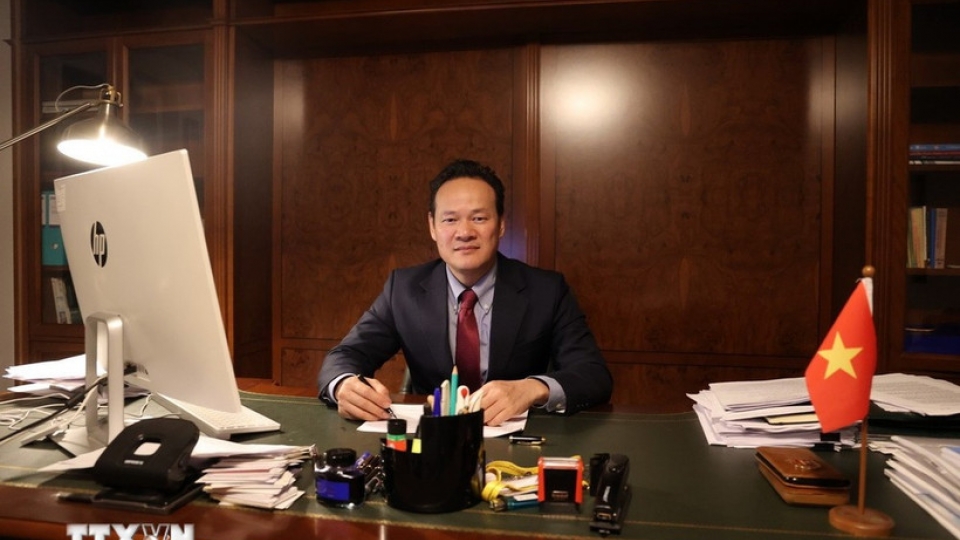
Vietnam continues to ensure all human rights for everyone: ambassador
Vietnam’s message on human rights is consistent: human rights are universal, but their implementation must be practical and closely linked to people’s daily lives, such as the rights to healthcare, education and sustainable employment.
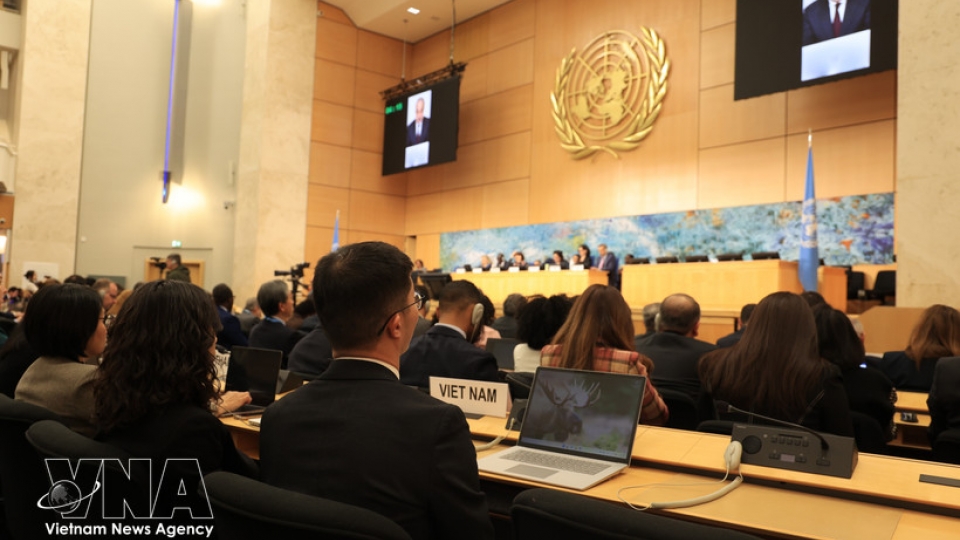
Vietnam affirms responsible role at UN Human Rights Council
Vietnam has reaffirmed its active and responsible role at the 61st regular session of the United Nations Human Rights Council (UNHRC), which concluded in Geneva on March 31 after six weeks of meetings amid increasingly complex global developments.