Vietnam to host third ASEAN Future Forum in Hanoi

VOV.VN - Vietnam is preparing to host the third ASEAN Future Forum (AFF) in Hanoi in mid-June 2026 under the theme “Shaping a shared future together: Peace, prosperity and people-centered development,” Foreign Ministry spokeswoman Pham Thu Hang said at the ministry’s regular press briefing on May 14.
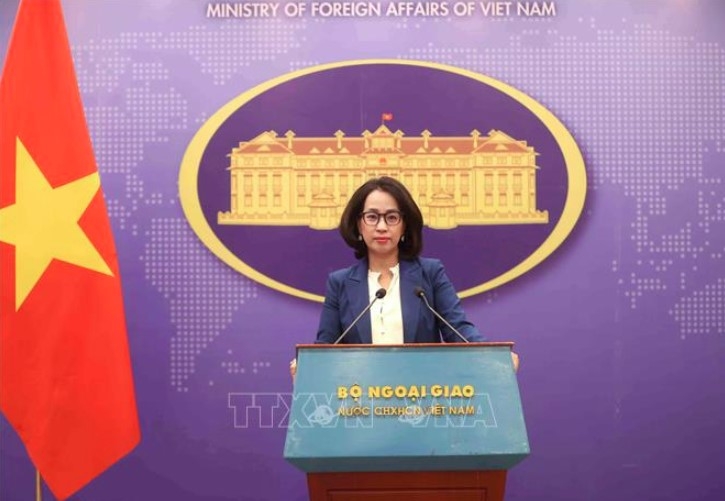
Hang said the ASEAN Future Forum was initiated by Vietnam as an open, inclusive and forward-looking platform bringing together leaders, scholars and businesses to discuss strategic issues facing ASEAN and the wider region.
The 2024 and 2025 forums had received broad support and participation from ASEAN member states and partners, she said, adding that discussions at the 2026 forum are expected to contribute policy recommendations and new perspectives for implementing the ASEAN Community Vision 2045.
The vision aims to build a peaceful, cohesive, prosperous, resilient, sustainable and people-centered ASEAN, the spokesperson added. Vietnam is currently coordinating closely with ASEAN countries and partners to prepare for the event.
At the same press briefing, responding to questions about the outcomes of the 48th ASEAN Summit recently held in Cebu, the Philippines, Hang stated that ASEAN leaders had reached strong consensus on a wide range of immediate and long-term measures across the political-security, economic and socio-cultural pillars.
The summit took place amid increasingly complex global and regional developments, particularly the crisis in the Middle East, she went on.
According to the spokeswoman, ASEAN leaders underlined the need to strengthen unity, resilience and strategic autonomy, while promoting mutual support among member states and improving inter-sectoral coordination, early warning systems and emergency communication mechanisms.
The leaders also emphasized the importance of ensuring regional energy and food security through the effective implementation of cooperation agreements and plans on oil and gas, energy connectivity and food supplies, while boosting consular cooperation and ensuring the safety of ASEAN citizens, particularly migrant workers in affected areas.
ASEAN leaders subsequently adopted a declaration on responding to the Middle East crisis. They also agreed that while addressing immediate challenges, the bloc must continue implementing long-term plans under the ASEAN Community Vision 2045.
These priorities include maintaining regional peace, security and stability through stronger unity, political trust and ASEAN-led mechanisms based on international law and multilateralism.
The bloc will bolster economic, trade and investment cooperation through the upgraded ASEAN Trade in Goods Agreement (ATIGA), the completion of negotiations on the ASEAN Digital Economy Framework Agreement (DEFA), support for small and medium-sized enterprises, infrastructure connectivity, market diversification and expanded economic links with partners through FTAs.
ASEAN leaders also laid stress on the need to keep people at the center of the ASEAN Community by prioritizing social welfare, strengthening people’s skills and capacity, and helping young people adapt to the digital and AI era.
During his first participation in an ASEAN Summit, Prime Minister Le Minh Hung put forward several proposals and initiatives aimed at reinforcing ASEAN unity and resilience to help the bloc respond collectively to current challenges and future shocks.
According to Pham Thu Hang, Vietnam’s proposals placed the highest priority on maintaining peace and stability to support ASEAN’s sustainable development and ensure better lives for ASEAN people. She added that the proposals were reflected in key elements of the declaration on responding to the Middle East crisis.
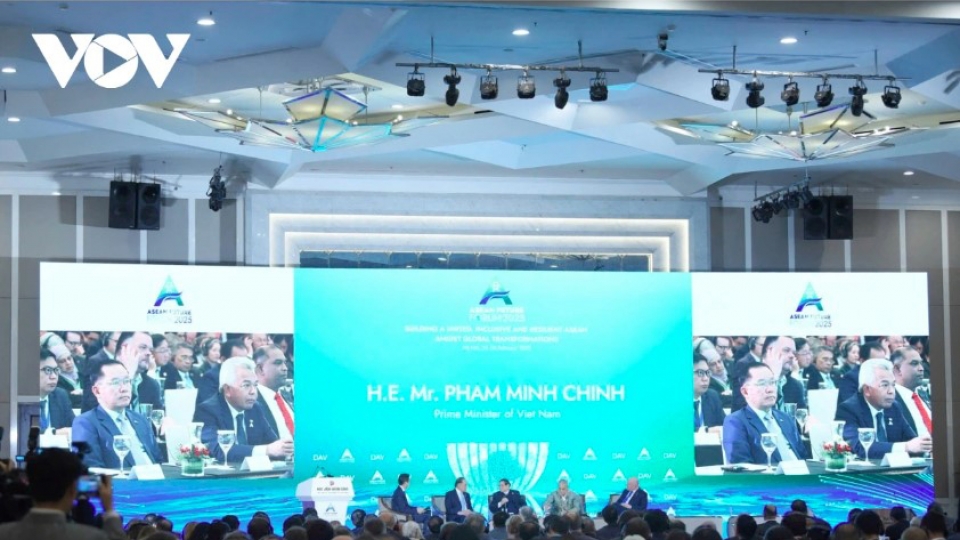
ASEAN Future Forum 2025: Strengthening unity and strategic autonomy
VOV.VN - The high-level plenary session of the ASEAN Future Forum 2025 on February 26 focused on ASEAN’s future, strategic autonomy, economic sustainability, and regional cooperation, with the participation of Vietnamese Prime Minister Pham Minh Chinh, Malaysian Prime Minister Anwar Ibrahim, New Zealand Prime Minister Christopher Luxon, and Timor-Leste President Jose Ramos-Horta.