Vietnam proposes “silver economy”, inclusive digital transformation at UNESCAP 82

VOV.VN - Vietnam has proposed that the United Nations Economic and Social Commission for Asia and the Pacific (UNESCAP) guide the region to focus on three strategies in response to population ageing and global economic pressures.
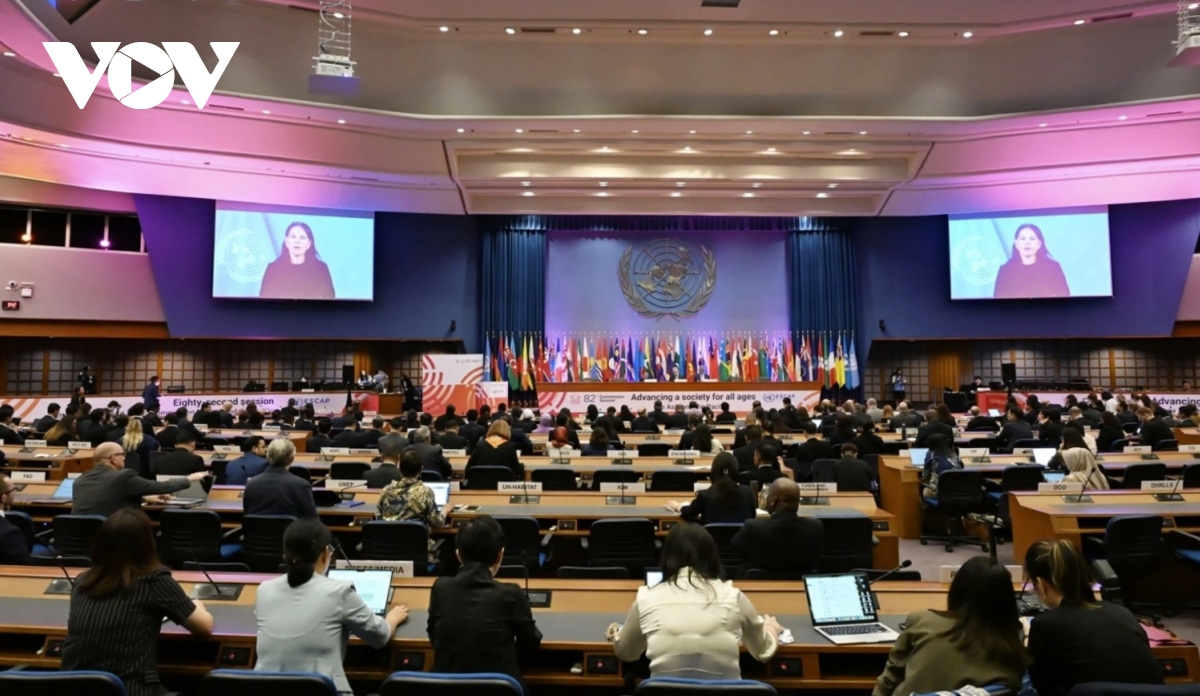
Speaking at a discussion session on April 21 in Bangkok themed “Leaving no one behind: Towards a society for all ages in Asia and the Pacific,” held within the framework of the 82nd session of UNESCAP, Ambassador Pham Viet Hung, Permanent Representative of Vietnam to ESCAP, delivered a message on repositioning the region’s growth model under pressure from population ageing and multiple crises.
As a recent United Nations report warned that growth in Asia and the Pacific could fall to 4% due to inflation and geopolitical instability, the ambassador said placing people at the centre of all policies is key to maintaining the resilience of each country.
Sharing Vietnam’s 40-year renewal process, he said the country has made strong progress, with GDP exceeding US$510 billion, per capita income above US$5,000 and a high Human Development Index (HDI) of 0.766. Vietnam is shifting to a growth model based on science and technology, while maintaining universal health insurance and sustainable social security.
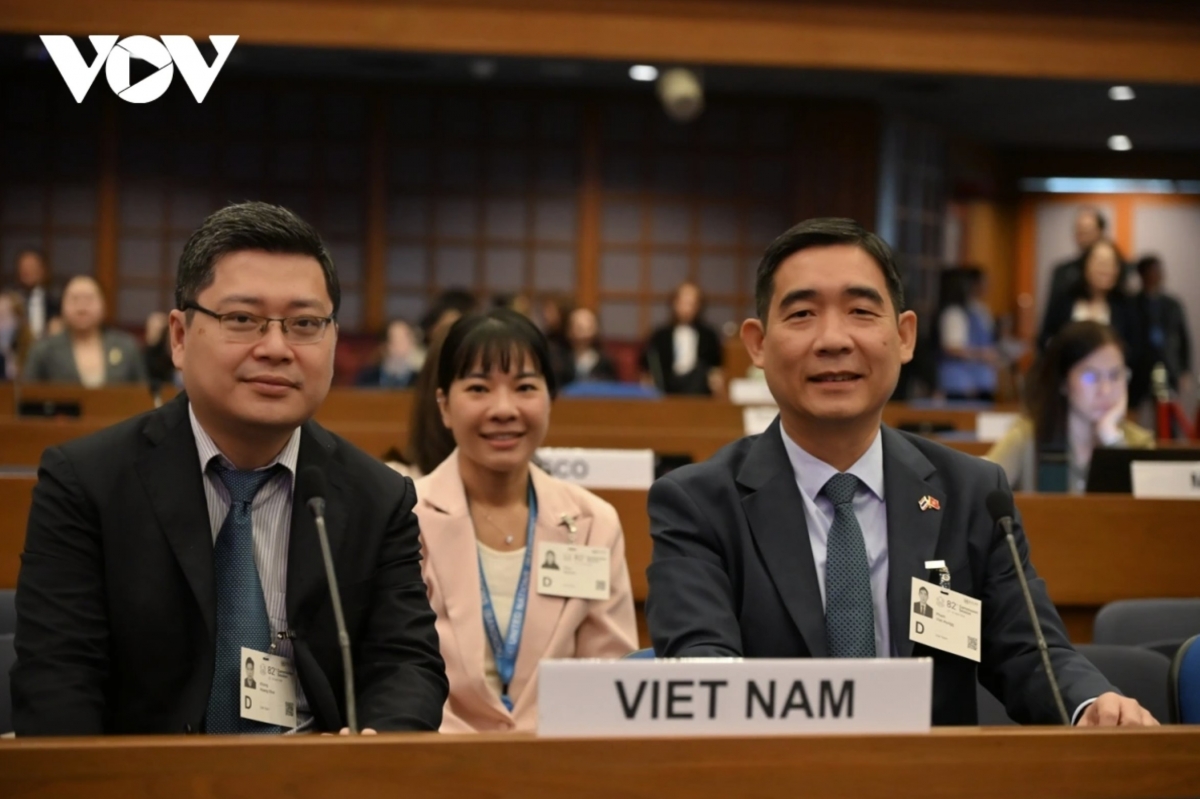
In response to population ageing and global economic pressures, Vietnam proposed that UNESCAP guide the region to focus on three strategies: developing the “silver economy” to turn demographic challenges into a growth driver; designing macroeconomic policies linked to social equity; and ensuring that digital transformation is inclusive.
Ambassador Pham Viet Hung stressed: “We must place science, technology, innovation and digital transformation at the heart of development strategies, while always putting people at the centre. This means narrowing the digital divide and directing technology investment towards strengthening public services, healthcare and lifelong learning for all ages.”
He reaffirmed Vietnam’s consistent support for multilateralism and the central role of the United Nations in global governance, while appreciating UNESCAP’s role in turning global commitments into regional action.
He emphasized that implementing the 2030 Agenda with its 17 Sustainable Development Goals requires strong coordination, and expressed confidence in regional solidarity in building a resilient, inclusive and prosperous Asia-Pacific where no one is left behind.
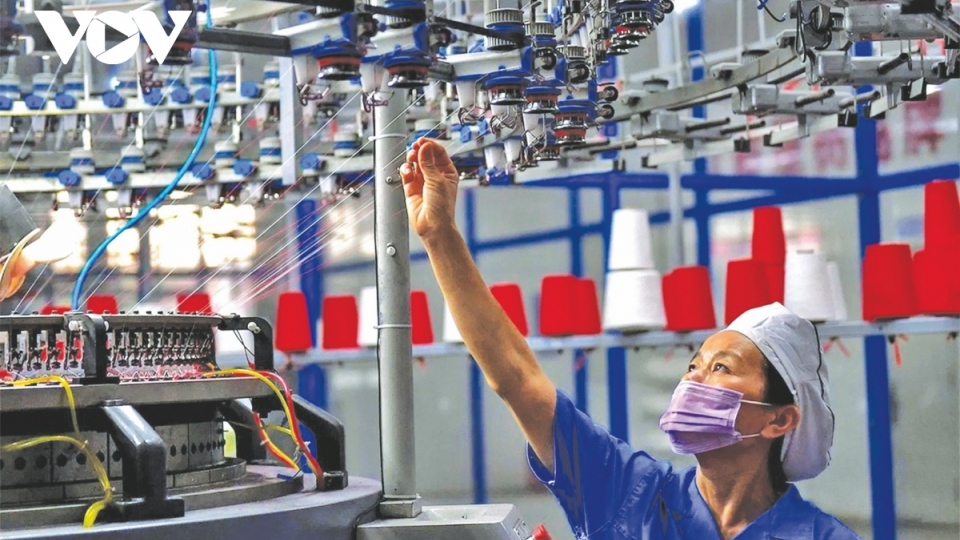
Vietnamese economy sees silver linings despite challenging start to 2023: HSBC
VOV.VN - While external woes will likely continue over the near-term, some recovery in the tourism industry may partially cushion some headwinds faced by the national economy this year, according to HSBC experts.