Vietnam, China agree to strengthen cooperation, better manage differences

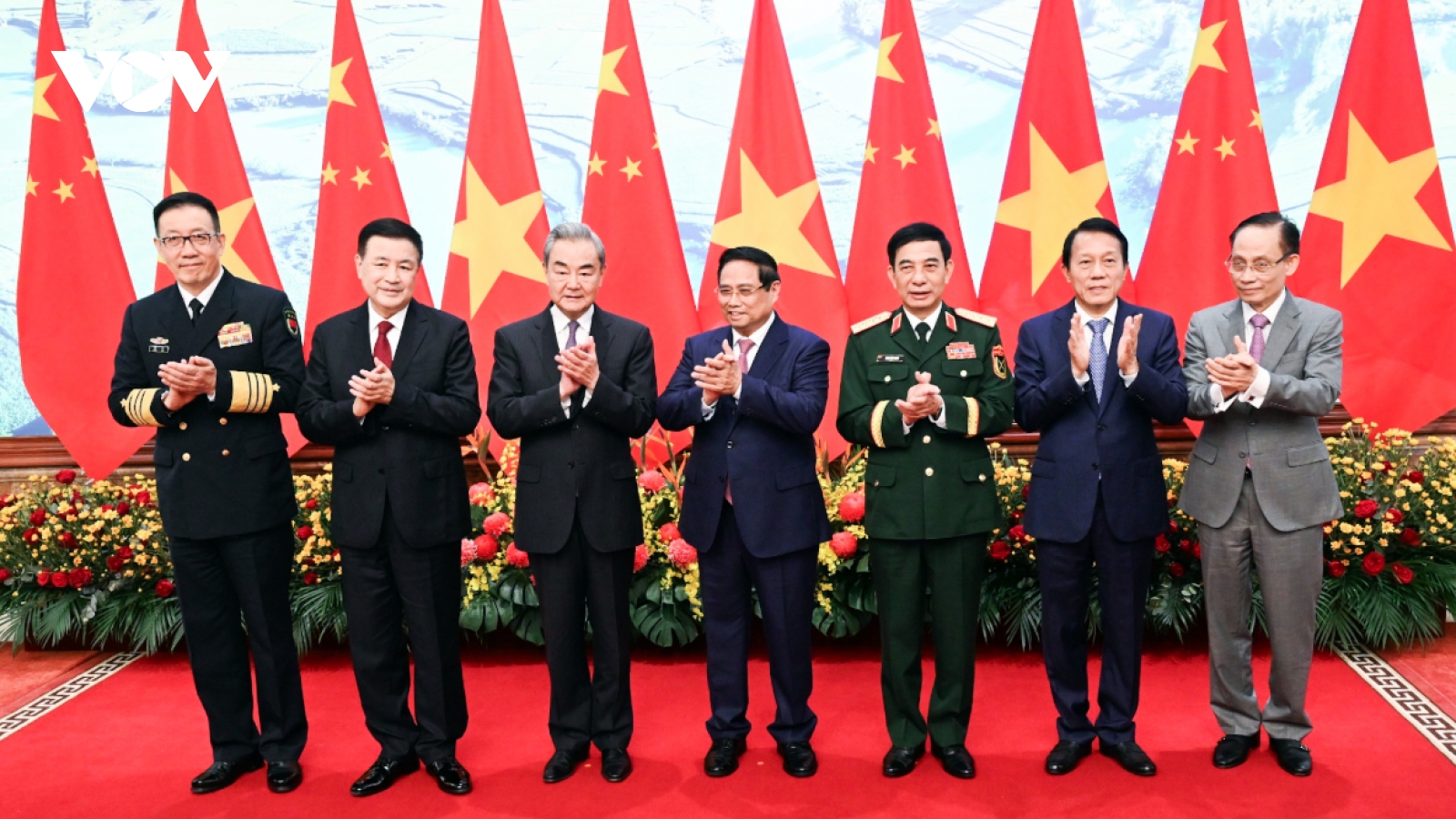
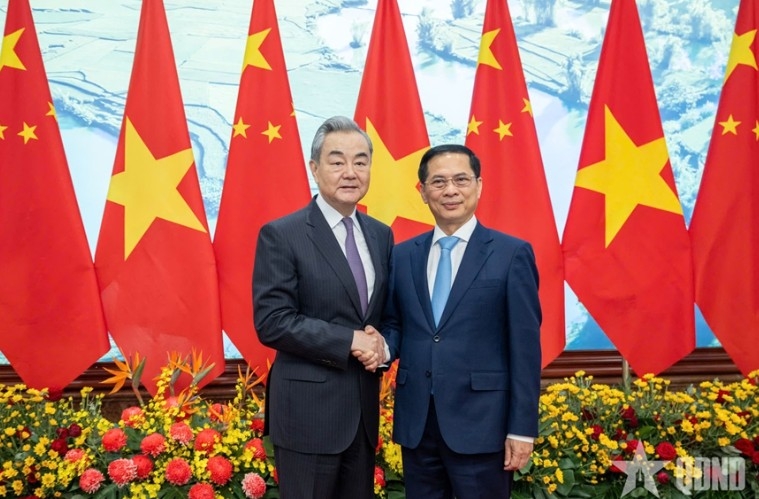
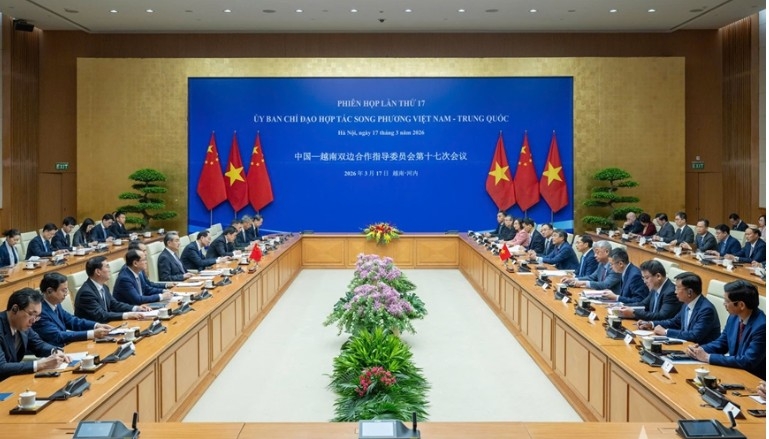
VOV.VN - Deputy Prime Minister Bui Thanh Son and Wang Yi, member of the Political Bureau of the Communist Party of China (CPC) Central Committee, and Foreign Minister of China, co-chaired the 17th meeting of the Vietnam-China Steering Committee for Bilateral Cooperation in Hanoi on March 17.
The meeting was attended by representatives of ministries, agencies, border localities and several provinces and cities of both countries.
In a candid, friendly, open and substantive atmosphere, both sides expressed satisfaction with the positive development of relations between the two Parties and the two countries since the 16th meeting in December 2024. They exchanged views in depth and agreed on a number of measures to effectively realize common perceptions reached by senior leaders, with a view to bringing bilateral ties into a new phase of more effective and substantive development.
The two sides congratulated each other on their respective development achievements and reaffirmed the importance and priority of bilateral relations in each country’s foreign policy. They noted that ties have recorded positive results, including close high-level exchanges and strategic exchanges, more developed cooperation mechanisms, and stronger cooperation across Party, legislative and consultative channels, as well as between ministries and sectors.
Economic, trade, investment and tourism cooperation has grown strongly, with China remaining Vietnam’s largest trading partner, while Vietnam is China’s fourth-largest trading partner, with a wide range of high-value agricultural products.
Strategic connectivity, particularly in railways, has made progress, while local-level cooperation and people-to-people exchanges have continued, alongside closer coordination at multilateral forums.
The two sides also candidly noted shortcomings in cooperation that require further joint efforts to match the potential and strengths of both sides.
On priorities for the time ahead, they consented to continue strengthening strategic trust, increasing exchanges at all levels, boosting the coordinating role of the steering committee, making cooperation more effective in practice, expanding locality-to-locality cooperation and people-to-people exchanges, and boost coordination at multilateral forums.
Deputy Prime Minister Bui Thanh Son proposed that both sides accelerate the establishment of intergovernmental working groups in key areas and give high priority to railway cooperation, including early completion of three standard-gauge railway projects connecting the two countries, alongside concessional loans for Vietnam, technology transfer and human resource training in the railway sector.
He also suggested allowing Vietnam to open additional trade promotion offices in China, further market access for Vietnamese agricultural and aquatic products such as wild-caught seafood and pomelos, early resumption of imports of Vietnamese spiny lobster, and stronger cooperation on standards.
The Deputy PM expressed hope that both sides would increase high-quality and high-tech investment from China into Vietnam, speed up the handling of obstacles in certain aid projects, and bolster cooperation in energy infrastructure and border gates, including increasing electricity imports from China, while ensuring fuel supply, expanding smart border gate models and developing cross-border economic cooperation zones.
He also called for stronger cooperation in agriculture, environment protection, finance and banking, science and technology, healthcare and people-to-people exchanges, including early agreement on and implementation of activities for the Vietnam-China Tourism Cooperation Year 2026-2027 and increased scholarships for Vietnamese students in China.
Agreeing with these proposals, Wang Yi said China attaches importance to mutually beneficial cooperation with Vietnam, is ready to share development opportunities, and supports Vietnam in building an independent and self-reliant economy.
He said China is willing to expand imports of high-quality goods, especially agricultural products, and work towards more balanced trade.
Wang Yi also said China would push forward the three railway projects and expand cooperation in financing, technology and training, while encouraging Chinese enterprises to increase investment in Vietnam.
He proposed stronger cooperation in emerging areas such as high technology, innovation and clean energy, and expressed hope for expanded people-to-people exchanges and cooperation in culture, healthcare and education. He added that China would provide more scholarships for Vietnamese students in diverse forms.
The two sides held frank discussions on maritime issues and concurred to continue seriously implementing high-level common perceptions, better managing and resolving differences, and maintaining peace and stability in the East Sea.
Deputy PM Bui Thanh Son called on both sides to respect each other’s legitimate rights and interests in accordance with international law, particularly the 1982 United Nations Convention on the Law of the Sea (UNCLOS), continue to enhance the role of maritime negotiation mechanisms, and step up efforts to achieve an effective and substantive Code of Conduct in the East Sea (COC).
Vietnam–China cooperation committee meeting deepens substantive bilateral ties
Maintaining the effectiveness of the Vietnam–China Steering Committee for Bilateral Cooperation demonstrates the importance both countries attach to their ties, and contributes to strengthening political trust and developing the partnership in practical manner, said Vietnamese Ambassador to China Pham Thanh Binh.