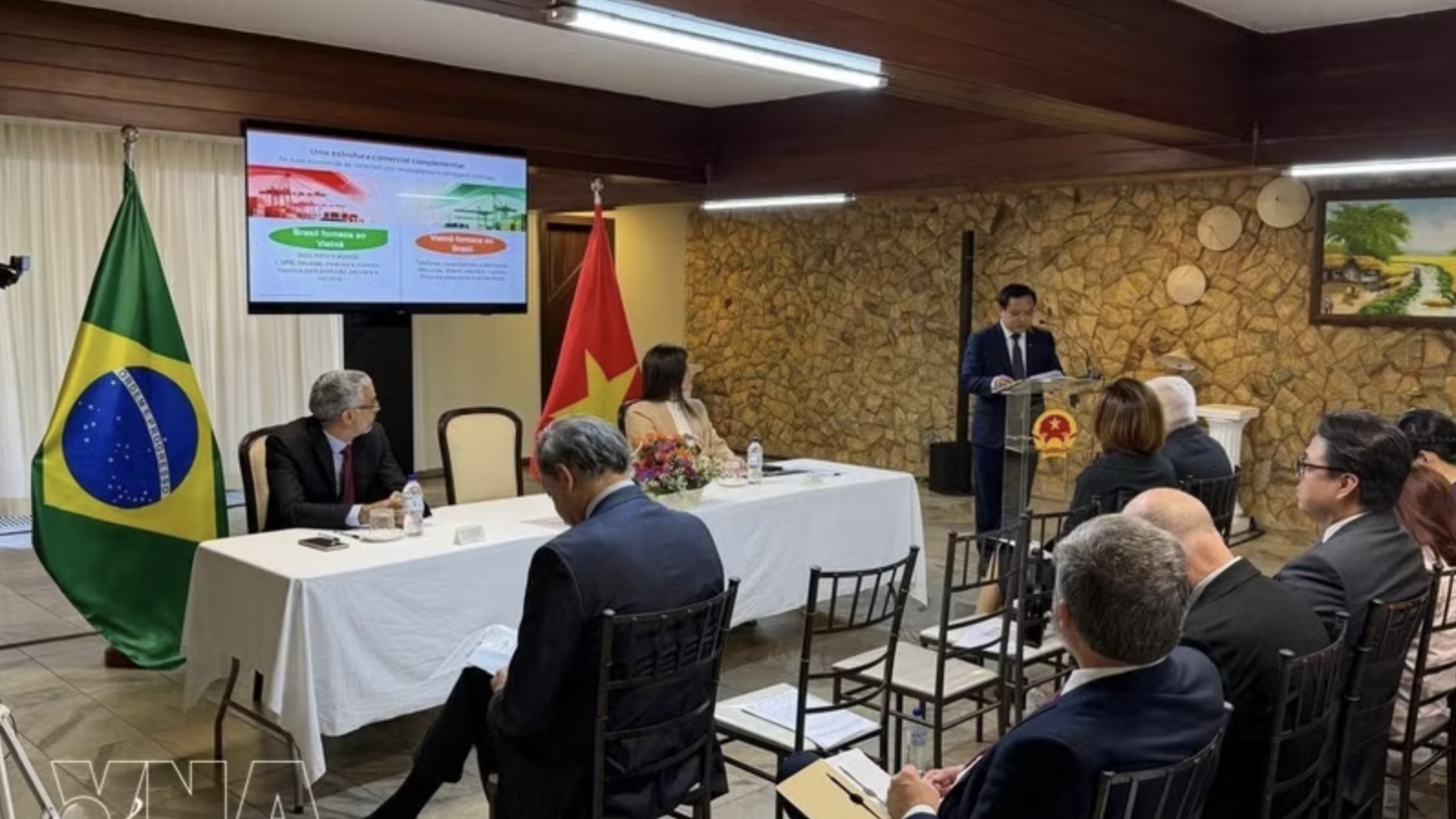
Vietnam, Brazil expand cooperation in semiconductors and digital transformation

VOV.VN - Vietnamese Ambassador to Brazil Bui Van Nghi led a working delegation to Porto Alegre, the capital of Rio Grande do Sul state, from August 17 to 19 to push forward the Vietnam-Brazil Strategic Partnership through local-level cooperation in high-tech industries and education.
The working visit centered on high-potential sectors, including semiconductor manufacturing, artificial intelligence (AI), digital transformation, precision agriculture, and workforce training.
On August 17, Ambassador Nghi met with Leandro Borges Evaldt, State Secretary for Economic and Social Development, presenting Vietnam’s socio-economic milestones and its strategic focus on science, technology, and innovation. Both sides discussed trade connections in microelectronics, agritech, and educational technology. The Ambassador asked state officials to help introduce research centers and investors interested in the Vietnamese market.
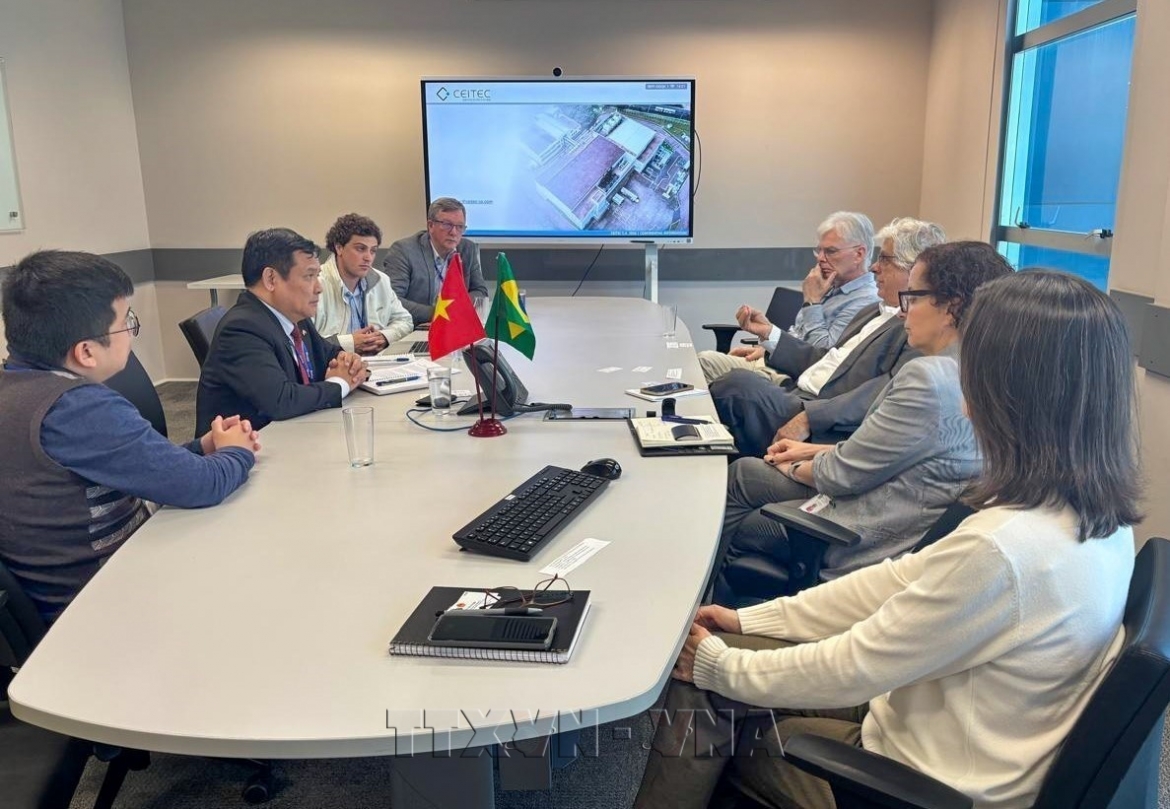
After learning about CEITEC’s research and integrated circuit (IC) design capabilities as well as its role in Brazil’s semiconductor ecosystem, the two sides deliberated on potential collaboration in engineering training, expert exchanges, and research links with Vietnamese universities and tech firms.
On August 18, the working delegation continued to look into the local innovation ecosystem. Drawing on her background at major technology corporations, Secretary for Innovation, Science, and Technology Lisiane Lemos detailed state development policies and the regional startup ecosystem, after which both sides identified key areas for cooperation, including microelectronics, innovative startups, precision farming, and high-tech workforce training.
Earlier that day, the working delegation toured the Caldeira Institute to build direct bridges between Vietnamese tech startups and Brazilian networks in fintech, smart agriculture, and edtech.
To materialize local-level cooperation, Ambassador Bui Van Nghi held official talks with Porto Alegre Vice Mayor Betina Worm, discussing the potential establishment of friendly ties between Porto Alegre and a suitable Vietnamese locality.
Expected areas of collaboration include smart urban planning, administrative digitalization, education, culture, tourism, and sustainable development. Vice Mayor Worm welcomed the initiative, viewing it as a foundation to establish a direct point of contact between city hall and the embassy.
Shortly after, the delegation visited the Interdisciplinary Center for New Technologies in Education at the Federal University of Rio Grande do Sul (UFRGS). Working with Vice Rector Professor Pedro de Almeida Costa, the Ambassador discussed building joint research programs, exchanging faculty and students, and training science and technology personnel. The Ambassador proposed that UFRGS build a long-term cooperation roadmap with Vietnamese universities, moving toward establishing a regular presence in Vietnam to directly support educational programs.
The highlight of the trip took place on the morning of August 19, when the Embassy collaborated with UFRGS to organize the Vietnam-Latin America Forum on Innovation and Digital Transformation. The event gathered UFRGS President Márcia Barbosa, Professor Dante Barone, and representatives from management agencies, research institutes, and technology enterprises in the state.
Opening the forum, Ambassador Bui Van Nghi affirmed that science and technology are top drivers for Vietnam's development, particularly investments in digital infrastructure and the semiconductor industry. On the Brazilian side, President Márcia Barbosa praised the initiative to organize the forum, viewing it as a golden opportunity for local partners to understand Vietnam's needs, thereby connecting scientific research with business practice. Three discussion sessions at the event analyzed Vietnam's role in the Global South, the impact of AI on education and human resource development, and big data applications in precision agriculture.
Ambassador Bui Van Nghi’s working visit to Rio Grande do Sul contributed to expanding Vietnam’s ties with one of Brazil’s key hubs for education, technology, industry, and agriculture. The meetings and forum established additional contacts between local governments, universities, research institutes, and businesses from both nations, laying the groundwork to turn cooperative potential into concrete programs and projects in the period ahead.
Vietnam, Brazil seek ways to promote trade, investment cooperation
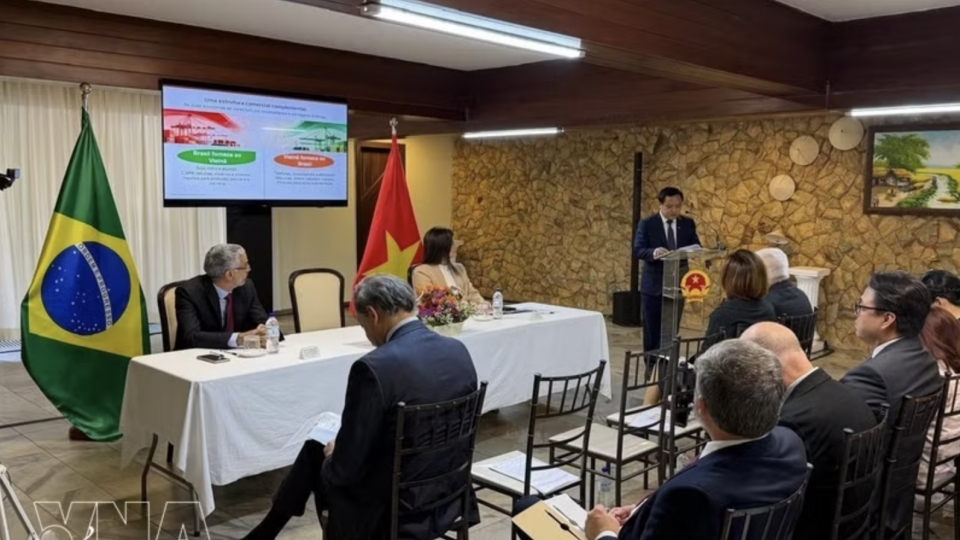
Vietnam and Brazil are stepping up efforts to strengthen bilateral trade and investment as businesses, industry associations and policymakers of both countries explored new market opportunities and ways to expand cooperation at an economic, trade and investment exchange seminar in the Latin American country on July 9.
Vietnam, Brazil seek to step up cooperation in renewable energy
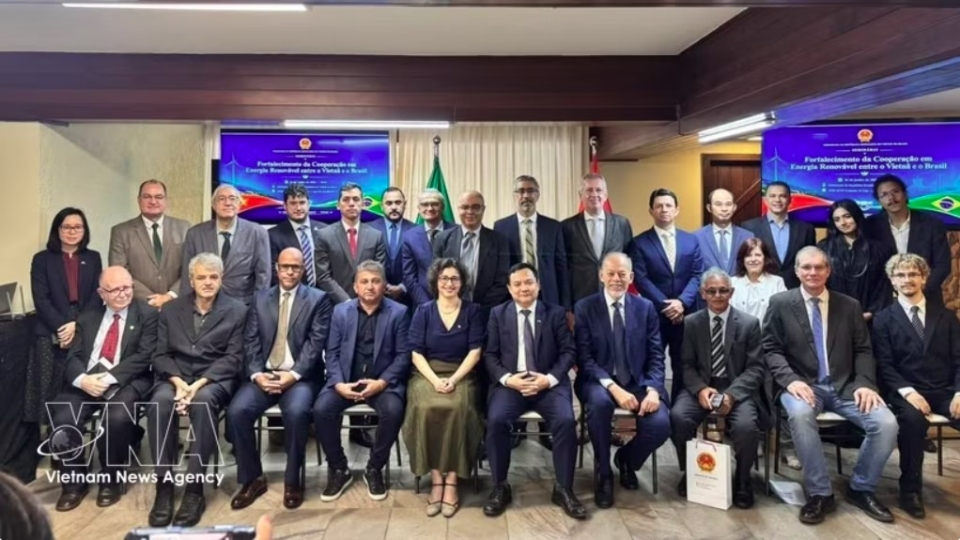
Vietnam and Brazil are seeking to expand cooperation in renewable energy, biofuels and green transition, as policymakers, researchers and businesses from the two countries gathered at a seminar in Brasília on June 17 to explore new partnership opportunities under the Strategic Partnership between the two nations.