


UNCLOS highlighted as legal framework for regional maritime order

VOV.VN - Vietnam emphasized UNCLOS 1982 as the comprehensive legal framework for peaceful settlement of disputes at the opening of the 18th South China Sea International Conference, which opened on October 7 in Hanoi.
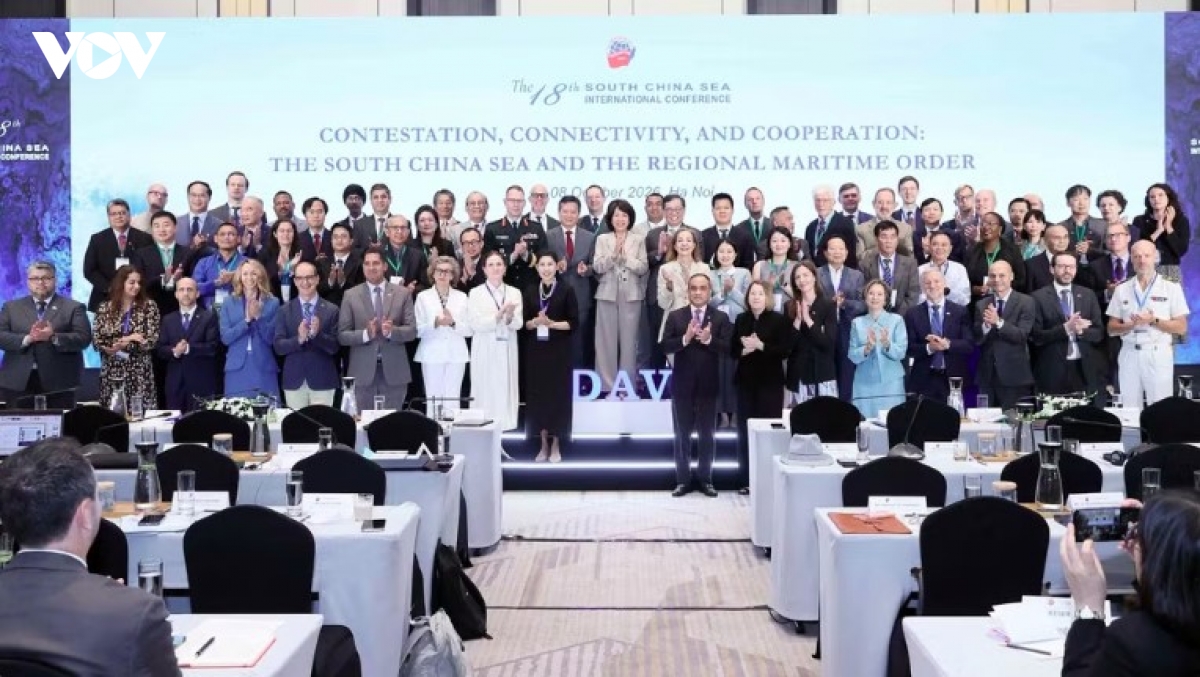
The two-day event themed “Contestation, Connectivity and Cooperation: The South China Sea and the Regional Maritime Order”, organized by the Diplomatic Academy of Vietnam under the Ministry of Foreign Affairs, drew nearly 50 speakers and around 300 policymakers, diplomats, experts, and scholars from over 30 countries and territories.
In his opening remarks, Dr. Nguyen Hung Son, President of the Diplomatic Academy of Vietnam, noted that over the past 17 years, the workshop has established itself as a reputable regional forum addressing maritime issues. He stressed that amid rapid security shifts involving supply chain disruptions, climate change, and technological advances, the three core themes are deeply interconnected: competition reflects divergent sovereignty claims, connectivity underlines the role of maritime routes and infrastructure in regional prosperity, and cooperation is mandatory for risk management, incident prevention, and environmental protection.
Dr. Nguyen Hung Son urged delegates to focus on four major issues: managing competition, protecting connectivity, expanding cooperation amid uncertainty, and building the East Sea into a foundation for a stable regional maritime order. He added that the event is scheduled to release the 4th Annual East Sea Report, alongside welcoming youth leaders and delegates from Pacific island nations.
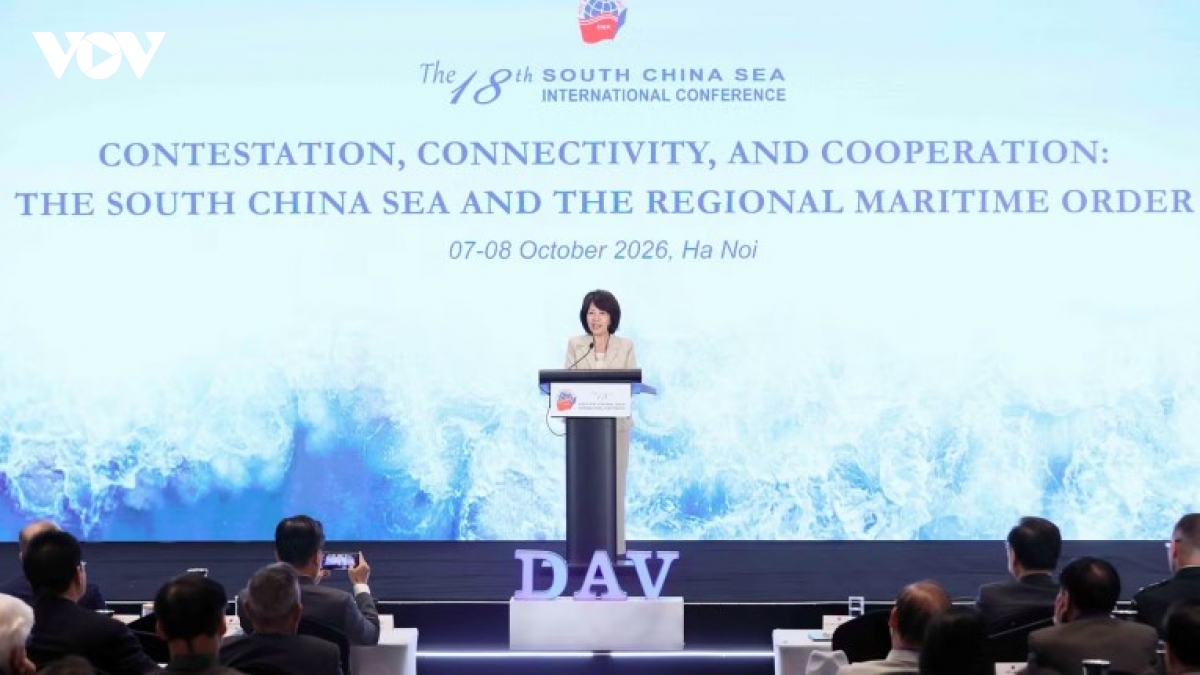
Delivering the keynote address on behalf of the Ministry of Foreign Affairs leadership, Deputy Minister of Foreign Affairs Nguyen Thi Hoang Van stated that global maritime security is undergoing a profound transition from spatial control to the protection of systems, rules, and connectivity.
Highlighting Vietnam's vision of building a strong maritime nation under Resolution 20 issued by the Party Central Committee on July 28, 2026, she outlined four key priorities: upholding UNCLOS 1982 as the foundational legal framework for peaceful dispute resolution, safeguarding international maritime life-lines, strengthening the resilience of critical maritime infrastructure, and managing risks alongside expanding practical cooperation in areas of shared interest.
"The sea has connected our region for centuries. Our responsibility today is to ensure it continues to connect rather than divide us. Vietnam stands ready to work with ASEAN member states and all partners toward a peaceful, stable, resilient, and prosperous maritime region," Deputy Minister Nguyen Thi Hoang Van affirmed.
During the special session for international guests, Philippine Undersecretary for Foreign Affairs and SOM Leader Leo M. Herrera-Lim reaffirmed that UNCLOS 1982 and the 2016 South China Sea Arbitral Award serve as the legal foundation protecting coastal states' sovereign rights and freedom of navigation. Highlighting the upgrade of Vietnam-Philippines relations to an Enhanced Strategic Partnership, he laid stress on efforts to enhance critical maritime infrastructure resilience and finalize an effective Code of Conduct (COC) with ASEAN this year.
Canadian Senior Military Representative for the Indo-Pacific, Lieutenant General Derek A. Macaulay, said that Canada supports peaceful dispute resolution based on UNCLOS 1982 and the application of the DOC to unexpected maritime incidents to reduce collision risks.
Speaking online, Australian Associate Secretary for Foreign Affairs and Trade Michelle Chan reaffirmed the final and binding nature of the 2016 Arbitral Award and highlighted Australia's Southeast Asia Maritime Partnerships Program aimed at bolstering regional maritime security capacity and maritime awareness.
Running through October 8, the workshop features thematic sessions focusing on strategic shifts in the balance of power, the management and modernization of maritime forces and unmanned systems, as well as spillover effects from disruptions at the Strait of Hormuz on regional energy security and maritime transport costs.
Additionally, sessions will clarify maritime cybersecurity risks for ports, shipping, navigation systems, and data platforms, alongside the requirement to protect undersea cables in the digital environment. The second day's sessions will delve into the role of UNCLOS 1982 in ensuring maritime legitimacy; advancing ASEAN-led mechanisms to reinforce the COC negotiation process; and implementing the Agreement under the United Nations Convention on the Law of the Sea on the Conservation and Sustainable Use of Marine Biological Diversity of Areas beyond National Jurisdiction (BBNJ Agreement), also known as the High Seas Treaty, to conserve biodiversity beyond national jurisdiction and enhance the resilience of ports and coastal communities.
The event also covers a discussion session for young leaders proposing practical policy recommendations toward a maritime order that prioritizes sustainable cooperation.
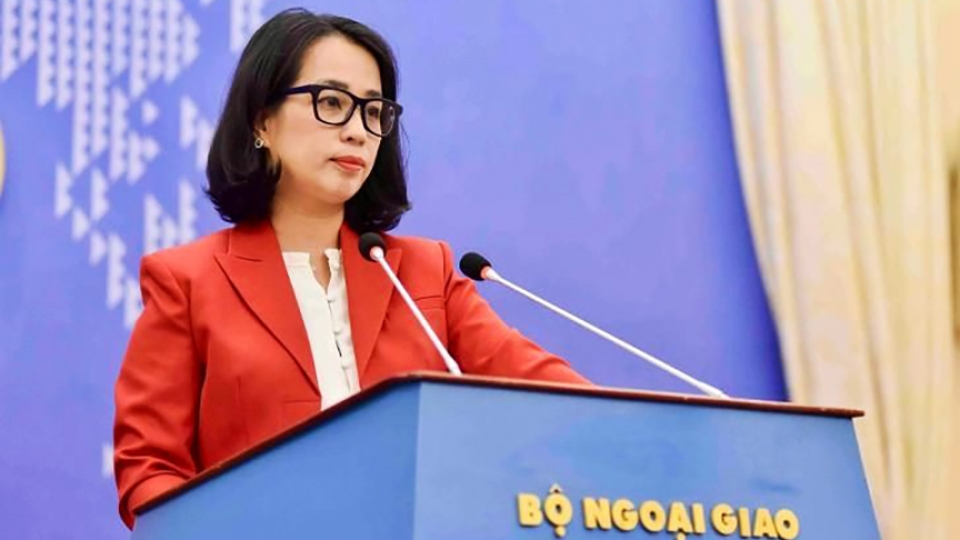
Vietnam reiterates UNCLOS 1982 as sole legal basis for maritime rights
VOV.VN - Vietnam has reaffirmed that the 1982 United Nations Convention on the Law of the Sea (UNCLOS) is the sole legal basis that comprehensively and fully defines the scope of maritime entitlements.
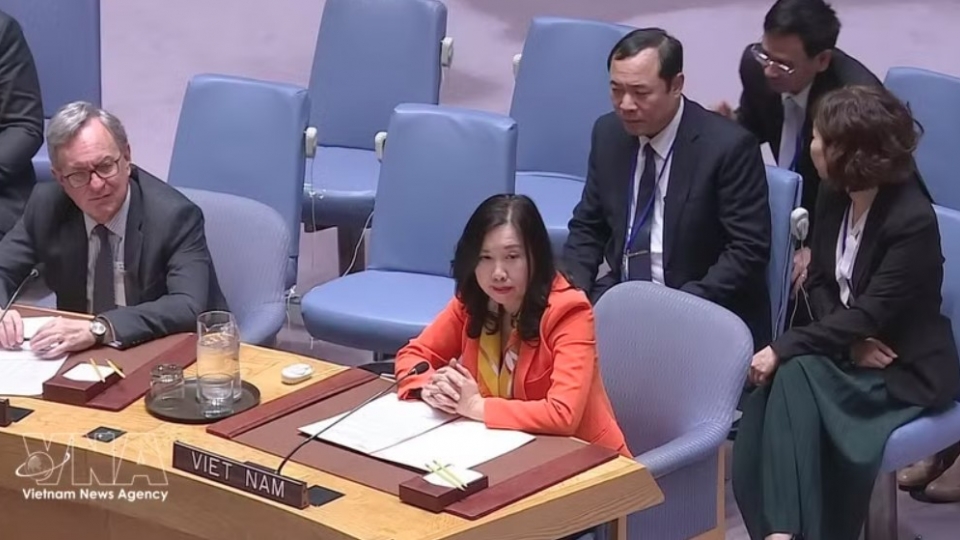
Vietnam underscores UNCLOS 1982 at UN Security Council High-Level Debate
Vietnamese Deputy Foreign Minister Le Thi Thu Hang attended and delivered a speech at the United Nations Security Council (UNSC)’s High-Level Open Debate on “The Safety and Protection of Waterways in the Maritime Domain” on April 27 afternoon (New York time).


