


Turning high-level commitments into practical benefits for Vietnamese and Lao people

VOV.VN -Vilay Lakhamphong, Politburo member and Permanent Member of the Secretariat of the Lao People's Revolutionary Party (LPRP) Central Committee, led a high-ranking Lao delegation on an official visit to Vietnam from October 14 to 16, 2026 at the invitation of Tran Cam Tu, Politburo member and Permanent Member of the Secretariat of the Communist Party of Vietnam (CPV) Central Committee.
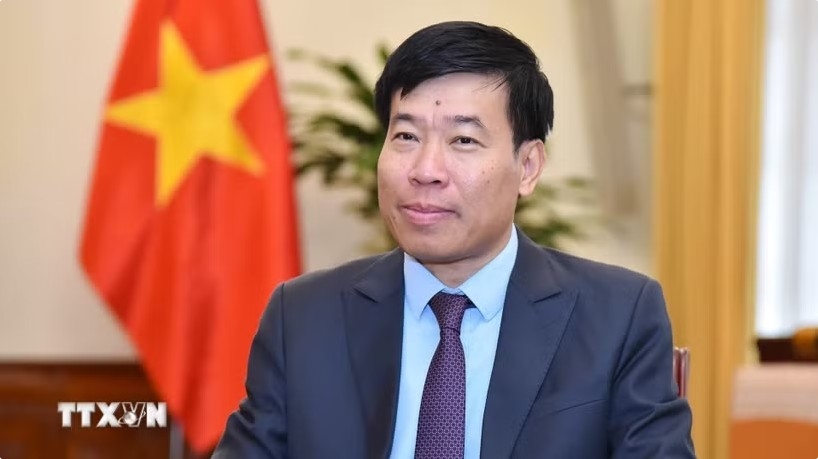
Regarding the outcomes of the visit with the press, Deputy Foreign Minister Nguyen Manh Cuong stated that the visit held profound political significance, demonstrating the special priority and high regard attached by the Lao Party and State to Vietnam-Laos relations.
This marked the first overseas trip of Vilay Lakhamphong in his capacity as Permanent Member of the Secretariat, taking place as both parties implement the resolutions of the 14th National Congress of the Communist Party of Vietnam and the 12th National Congress of the Lao People's Revolutionary Party.
Choosing Vietnam as his first destination reaffirmed the top priority and long-term strategic significance of Vietnam-Laos relations in each country's foreign policy, while highlighting the decisive guiding role of inter-party relations in overall bilateral ties.
Discussions between the two Permanent Members focused on major orientations for the new term and experiences in party building, political system governance, and cadre work, which serve foundational roles for each nation's development.
Through the visit, both sides affirmed their determination to develop the great friendship, special solidarity, comprehensive cooperation, and strategic cohesion between Vietnam and Laos in a more substantive and sustainable manner, for the benefit of both nations.
During the visit, Vilay Lakhamphong held talks with Tran Cam Tu; met with General Secretary of the Communist Party of Vietnam Central Committee and President To Lam, Prime Minister Le Minh Hung, and National Assembly President Tran Thanh Man; met with Minister of Public Security Luong Tam Quang and Secretary of the Hanoi Party Committee Tran Duc Thang; and paid a working visit to Bac Ninh city.
The meetings took place in an atmosphere of friendship, trust, and frankness, during which both sides agreed to continue consolidating special political relations and set out priority cooperation areas for the coming period.
Politically, both sides emphasized that high-level agreements between the two parties serve as the ultimate political guidance for cooperation, agreeing to maintain high-level delegations, promote cooperation mechanisms across party, state, and parliamentary channels, and step up experience-sharing in party building and anti-corruption.
On this occasion, the two Permanent Members witnessed the handover ceremony of a cooperation document on digital transformation between the two Party Central Offices.
Economically, both sides agreed to prioritize strategic connectivity projects in transportation, logistics, energy, and the digital economy, remove obstacles for businesses, and strive to soon bring bilateral trade turnover to US$5 billion.
Both sides reaffirmed human resource development as a long-term strategic cooperation area, focusing on strategic-level and young cadres as well as the training quality of Lao students in Vietnam, with Vietnam standing ready to send experts and lecturers to help enhance the capacity of Lao leadership and management personnel.
Both sides agreed to boost locality-to-locality cooperation, particularly among border provinces, linking economic development with national defence and security, while Vietnam sincerely thanked Laos for actively supporting the search and repatriation of remains of Vietnamese volunteer soldiers and experts who sacrificed their lives in Laos.
They consented to closely coordinate in successfully organizing the "Vietnam-Laos Year of Solidarity and Friendship 2027" to mark the 65th anniversary of diplomatic relations and the 50th anniversary of the signing of the Treaty of Friendship and Cooperation.
Regarding future orientations, Deputy Foreign Minister Nguyen Manh Cuong emphasized that the paramount task is to effectively implement shared perceptions and high-level agreements through five key directions.
First, greater emphasis must be placed on implementation, ensuring that each high-level agreement is translated into concrete actions with clear responsibilities and measurable outcomes.
Second, the guiding role of inter-party relations must be promoted, closely linked with state, parliamentary, and people-to-people channels, while effectively implementing the newly exchanged digital transformation document.
Third, clear breakthroughs must be created to make economic cooperation commensurate with special political relations, focusing on accelerating strategic connectivity projects, improving the investment and business environment, and gradually materializing trade targets.
Fourth, the quality of educational cooperation must be elevated to meet Laos's development needs, promoting the young leadership training program among the three parties of Vietnam, Laos, and Cambodia.
Fifth, local cooperation must be intensified, especially among border provinces, alongside close coordination at the United Nations, ASEAN, and Mekong sub-regional cooperation mechanisms for regional peace, stability, and development.
Regarding the Ministry of Foreign Affairs, Deputy Minister Nguyen Manh Cuong affirmed that the ministry will closely coordinate with party agencies, ministries, sectors, and localities to monitor and urge the implementation of high-level agreements, while actively participating in preparations for the "Vietnam-Laos Year of Solidarity and Friendship 2027" to ensure substantive, profound, and far-reaching commemorative activities, particularly for the younger generation.
He expressed confidence that with the high political determination of leadership from both parties and countries, the agreed orientations will soon be materialized, ensuring that the special Vietnam-Laos relationship serves as an invaluable asset of both parties and nations and a solid foundation for each country's development.
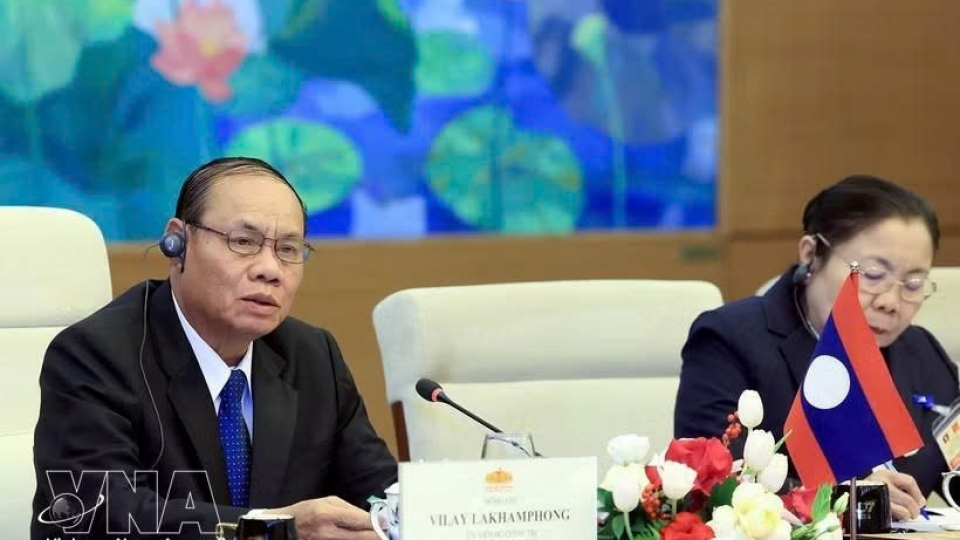
Laos’ senior Party official concludes official visit to Vietnam
Politburo member and Standing Member of the Secretariat of the Lao People’s Revolutionary Party (LPRP) Central Committee Vilay Lakhamphong left Hanoi on October 16, concluding his three-day official visit to Vietnam at the invitation of his Vietnamese counterpart Tran Cam Tu.
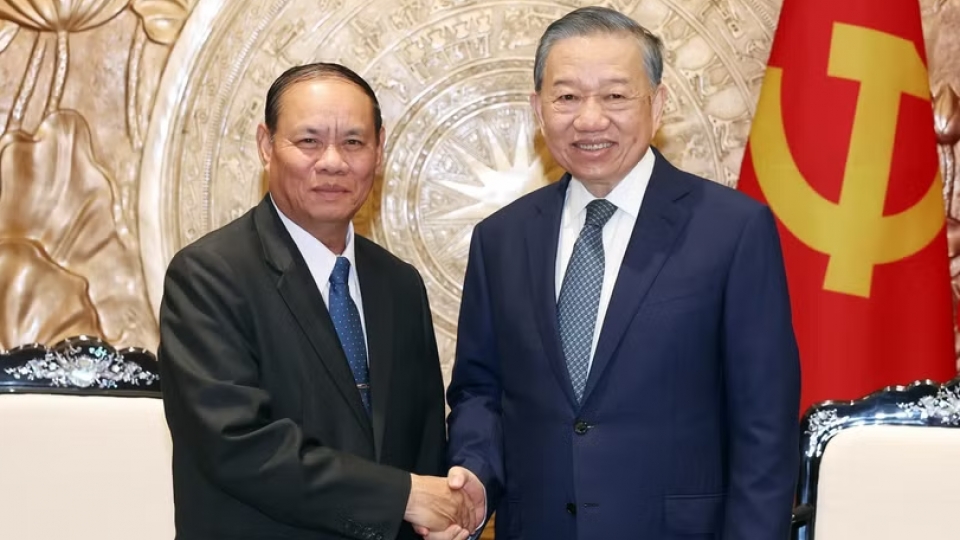
Vietnam gives highest priority to developing relations with Laos: Top leader
General Secretary of the Communist Party of Vietnam (CPV) Central Committee and President To Lam received Vilay Lakhamphong, Politburo Member and Standing Member of the Secretariat of the Lao People’s Revolutionary Party (LPRP) Central Committee, and a high-ranking delegation of the LPRP in Hanoi on October 15.


