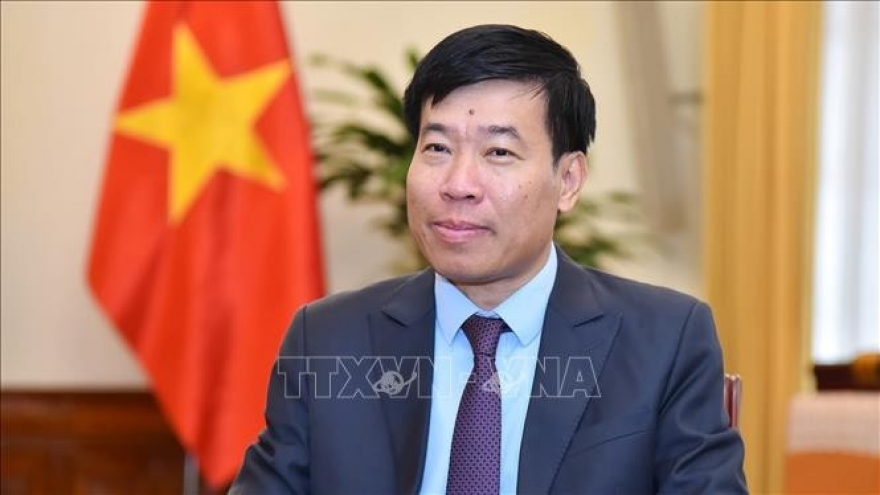
“Spring trains” named “resolutions”

VOV.VN - The years 2024 and 2025 marked notable milestones with the issuance of several major resolutions by the Politburo. The moves point to strong political resolve by the Party and the State to steer Vietnam into the next period of development.
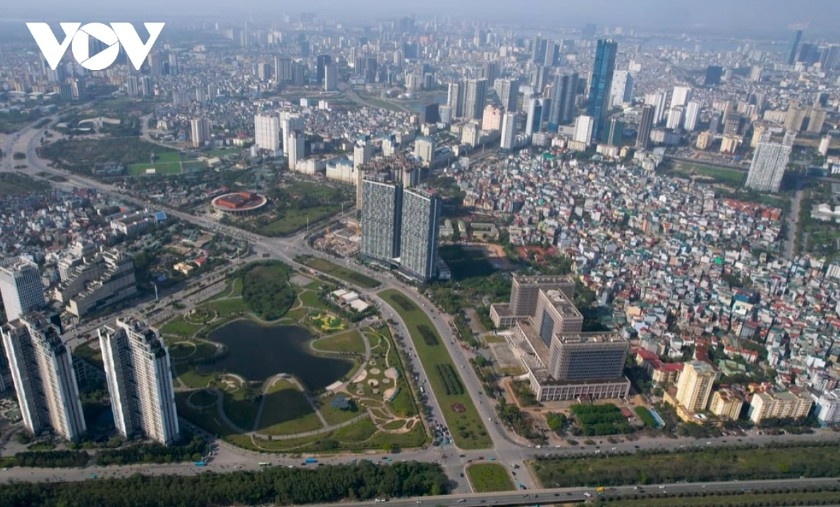
Opening the door to a new period of national advancement
Vietnam is facing historic opportunities, challenges and momentum as it seeks to move toward becoming a high-income developed country. Turning this aspiration into reality requires foundational institutional pillars. Central among them are resolutions, which provide direction and guidance. With strong political determination, the Party leadership has issued a set of resolutions often described as a “four-pillar framework”, aimed at steering the country forward in steady and sustained steps.
Resolution 57, dated December 22, 2024, on breakthroughs in science and technology, innovation and national digital transformation, identifies these areas as strategic drivers for modernisation, reform of national governance, and rapid and sustainable socio-economic development.
Resolution 59, dated January 24, 2025, on international integration in the new context, is viewed as a breakthrough policy decision. It functions as a practical guide for Vietnam’s integration process and a key driver for the coming period. The resolution reflects a clear view that international integration is not simply about opening up and exchanges, but about proactive and confident engagement.
Resolution 66, dated April 30, 2025, on reforming the development and enforcement of laws to meet national development requirements, provides overall direction for legislative work. It sets higher standards for governance, promoting a shift from a “management” mindset to a “service-oriented” approach. Lawmaking is expected to move ahead of practice, with stronger foresight and closer alignment with real-world needs.
Resolution 68, dated May 4, 2025, on private-sector development, marks a broad change in how the private economy is viewed, from mere “recognition” to “protection, encouragement and promotion”, and from a “supporting role” to one that helps drive development. It is accompanied by requirements to remove institutional barriers, unlock resources, encourage innovation, create a fair and competitive business environment, and allow private firms to take part in major national projects. These directions show urgent needs as well as long-term objectives linked to Vietnam’s development aspirations.
Following the issuance of this four-resolution framework, the policies drew wide support and positive assessments from businesses and policy researchers. They are seen as key foundations for achieving Vietnam’s two long-term milestones: by 2030, marking the 100th anniversary of the Party’s founding, becoming a developing country with modern industry and upper-middle income status; and by 2045, marking the centenary of the nation’s founding, becoming a high-income developed country.
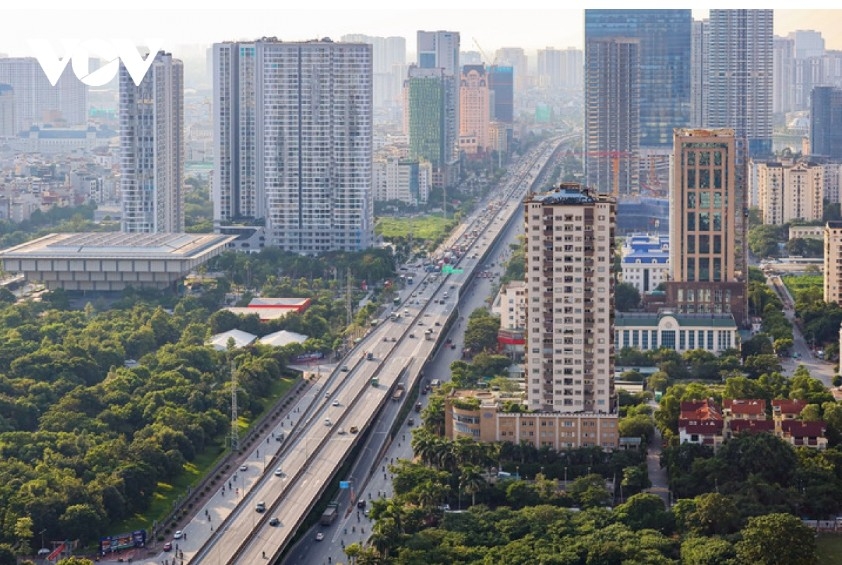
Implementing resolutions through renewed thinking
The four resolutions, 57, 59, 66 and 68, are likened to high-speed “spring trains”, covering a wide range of development policies and driven by renewed thinking on institution-building and long-term planning.
According to Tran Hoang Ngan, a National Assembly deputy from Ho Chi Minh City, Resolution 66 represents a fundamental change in thinking on lawmaking and national governance.
He said the resolution resolves what he described as the “bottleneck of bottlenecks”: institutions. A coherent and enabling institutional framework, he noted, can support socio-economic development by reducing time and compliance costs for people and businesses in administrative procedures. At the same time, he stressed that effective lawmaking requires capable officials with practical experience, solid expertise and a strong sense of responsibility.
From the 2026-2030 period, the Party and the State have set a target of average annual growth of 10%. To pursue this goal, Vietnam is shifting toward a growth model based on science, technology and innovation. Duong Thi Bich Diep, Director of the Institute of Green Economy, said Resolution 57, with its institutional and financial mechanisms, has created conditions for research, development, innovation and technology application, while encouraging science and technology organisations to take a more active role.
However, achieving double-digit growth also requires contributions from the private sector. Truong Sy Ba, Chairman of Tan Long Group, said Resolution 68 addressed long-standing expectations among businesses.
He said the resolution places the private sector in a clearer position, creating a more open environment for development. He also called on ministries and agencies to revise laws and improve policies so that the guidelines and measures set out in the resolution are translated into concrete outcomes for enterprises.
For the four-resolution framework to deliver practical results, broad consensus and strong political resolve are needed to turn guiding principles into concrete action programmes. This includes developing focused mechanisms and policies, building a coherent institutional ecosystem, and placing people and businesses at the centre of service delivery. The State, in particular, is expected to play a leading role in coordination, guidance, monitoring and evaluation to ensure that implementation produces real outcomes.
The “spring trains” bearing the numbers 57, 59, 66 and 68 have now departed, carrying political resolve and the nation’s aspiration for a prosperous and resilient Vietnam in the coming period. As a new spring arrives, efforts are under way to turn these resolutions into action, with the aim of meeting the goals that have been set.
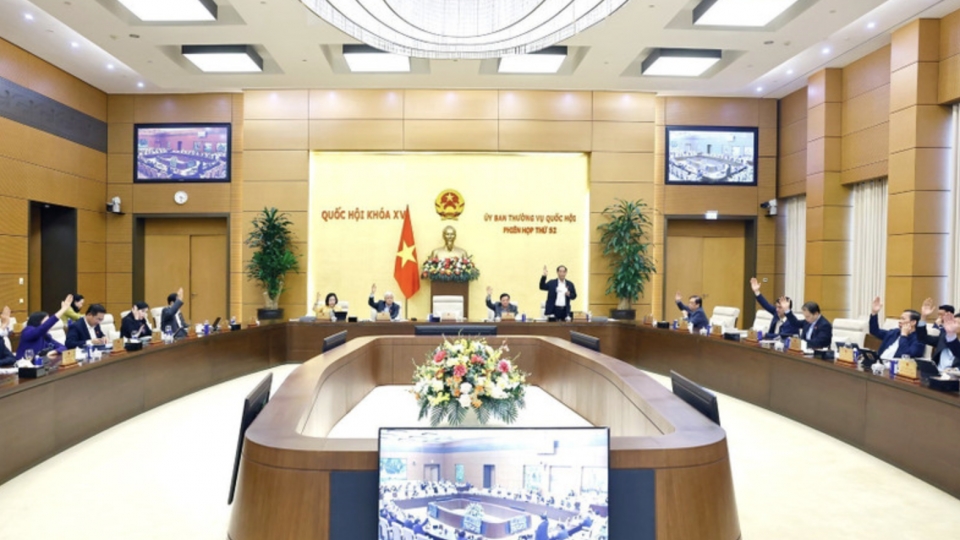
Resolutions on urban classification and administrative unit standards approved
The National Assembly Standing Committee looked into two draft resolutions on administrative unit standards and urban classification at its 52nd session in Hanoi December 24.