
PM Chinh urges health sector not to miss any chance to save lives

VOV.VN - Prime Minister Pham Minh Chinh has urged Vietnam’s health sector not to miss even the smallest opportunity to treat patients, as he met leading medical experts, scientists and directors of central hospitals on the occasion of the 71st anniversary of Vietnamese Physicians’ Day (February 27).
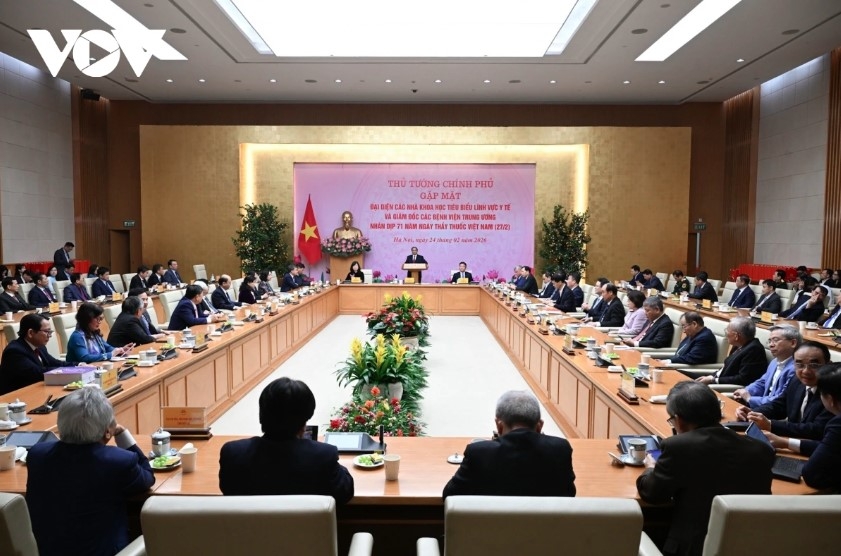
At the meeting held at Government Headquarters on February 24, the Government leader expressed appreciation to generations of doctors, scientists, health administrators and medical workers for their sustained and dedicated contributions to protecting and improving public health. He conveyed a message to the sector: uphold medical ethics, strengthen professional skills, elevate medical knowledge, overcome adversity and act in the service of the people.
Health Minister Dao Hong Lan reported that during the 2021-2025 term, the sector met and exceeded major targets. Average life expectancy reached 74.5 years in 2025, while mortality rates among children under one and under five continued to decline. Vietnam has been recognized as a bright spot internationally in achieving health-related development goals.
Medical examination and treatment services have developed toward greater specialization and modernization. Central and tertiary hospitals have mastered advanced techniques such as multi-organ transplantation, cardiovascular interventions, robotic-assisted endoscopic surgery, assisted reproduction, stem cell applications and nuclear medicine in cancer treatment. Many of these techniques have been transferred to lower-level facilities, helping reduce pressure on higher-level hospitals.
Vietnam’s preventive healthcare network has been organized nationwide in close linkage with grassroots healthcare. The country has eliminated, controlled and contained a number of dangerous diseases and responded effectively to emerging epidemics, including COVID-19.
The sector has also advanced research and application of medical technologies in prevention, detection, diagnosis and treatment, as well as the production of medicines and vaccines.
The use of domestically produced drugs at medical facilities has steadily increased in both volume and value. Vietnam currently operates seven vaccine manufacturing plants, supplying 10 of the 12 vaccines in the national expanded immunization program.
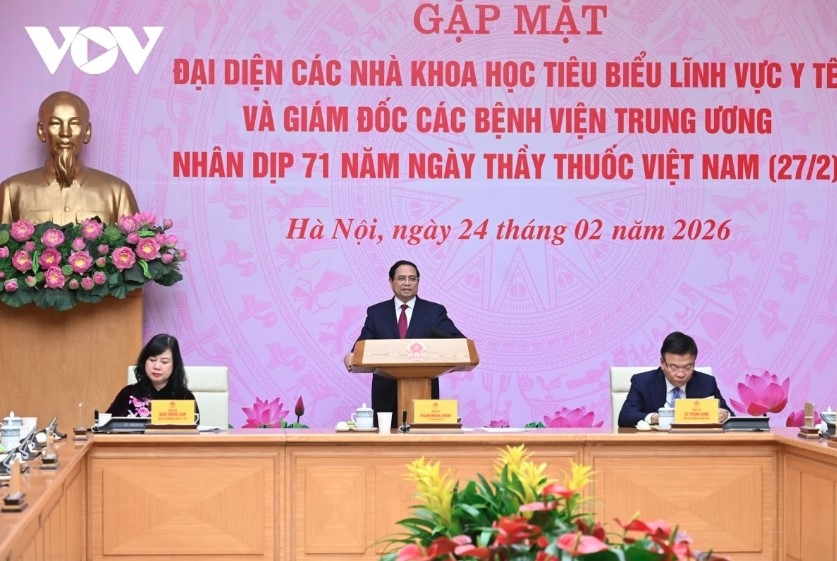
At the meeting, medical experts proposed developing a domestic medical equipment industry to reduce reliance on imports and adopting policies to ensure a more balanced distribution of healthcare personnel across regions.
They also called for stronger supervision of medical training quality and incentives for newly graduated doctors, including residents, to work at provincial-level facilities.
The Government leader reaffirmed that protecting, caring for and improving public health is a top political priority of the Party and the State and a responsibility of the entire political system, society and every citizen.
He called for continued institutional reforms, stronger preventive and grassroots healthcare, streamlined organization of the health system and mobilization of social resources under the principle of contributions from the State, the people and businesses.
He said the sector should “not say no, not say difficult, not promise without action, not cause inconvenience to patients, and not give up even the smallest opportunity to treat patients.”
He also underlined the need for greater public-private cooperation in developing healthcare facilities and diagnostic centers, modernization of infrastructure and equipment, nationwide implementation of electronic medical records, and the building of a medical workforce of regional and international standing.
14th National Party Congress: Hanoi health sector ready for all situations
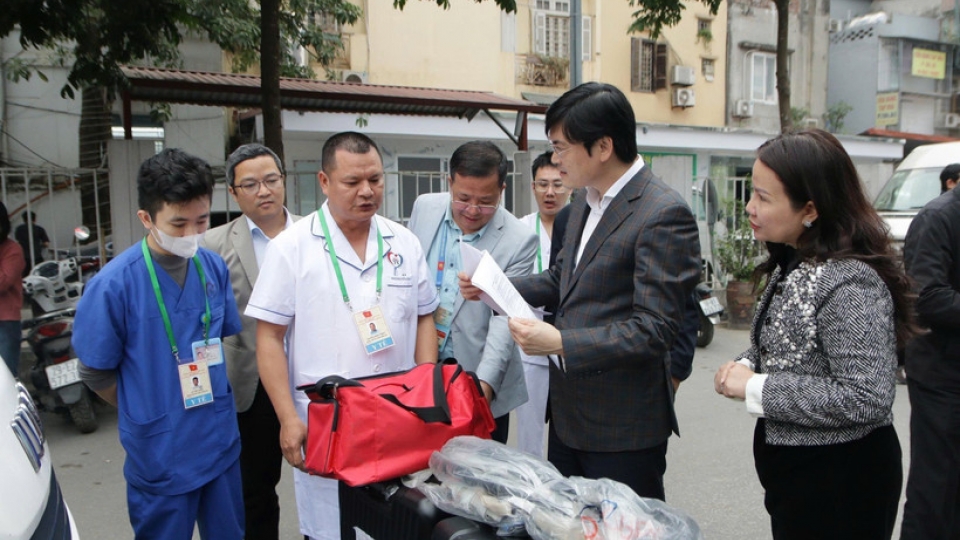
Hanoi’s Department of Health on January 16 launched a medical response campaign in preparation for the 14th National Party Congress, marking an important step in ensuring medical services, health care, disease prevention and control, and emergency response throughout the congress.
Vietnam calls on countries to bolster cooperation in health sector
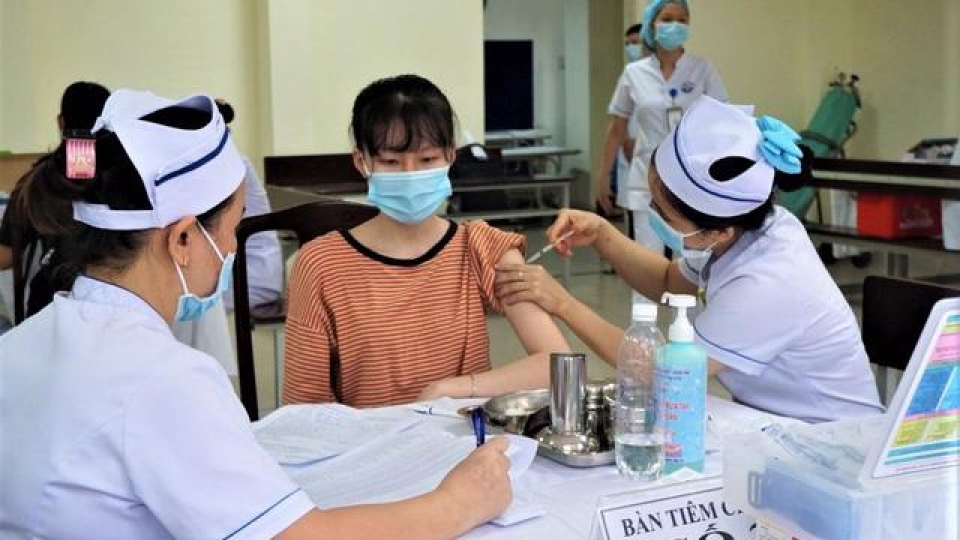
VOV.VN - A working delegation led by Deputy Minister of Health Nguyen Thi Lien Huong and the Permanent Mission of Vietnam to the United Nations in Geneva actively coordinated to participate in the 77th World Health Assembly (WHA77) which is getting underway from May 28 to June 1.
