PM calls for deeper Japanese investment as bilateral trade tops US$50 billion

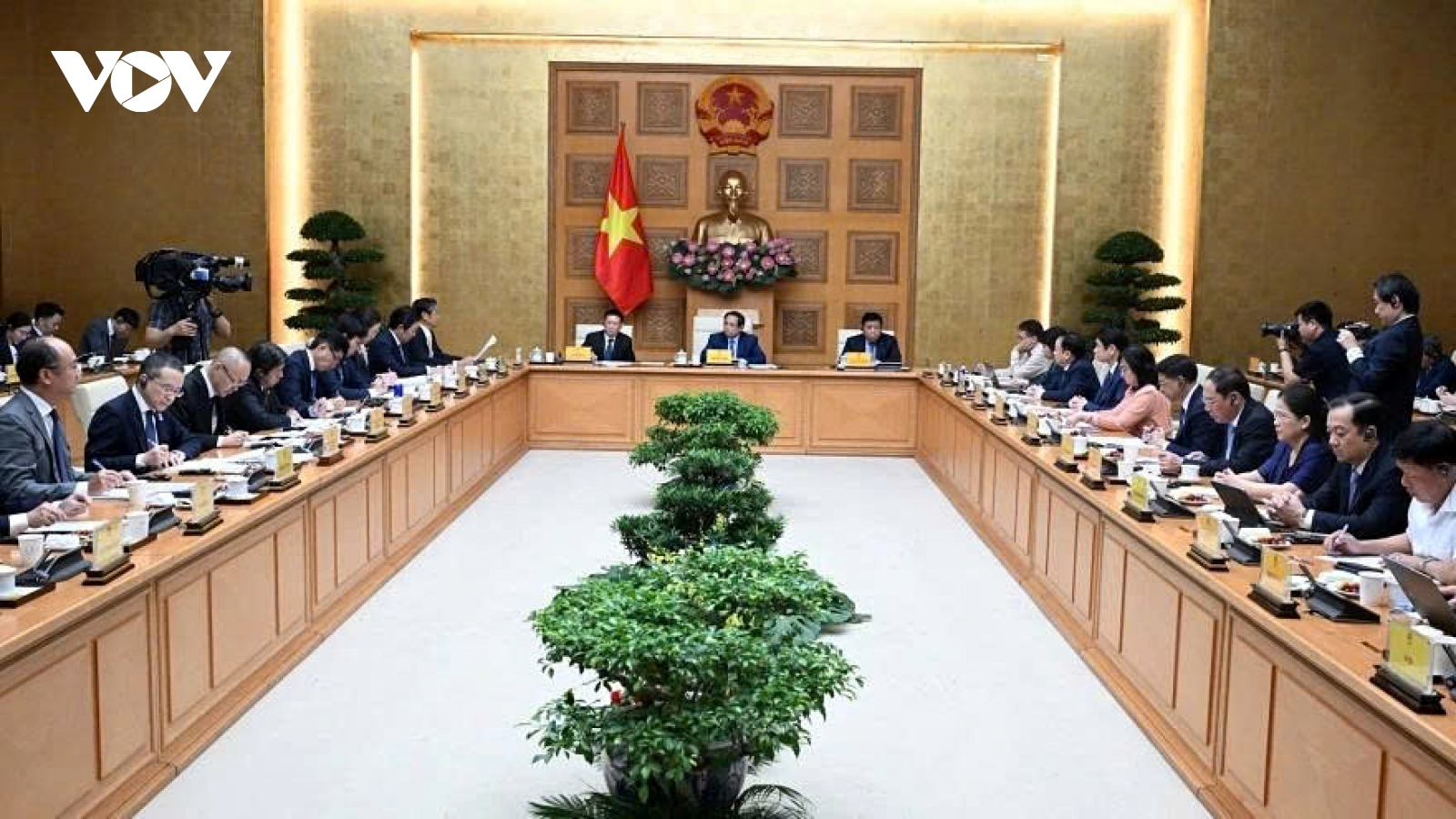
VOV.VN - Prime Minister Pham Minh Chinh called on Japanese companies to expand investment in Vietnam, as bilateral trade between the two countries surpassed US$50 billion for the first time, during a February 9 meeting with a delegation representing 37 Japanese companies, corporations and organisations in Hanoi.
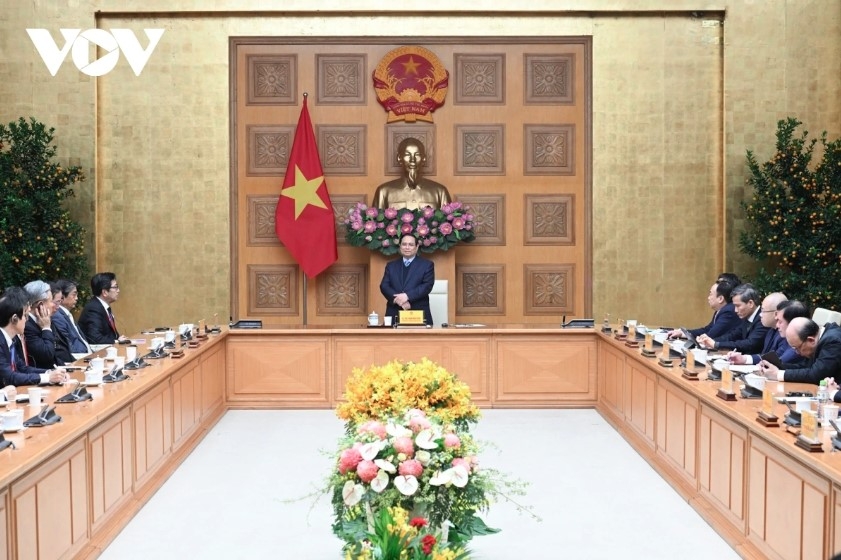
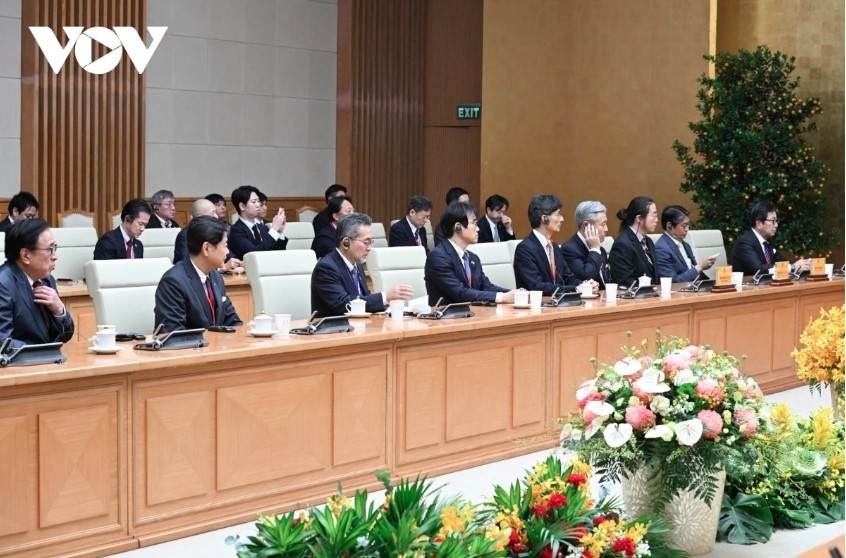
The delegation was led by Keita Ishii, Chairman of the Japan-Mekong Economic Committee and President and CEO of Itochu.
At the meeting, PM Chinh welcomed Japanese businesses seeking cooperation opportunities and expanded investment in Vietnam, and expressed appreciation for the role of the Japan Chamber of Commerce and Industry and the Japan-Mekong Economic Committee in boosting bilateral economic ties and acting as a bridge for Japanese enterprises operating in Vietnam.
He highlighted sound relations between the two countries , noting that Japan continues to be among Vietnam’s leading investors. As of January 31, 2026, Japan had 5,722 valid projects in Vietnam with total registered capital of US$78.9 billion.
In 2025, Japan ranked fourth among 113 countries and territories investing in Vietnam, with 296 newly licensed projects and US$3.7 billion in newly registered capital, up 6.6% from 2024. Japanese investment has focused on manufacturing and processing industries; electricity, gas and water production and distribution; and real estate.
On trade, bilateral turnover reached a new milestone, rising to more than US$51.43 billion, an increase of 11.28% year on year.
Vietnam recorded a trade surplus of nearly US$2.1 billion with Japan, underscoring Japan’s role as a leading, stable and complementary trading partner within regional supply chains.
The Government leader encouraged Japanese companies, corporations and organisations to share their interests, expectations and specific needs when cooperating in Vietnam, based on the principle of “harmonised benefits and shared risks.”
Speaking at the meeting, Keita Ishii said not only large corporations but also small and medium-sized Japanese enterprises across various sectors are keen to cooperate and do business in Vietnam.
“We highly value Vietnam’s reform efforts and achievements. Many Japanese companies make use of Vietnam’s high-quality human resources,” he said, adding that Japanese businesses wish to further expand cooperation in human resource exchanges and to better harness the combined strengths of both countries. He expressed hope that Vietnam would continue to strengthen workforce training to support the development of both nations.
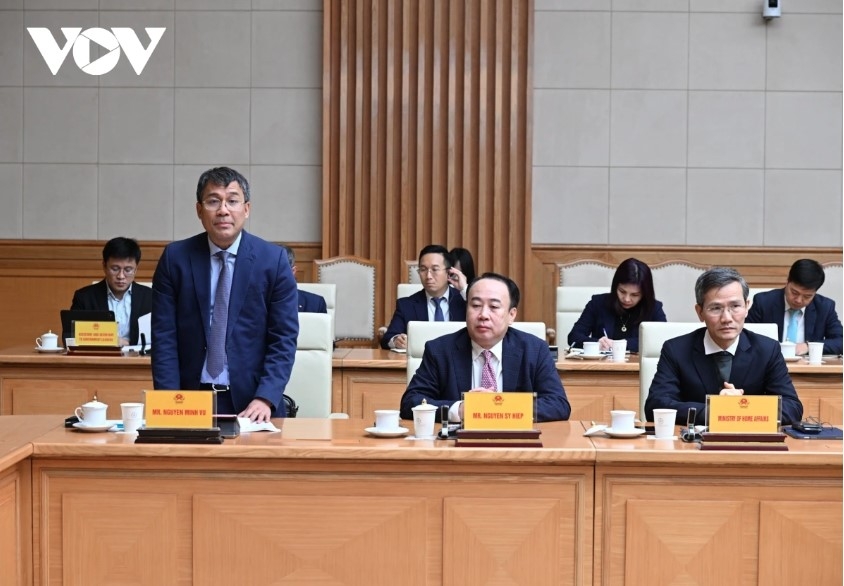
Also addressing the meeting, Associate Professor Dr. Huynh Quyet Thang, President of Hanoi University of Science and Technology (HUST) underlined the need to further renew training programmes, with a focus on professional knowledge, practical skills and Japanese-language proficiency.
He noted that a number of HUST graduates who initially worked in Japan have gone on to establish their own companies there. According to university statistics, around 1,200 HUST alumni have pursued careers in Japan, including the establishment of more than 20 enterprises with total capital of US$10 million or more, forming a strong network to support current students and contribute to key industries.
Vietnam is entering a phase of accelerated development and has set a target of double-digit growth during 2026-2030, in pursuit of two major goals: becoming a developing country with upper-middle income by 2030, and a high-income developed country by 2045, Chinh said.
He stressed that enhancing competitiveness, restructuring the economy and fully leveraging opportunities from international economic integration are essential to achieving sustainable development.
The Government chief laid stress on the importance of expanding training efforts and called on universities to continue educating engineers in fields demanded by Japan, including not only technical expertise but also legal knowledge, cultural understanding and foreign-language skills.
He also urged greater flexibility in cooperation, including more facilitative visa and work permit arrangements, alongside improvements in workforce quality.
Universities such as Phenikaa University and FPT University were encouraged to focus on areas where Japan is placing priority, including semiconductors, artificial intelligence, climate change mitigation and green development, to further strengthen economic linkages between the two economies.
PM Chinh called on the Japan Chamber of Commerce and Industry and the Japan-Mekong Economic Committee to continue working closely with Vietnam’s Ministry of Finance and relevant agencies to facilitate Japanese investment, improve investment quality and shorten decision-making timelines, while promoting technology transfer and supporting Vietnamese enterprises in strengthening competitiveness and deeper participation in Japanese-led value chains.
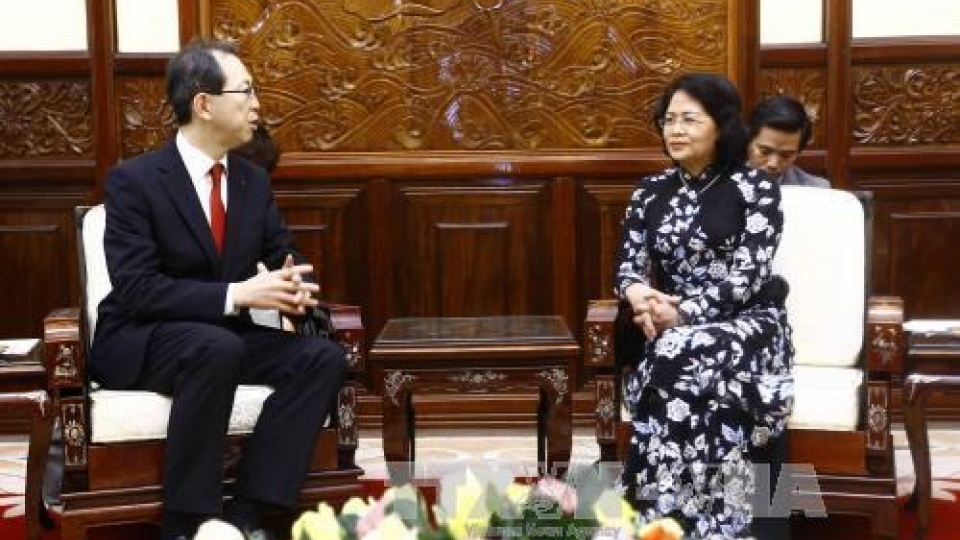
Vice President wants more Japanese investment in Vietnam
Vice President Dang Thi Ngoc Thinh has suggested Governor of Japan’s Fukushima prefecture Masao Uchibori encourage local firms to invest in Vietnam, especially in fields of their strength like industry, high-tech agriculture and renewable energy.