People - centre of all policymaking in Vietnam: Egyptian journals

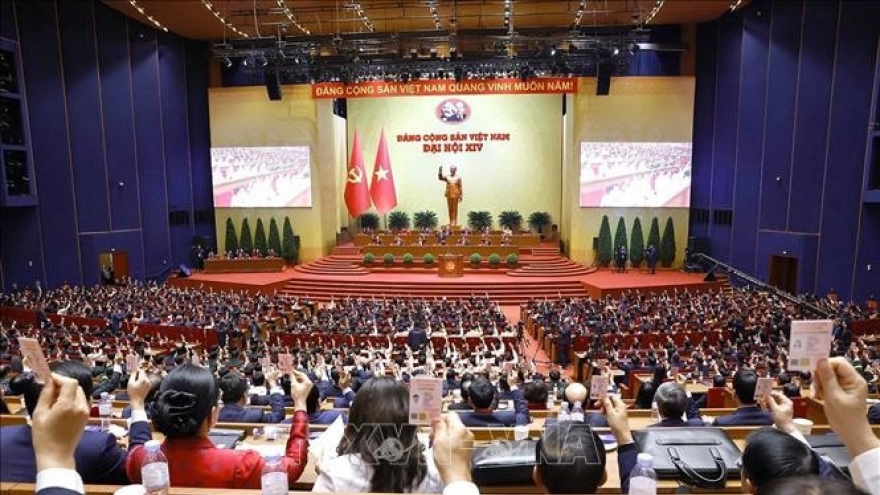
Egypt’s leading newspaper - Liga Hispano and Elsoot on January 26 published articles saying the documents of the 14th National Party Congress have outlined a strategic, long-term and deeply humanistic development vision, with a strong emphasis on the principle that “the people are the centre and the subject”.
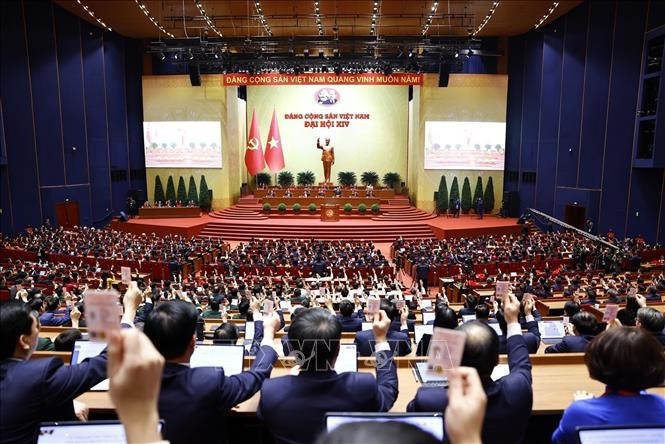
The two newspapers underscored Vietnam’s major achievements of historical significance after nearly four decades of Doi moi (Renewal) under the leadership of the Communist Party of Vietnam (CPV).
They noted that the 14th National Party Congress took place at a time of profound, complex and unpredictable global changes, marked by intensified strategic competition among major powers, prolonged geopolitical conflicts, energy crises, climate change and the rapid advance of digital transformation. In that context, the Congress documents not only inherited the development thinking of previous congresses but also demonstrated clear innovation in vision, approach and development values.
Liga Hispano and Elsoot identified a central and foundational highlight of the Congress documents as the consistent affirmation that “the people are the centre, the subject, the goal, the driving force and the resource of development.” This, they said, represents both a continuation of Ho Chi Minh Thought and the revolutionary traditions of the CPV, and a response to the requirements of modern, sustainable development in new circumstances.
The documents of the 14th Congress set out national development goals in the short, medium and long terms, with a strategic vision extending to the mid-21st century, all revolving around people as the core. These include fast and sustainable development based primarily on science, technology, innovation, digital transformation and the full mobilisation of human resources; building an independent and self-reliant economy closely linked with deep, substantive and effective international integration; comprehensive development of the Vietnamese people and the building of a democratic, equitable and civilised society; construction of a socialist rule-of-law state of the people, by the people and for the people; and firmly safeguarding independence, sovereignty and territorial integrity while proactively contributing to peace, stability and development in the region and the world.
According to the articles, development is no longer understood solely in terms of GDP growth, but also in terms of quality of life, the Human Development Index, human rights, and equitable access to essential services such as education, healthcare, housing and culture. People are not merely policy beneficiaries, but active participants in policy formulation, supervision and evaluation.
The principle that “the people are the foundation” remains a lodestar throughout the CPV’s revolutionary line and is formalised in the Congress documents with higher requirements for quality and effectiveness. This is reflected in placing the interests, aspirations and happiness of the people as the supreme objective of development; strengthening public trust through Party building and rectification, anti-corruption efforts and the development of a contingent of capable and ethical officials; and promoting inclusive development, narrowing development gaps and ensuring sustainable social security.
Liga Hispano and Elsoot concluded that the development goals set out in the documents of the 14th National Party Congress are comprehensive, modern and imbued with profound humanistic values.
By placing people at the centre, Vietnam’s development orientation aligns with global trends and the country’s practical needs. If implemented in a consistent, substantive and effective manner, these goals are expected to provide a solid foundation for Vietnam’s fast and sustainable development, while preserving independence and self-reliance and realising the aspiration of building a prosperous and happy nation in the decades ahead, the journals underscored.
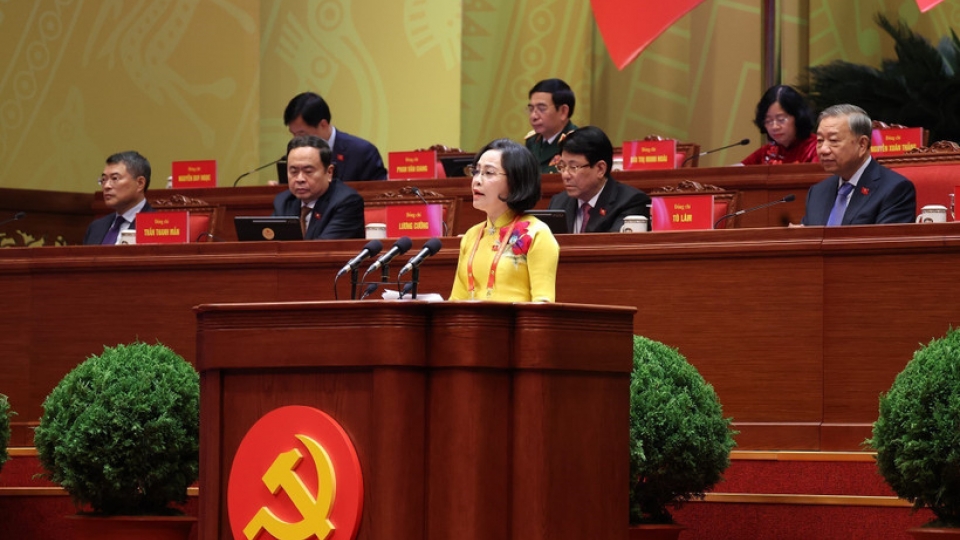
Enhancing Party characteristics and people-centred approach in NA operations
Efforts to renew the organisation and operations of the NA have gone hand in hand with enhancing Party characteristics and deepening the NA’s people-centred approach, following the principle of “the people know, the people discuss, the people act, the people monitor, the people supervise, and the people benefit".