


Knowledge-sharing brings new depth to Vietnam-France relations

VOV.VN - In the new era under the Comprehensive Strategic Partnership, scientific, educational, and cultural cooperation retains a crucial role and can serve as a model for bilateral ties, rooted in equality and the co-creation of knowledge.
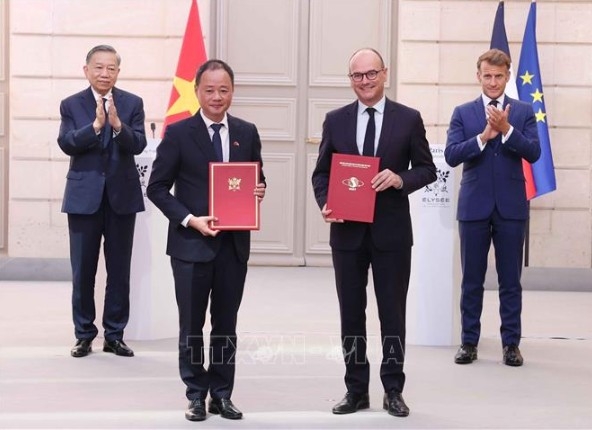
Dr. Frederic Roustan, a lecturer in Asian history at Aix-Marseille University (AMU) and Deputy Director of the Institute for Asian Research (IrAsia), assesses that General Secretary Communist Party of Vietnam Central Committee and President To Lam's official visit holds historic significance for France.
According to Roustan, Vietnam has emerged as an indispensable political and economic player in Southeast Asia, assuming a leading role both within and beyond the region. The establishment of the Comprehensive Strategic Partnership in 2024 has laid a fresh foundation for future cooperative projects on an equal footing.
From the perspective of a researcher closely monitoring Vietnam and its relations with Asian nations for years, Roustan underscored the pivotal role of scientific and intellectual cooperation in bilateral ties. He notes that through historical ups and downs in diplomatic, political, and economic dimensions, ties between French and Vietnamese scientists and intellectuals have been consistently sustained, preserving cultural and academic flows between the two nations.
According to him, scientific cooperation once held a central position and still retains foundational significance for the future of Vietnam-France relations, especially amid profound global changes. Notably, the French researcher suggested that ways of cooperating in science could serve as a model for political and diplomatic relations between the two countries.
Importantly for the future of academic relations, Vietnam must not simply become an object of study for French scholars, nor France solely an object of research for Vietnamese counterparts. Instead, knowledge must be created through equal cooperation between researchers from Vietnam and France.
Dr. Frédéric Roustan cited practical cooperation at AMU and IrAsia, a research unit under the French National Centre for Scientific Research (CNRS) that he helps lead. Over the years, these units have implemented joint research projects, teaching programs, and training courses with Vietnamese university partners, primarily the University of Social Sciences and Humanities under Vietnam National University, Hanoi, alongside the University of Education, Hue University."
For nearly 15 years, the two sides have maintained coordinated training programs, annual student and researcher exchanges, and regular seminars in France and Vietnam, alongside joint scholarly publications.
Another notable avenue of cooperation is the preservation and promotion of shared historical documents. According to Roustan, AMU and IrAsia are cooperating with archives in France and Vietnam to preserve and share bilateral documentary heritage. Both sides have also launched a project to promote this heritage under the framework of the United Nations Educational, Scientific and Cultural Organization (UNESCO).
Concurrently, the two sides are building a joint master's program in 'francophone archival operations,' slated to begin next year. In 2026, an AMU delegation visited the University of Social Sciences and Humanities, Vietnam National University, Hanoi, to renew bilateral agreements between the two schools and develop joint programs.
Apart from scientific and educational cooperation, Dr. Frédéric Roustan believes that culture is a foundational channel for awakening the interest of French youth in Vietnam and young Vietnamese in France. Therefore, the two countries need to promote cultural exchanges in fields such as cinema, literature, music, and arts.
He observes that contemporary Vietnamese culture remains relatively little-known in France compared to popular culture from Japan or the Republic of Korea (RoK). Meanwhile, Vietnam also possesses a vibrant pop culture. Promoting these cultural aspects more strongly in France can help Vietnam reach younger audiences, some of whom may become future Vietnamese-language learners.
Roustan also emphasizes the necessity of supporting the development of Vietnam studies in France, ranging from Vietnamese language instruction to Vietnamese culture and history.
Conversely, he notes the importance of maintaining the French language within language departments and regional studies in Vietnam.
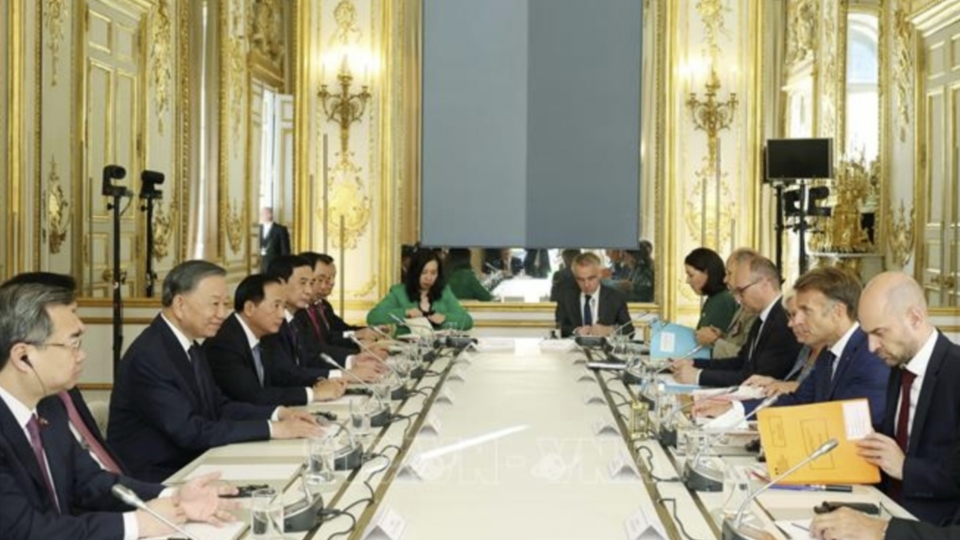
Vietnam, France set science and technology as new pillar in bilateral ties
VOV.VN - General Secretary of the Communist Party of Vietnam Central Committee and President To Lam and French President Emmanuel Macron have agreed to deepen the Vietnam-France Comprehensive Strategic Partnership, expanding cooperation across strategic sectors such as science and technology, energy, and aerospace.

Top leader To Lam receives warm welcome in France on official visit
VOV.VN - General Secretary of the Communist Party of Vietbnam Central Committee and State President To Lam and his spouse were accorded an official welcome with full honours at the Invalides in Paris on September 10, as part of his official visit to France and participation in the 2026 International Space Summit.


