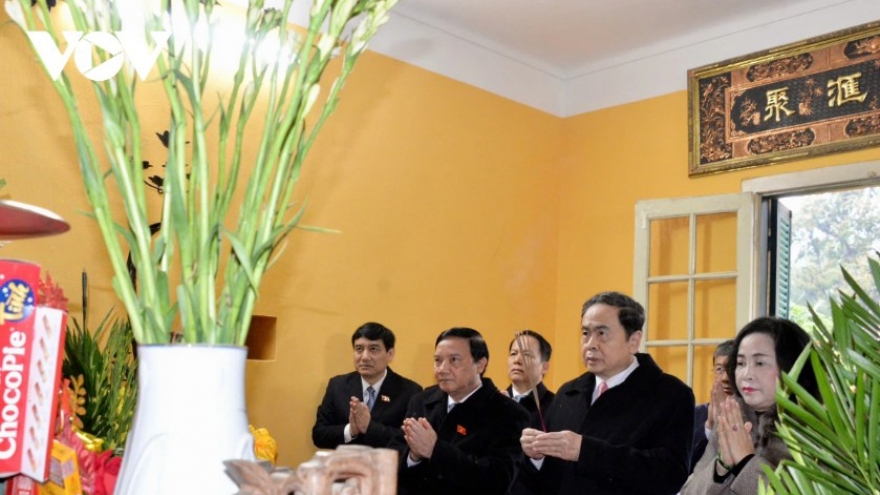
Ho Chi Minh-leader who brought everlasting spring to Vietnamese nation

VOV.VN - For Ho Chi Minh, independence was never the final destination. He consistently emphasized that independence must go hand in hand with the people’s freedom and happiness. The spring he brought was a spring for the people and of the people.
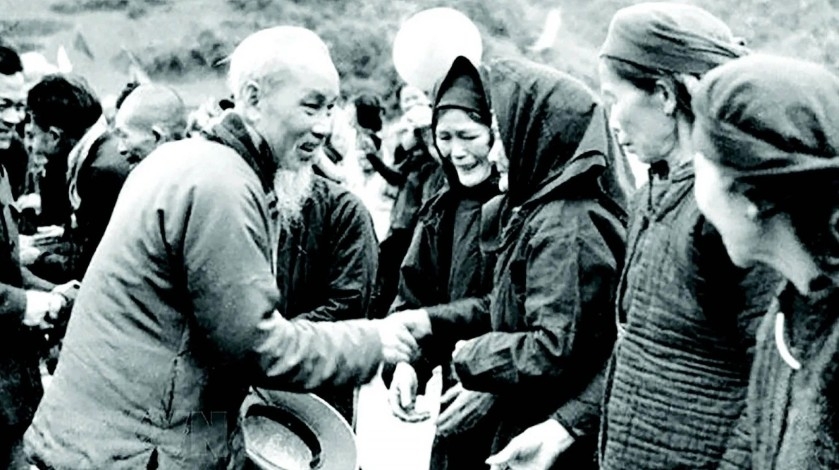
Each time Tet arrives and spring returns, Vietnamese people reflect with deep emotion on President Ho Chi Minh- the beloved leader who brought the spring of independence and freedom to the nation. From the darkness of colonial subjugation, under his leadership, the Vietnamese people rose up to reclaim control over their own destiny. The spring he ushered in was the spring of nature and of independence and freedom- a spring of aspiration, belief and the nation’s future.
A spring for the people and of the people
According to Major General, Ass. Professor and Dr. Nguyen Van Sau, Deputy Director of the Institute for Military Strategy and History of Vietnam, before that spring arrived, the country endured a long night of servitude. The nation’s spring was taken away, the joy of life suppressed, and the aspiration to live as free human beings suffocated.
From the pain of losing the country, the young man Nguyen Ai Quoc set out in search of a path to national salvation, carrying a burning aspiration: to win independence for the nation and bring happiness to the people. His thirty-year journey abroad was the process of sowing the seeds for a new spring of the Vietnamese nation.
The founding of the Communist Party of Vietnam in the spring of 1930 marked the assumption of the historic mission to lead the Vietnamese revolution and created a major turning point in the nation’s historical trajectory. From that moment, the Vietnamese revolution overcame its crisis and deadlock in political line, organization and methods, thus opening a new chapter under the leadership of the working class through its vanguard, the Communist Party.
From the Party’s founding onward, the national liberation movement advanced from one victory to another. Fifteen years later, the spring of independence “blossomed” in the autumn of 1945. Under the leadership of the Party and President Ho Chi Minh, the August Revolution succeeded, opening a new era for the country. For the first time in history, the Vietnamese people became masters of their own destiny. From the status of a subjugated people, the nation rose to that of an independent country. This was a great spring-one that awakened national pride and the aspiration for advancement across the entire country.
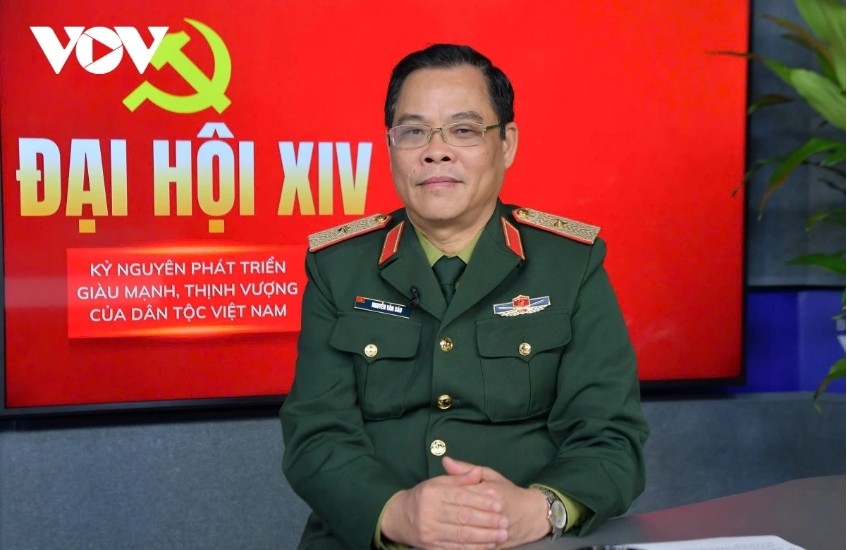
Nguyen Van Sau emphasized that, for President Ho Chi Minh, independence was not an end in itself. He was constantly concerned that independence must be inseparable from the people’s freedom and happiness. The spring he brought was a spring for the people and of the people.
In every policy, every statement and every action, Ho Chi Minh consistently placed the people’s interests above all else. He lived a simple life so the people could live in comfort and security. He was strict with himself to safeguard the integrity of the young revolutionary government.
“During the arduous years of resistance, President Ho Chi Minh continued to sow the seeds for a spring of peace. Amid bombs and sacrifices, he maintained an unwavering belief in the nation’s ultimate victory. That belief became an incomparable spiritual force, strengthening the resolve of the entire nation to overcome hardship. Each spring of resistance was a spring of willpower, patriotism and determination- a living embodiment of the principle that ‘nothing is more precious than independence and freedom,’” Nguyen Van Sau said.
Throughout the two prolonged resistance wars against French colonialism and US imperialism, Ho Chi Minh stood as a symbol of the aspiration for peace, independence and freedom. Military historians note that his doctrine of “waging resistance while building the nation” forged a distinctive character in the Vietnamese revolution: resolute in struggle yet not bellicose, humane yet uncompromising on principles.
The well-known affirmation, “Nothing is more precious than independence and freedom,” is regarded by many scholars as a political and moral declaration of the era. That principle nurtured a “spring of willpower” throughout the harsh years of war, ultimately crystallizing into the nation’s historic victories.
Placing the people’s interests above all else
A defining feature of Ho Chi Minh’s thinking was his forward-looking vision. He stressed that the ultimate goal of the revolution was to ensure prosperity for the people, a strong nation, and a society that is equitable, democratic and civilized. Many researchers view this as an early foundation for the concept of sustainable development in Vietnam.
In his Testament, a document widely regarded as the highest synthesis of Ho Chi Minh’s thought and moral character, he devoted special attention to the lives of the people, to younger generations and to the country’s long-term future. The spring he left behind did not end with a historical period; it became a lasting source of spiritual motivation for subsequent stages of national development.
Emphasizing that the founding of the Communist Party of Vietnam in the spring of 1930 was a historic turning point and the decisive factor behind every victory of the Vietnamese revolution, Associate. Prof and Dr. Bui Dinh Phong, a member of the Scientific Council of the Ho Chi Minh National Academy of Politics, said the event generated enduring theoretical and practical values that remain relevant today.
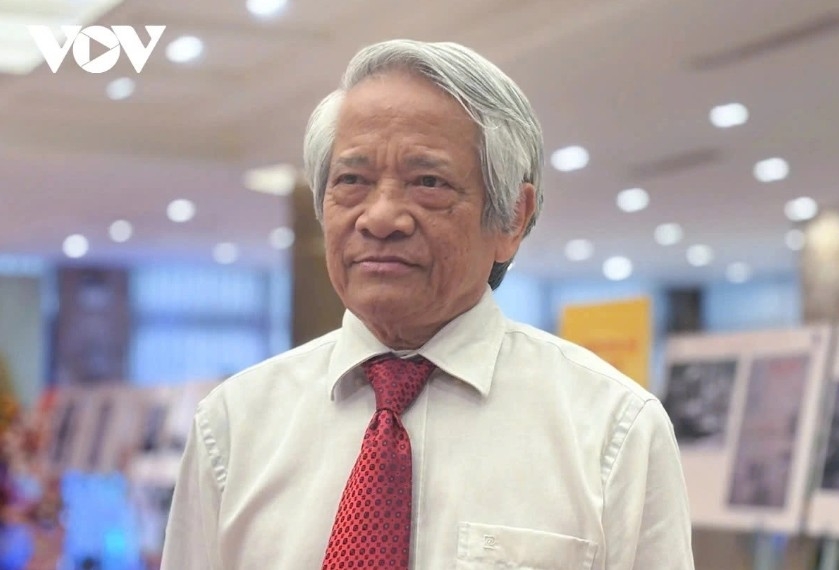
According to Bui Dinh Phong, a genuinely revolutionary, ethical and civilized party must first and foremost formulate correct revolutionary policies and lines. Such a line must meet four requirements: it must be grounded in Vietnamese realities; respond to the people’s needs and aspirations; conform to objective laws; and align with the trends of the era.
According to Bui Dinh Phong, a genuinely revolutionary, ethical and civilized party must first and foremost formulate correct revolutionary policies and lines. Such a guideline must meet four requirements: it must be grounded in Vietnamese realities; respond to the people’s needs and aspirations; conform to objective laws; and keep pace with the course of the era.
“The Central Party Committee's Resolution issued in May 1941 fulfilled four requirements. From that point to the present, across different revolutionary stages and historical periods, including the current 14th National Party Congress, the Party has continued along that line. The wording may vary from term to term, but the underlying spirit remains unchanged. The central thread running through the Party’s resolutions, which continues to be upheld and developed today, is placing the people at the center, putting their interests first and foremost. Renewal is carried out for the people and by the people, with the people’s lives and happiness serving as the measure of the Party’s policies,” Bui Dinh Phong said.
He added that, building on the tradition of independence and self-reliance since the Party’s founding, the documents of the 14th National Party Congress further renew theoretical thinking and strategic vision. In this context, the principle of independence and self-reliance has been elevated to a new level - “strategic autonomy,” encompassing autonomy in political direction, economics, culture and domestic and foreign affairs, in order to meet the demands of the era and realize the aspiration for sustainable and strong national development.
“We consistently combine internal and external strengths, as well as national strength with the strength of the times, with national strength being the decisive factor,” Bui Dinh Phong said.
In the spring of Binh Ngo 2026, imbued with the spirit of “success returning with the horse,” and following the successful conclusion of the 14th National Party Congress, the country is entering a new era-an era of national advancement, toward peace, independence, democracy, prosperity, civilization and happiness, steadily moving forward on the path toward socialism. Amid peach and apricot blossoms and the joy of family reunions, Vietnamese people once again deeply appreciate the immense contributions of President Ho Chi Minh.
He devoted his whole life so that the nation could enjoy an enduring spring- a spring of independence, freedom, peace and prosperity.
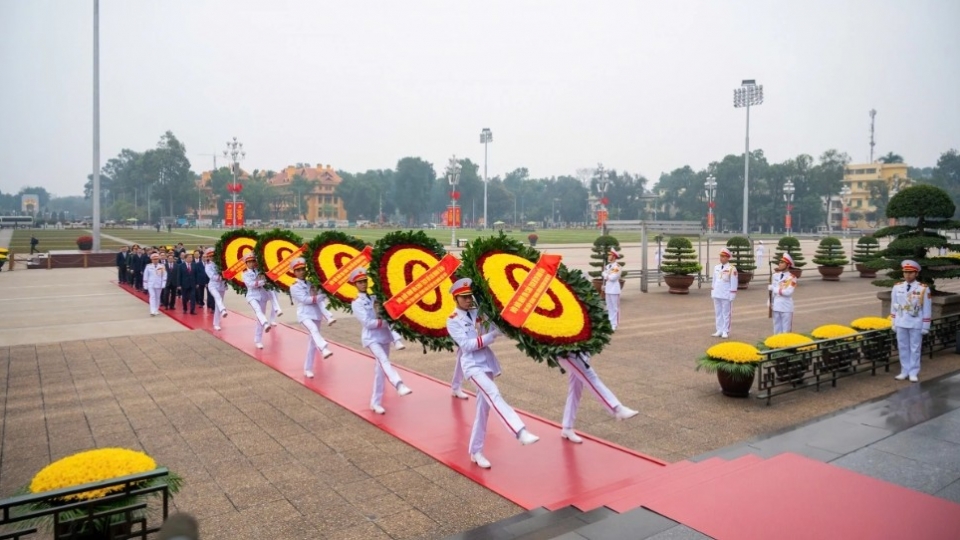
Party and State leaders pay tribute to President Ho Chi Minh at his mausoleum
VOV.VN - Marking the 96th anniversary of the founding of the Communist Party of Vietnam (CPV) (February 3, 1930 - February 3, 2026), a delegation representing the Party Central Committee, the National Assembly, the President, the Government and the Central Committee of the Vietnam Fatherland Front laid wreaths and paid