


Government aims to achieve 2026 targets, build momentum for 2027

VOV.VN - Prime Minister Le Minh Hung on November 4 chaired the government's regular meeting for October 2026 to review the ten-month socio-economic situation, agree on measures to control inflation and stabilize the macroeconomy, accelerate public investment disbursement, and focus intensively on institutional improvement.
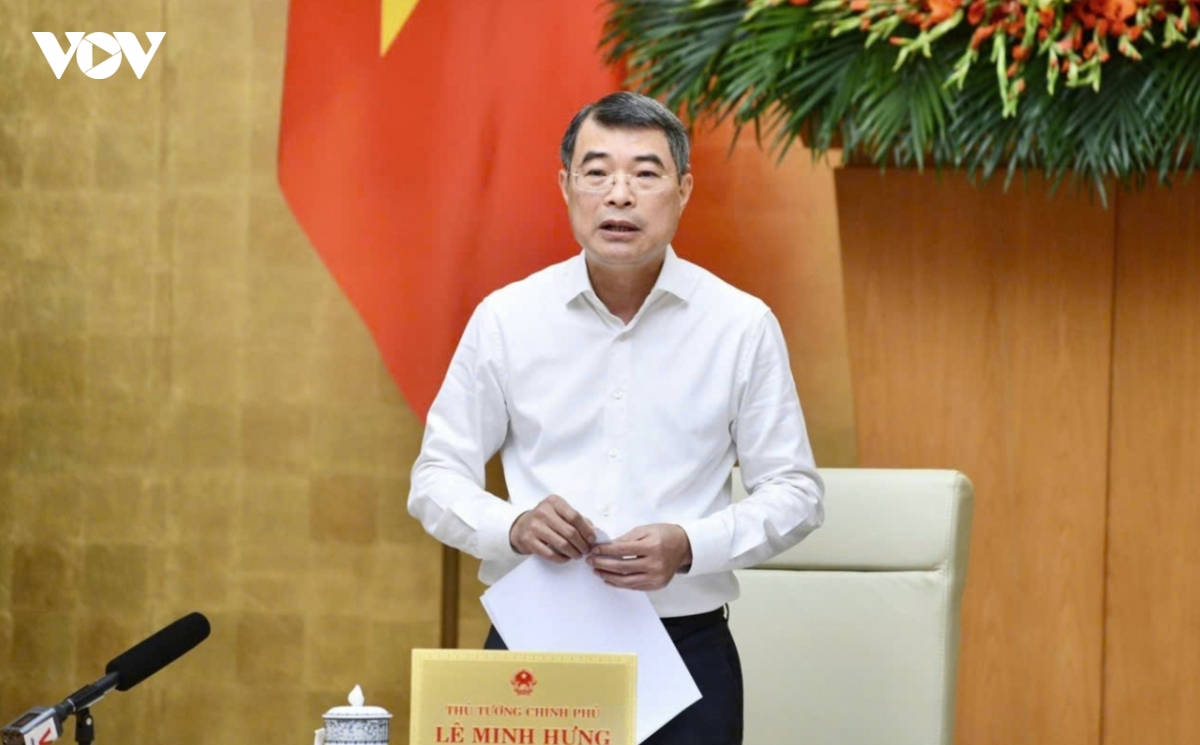
Opening the meeting, Prime Minister Le Minh Hung emphasized the critical importance of the current period as the country enters a decisive phase to meet 2026 targets under action programs implementing resolutions of the Party Central Committee, the Politburo, and directives of key leaders. The session takes place as the National Assembly actively discusses socio-economic conditions and key draft laws with profound, multi-faceted impacts on national development.
Identifying law-making and legal improvement as a top priority, the head of government urged cabinet members to thoroughly discuss, listen to, and seriously incorporate review opinions from National Assembly bodies and deputies. The government will promptly finalize and explain matters to submit draft laws for legislative approval while carefully preparing the draft resolution on socio-economic development for 2026 and the plan for 2027.
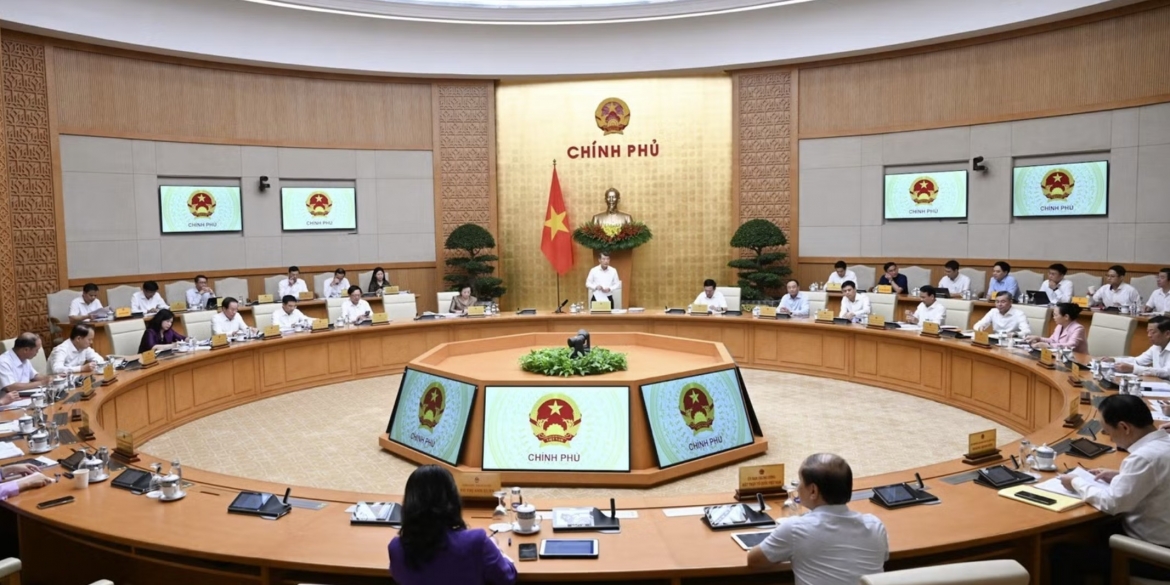
Regarding socio-economic tasks for the final two months of 2026, PM Hung outlined key solution groups requiring high resolve. These include controlling inflation and maintaining macroeconomic balances through flexible and synchronized management of prices, monetary markets, credit, and interest rates, thereby solidifying macroeconomic foundations while strongly stimulating production and business to generate growth momentum for the final months and 2027.
He also called for accelerating public investment disbursement, decisively removing bottlenecks, and definitively handling lingering, stalled projects, viewing public investment disbursement as a driving force to activate private capital flows as well as direct and indirect FDI.
In addition, the Government chief stressed the comprehensive development of culture and society, ensuring that targets in healthcare, education, and social security proceed synchronously with economic growth.
During the session, cabinet members listened to reports delivered by the Minister of Finance on the socio-economic situation and public investment disbursement, as well as reports from the Minister-Chairman of the Government Office and the Minister of Justice on law-making work and the incorporation of National Assembly feedback.
PM Hung urged all government members to uphold their sense of responsibility, engage in substantive discussions, and focus directly on specific, feasible solutions to successfully achieve the highest possible targets set for 2026, building a solid foundation to enter 2027.
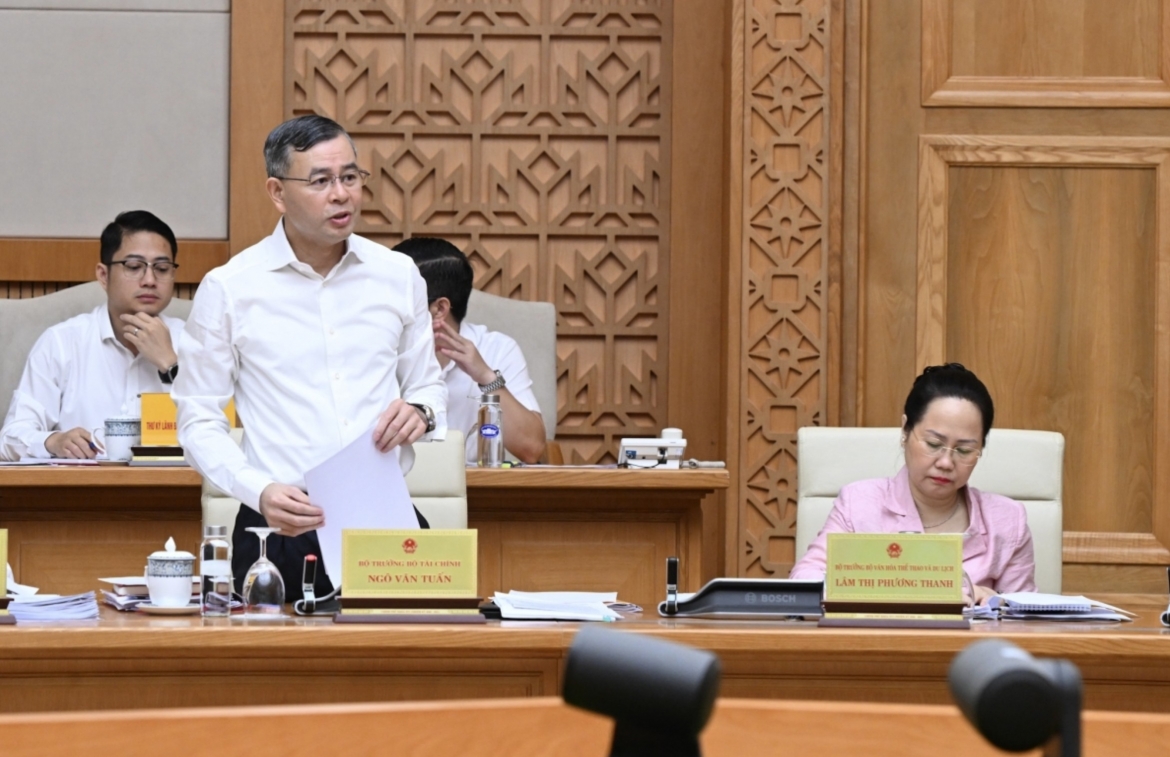
Reporting at the regular session, Minister of Finance Ngo Van Tuan emphasized that the ten-month economic landscape recorded many bright spots with new records in import-export turnover and investment attraction, yet inflationary pressures alongside bottlenecks in production and public investment disbursement demand more drastic and flexible management to realize the double-digit growth target.
Import-export exceeds US$1 trillion, FDI attraction accelerates strongly
The report by the Ministry of Finance showed that the economy continues to maintain a positive recovery momentum. Most notably, total ten-month import-export turnover surpassed the historic milestone of US$1.010 trillion (up 32.3%year-on-year). Exports reached US7.31 billion, helping narrow the cumulative ten-month trade deficit to US$12.07 billion.
Industrial production continued to brighten as the ten-month Index of Industrial Production (IIP) rose by 12.4%, with the manufacturing sector alone increasing by 13%. Notably, 33 out of 34 localities recorded increases in IIP. The Purchasing Managers' Index (PMI) in October reached 52.3 points, marking the 16th consecutive month above the 50-point threshold, affirming businesses' confidence in expanding production.
FDI inflows continued to serve as a solid anchor, with registered capital reaching US$54.85 billion (up 74% year-on-year) and realized capital reaching US$24.08 billion (up 13.1%). The domestic market and services maintained a stable pace, with total retail sales and consumer demand in ten months increasing by 13.5%; international visitors were estimated at 19.5 million arrivals, up 13.8%.
In addition, major macroeconomic balances were maintained. Ten-month state budget revenue reached VND 2.44 quadrillion (equal to 96.4% of the estimate, up 11%), despite the implementation of tax and fee exemption, reduction, and extension packages totaling VND 366.6 trillion to support businesses. Public investment disbursement reached VND 708.57 trillion, achieving 74.1% of the plan, higher than the same period by VND 217.5 trillion. The review and removal of bottlenecks for stagnant projects recorded clear progress as 902 projects (with a total investment capital of VND 342.6 trillion) were put into use.
Alongside achieved results, Minister of Finance Ngo Van Tuan bluntly pointed out a series of difficulties and challenges ahead for the year-end sprint period.
To achieve the full-year growth target, the fourth quarter requires growth of up to 12.5%, while actual production and business have yet to generate a commensurate breakthrough. Actual consumption, excluding inflation factors, increased by only about 7.7%. The trade balance still harbors deep imbalances, as the domestic enterprise sector recorded a trade deficit of as much as US$36.9 billion (up 92.2%), while the surplus depends entirely on the FDI sector.
Particularly, macroeconomic management space is gradually narrowing. Ten-month average inflation rose by 4.57%, slightly exceeding the full-year target ceiling (about 4.5%), mainly due to the impact of global petroleum price fluctuations. As many as 13 out of 34 localities recorded ten-month inflation exceeding the 4.6% threshold.
On the monetary market, credit growth slowed down in October. New lending rates recorded by the State Bank of Vietnam exceeded 10% per year; capital mobilization from economic organizations as of October 21 increased by only 5.83% compared to the end of 2025, reflecting that the cash flow of the business sector is facing huge pressure. Increasing pressure from bad debts, a sluggish real estate market, and localized liquidity drops continue to be bottlenecks requiring special monitoring.
Regarding public investment and stagnant projects, there are still 1,206 troubled projects with about VND 873 trillion in capital yet to be untangled. Progress at many key transport projects and national target programs remains very slow due to land clearance hurdles, material scarcity, and rising construction costs.
Curbing inflation and unlocking capital for economic growth
Regarding tasks for the final months of the year and 2027, the government asked ministries, sectors, and localities to strictly carry out Conclusion No. 106 of the Party Central Committee, steadfastly pursuing the double-digit growth target alongside maintaining macroeconomic stability and controlling inflation.
Accordingly, the Ministry of Finance will flexibly manage taxes and fees on petroleum and jet fuel, and resolutely reallocate capital or recover medium-term capital plans from projects with delayed procedures to prioritize 100% public investment disbursement. The State Bank of Vietnam will proactively inject liquidity, strive for credit growth of about 15% channeled into production, and decisively implement measures to lower lending rates, particularly for working capital.
The Ministry of Construction, in coordination with localities, will speed up key transport projects, determined to put Phase 1 of the Long Thanh International Airport into operation in 2026; complete the target of 97,300 social housing units; and submit to the Prime Minister a comprehensive plan to untangle the real estate market within November.
The Ministry of Industry and Trade will ensure an absolute supply of petroleum and electricity; urgently bring the Na Duong II and Quang Trach I thermal power plants into commercial operation in 2026; prepare adequate goods for price stabilization during the Tet holidays; and bring the Vietnam-EFTA Free Trade Agreement into implementation.
Concerning the 2027 plan, the Ministry of Finance noted that many ministries and sectors registered central budget capital lower than the medium-term quota due to psychological hesitation regarding disbursement evaluation KPIs.
The government requested units to promptly complete procedures, review and register additional capital for feasible projects, and resolutely avoid adjusting capital plans backward merely to achieve formal disbursement rates, which will affect the country's overall growth momentum.

PM urges focus on inflation risks, public investment at cabinet meeting
VOV.VN - Prime Minister Le Minh Hung urged deeper analysis of inflation risks and faster public investment disbursement while chairing the Government’s regular meeting for April 2026 on May 4.

Cabinet meeting focuses on May results, plans priorities for months ahead
VOV.VN - Prime Minister Pham Minh Chinh chaired a regular government meeting for May in Hanoi on June 4 to review the socio-economic performance in May and the first five months of 2025; assess the allocation and disbursement of public investment capital; evaluate the implementation of national target programs; and set key tasks for June and the coming period.

