


Vietnam cannot afford slow decisions and implementation, top leader To Lam says

VOV.VN - General Secretary of the Communist Party of Vietnam Central Committee and State President To Lam has called for a major shift in leadership thinking and implementation, saying Vietnam cannot afford slow decisions or slow execution as it moves to put the 14th National Party Congress Resolution into practice.
Speaking at the conclusion of a nationwide conference on September 3 to study, disseminate and implement Politburo resolutions and directives, the top leader pointed out that the implementation of the 14th National Party Congress Resolution comes at a time when Vietnam has major opportunities and strong aspirations, but also faces increasingly demanding challenges.
Rapid changes in the world and the region, together with digital technology and climate change, are reshaping development and governance, he analysed, adding the circumstances require “strong renewal in leadership thinking, organisational methods and capacity for action,” and “we cannot work in the old way, making slow decisions and implementing them slowly.”
Party General Secretary and State President To Lam noted that the five resolutions and one directive discussed at the conference form a unified framework for both thinking and action, aimed at strengthening the Party’s leadership and governance capacity, promoting rapid and sustainable national development and improving people’s lives.
Renewing the way policies are implemented
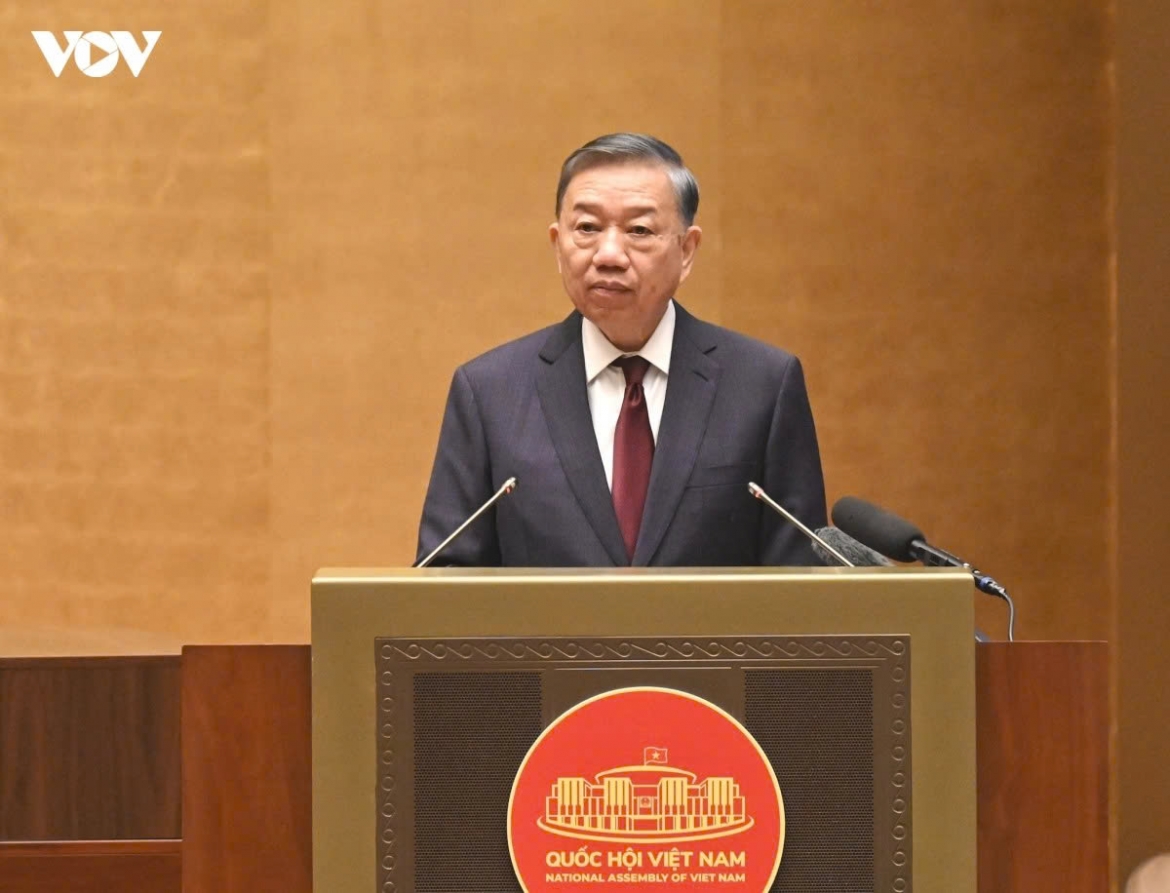
According to the top leader, the conference should not end with the dissemination of resolutions but mark the beginning of a decisive stage of implementation. Studying a resolution cannot be treated as a procedural exercise, with the work considered complete once participants have heard the contents and an implementation plan has been issued.
Party committees, agencies, localities and individual Party members must clearly identify what needs to be done, who is responsible, which authority is involved, what resources are required, the deadline, expected deliverables and accountability. Awareness must be translated into action and determination into results.
Immediately after the conference, he held relevant bodies must review programmes for implementing the 14th National Party Congress Resolution, strategic resolutions and other documents, integrating tasks that share common objectives or locations and addressing overlaps and coordinating shared resources.
However, integration does not mean merging the documents into one.
“Integration does not mean mixing them together; coordination does not mean making them identical,” he stressed.
Each task must have a clear objective, responsible focal point, authority, resources, deadline, deliverables and verifiable data. This marks a shift from managing progress to managing results.
“The value of a policy document must be reflected in its ability to address practical problems and deliver changes that people can see and feel,” he told the conference.
Empowering action with accountability
A major part of the top leader’s remarks focused on the need to improve institutions, clarify authority, ensure resources and strengthen risk management.
“Institutions must move one step ahead,” he said, underlining the need to maintain discipline and order while creating room for development.
Overlapping regulations and legal gaps that hinder innovation, regional connectivity, tourism development, talent attraction and the mobilisation of resources must be addressed. Issues that are clear, mature and tested in practice should be promptly institutionalised, he stated.
In his view, decentralisation and delegation of authority must also be accompanied by adequate human resources, funding, data, technology and mechanisms for power control. Responsibilities cannot be assigned without providing the conditions needed to carry them out, nor can authority be decentralised on paper if agencies still have to repeatedly seek approval for their work.
For new and difficult tasks without established precedents, the top leader called for controlled pilot programmes with clear objectives, scope, timelines, resources, risks, oversight and accountability. The process should then move through testing, evaluation, refinement, expansion and legalisation.
At the same time, officials who dare to think and act in the common interest must be protected. But Party General Secretary and State President To Lam made clear that “Protection does not mean exemption from responsibility.”
Time, he noted, is also a non-renewable development resource. Delays in institutionalising policies, making decisions or removing bottlenecks increase costs and cause opportunities to be lost.
Putting responsibility at the centre
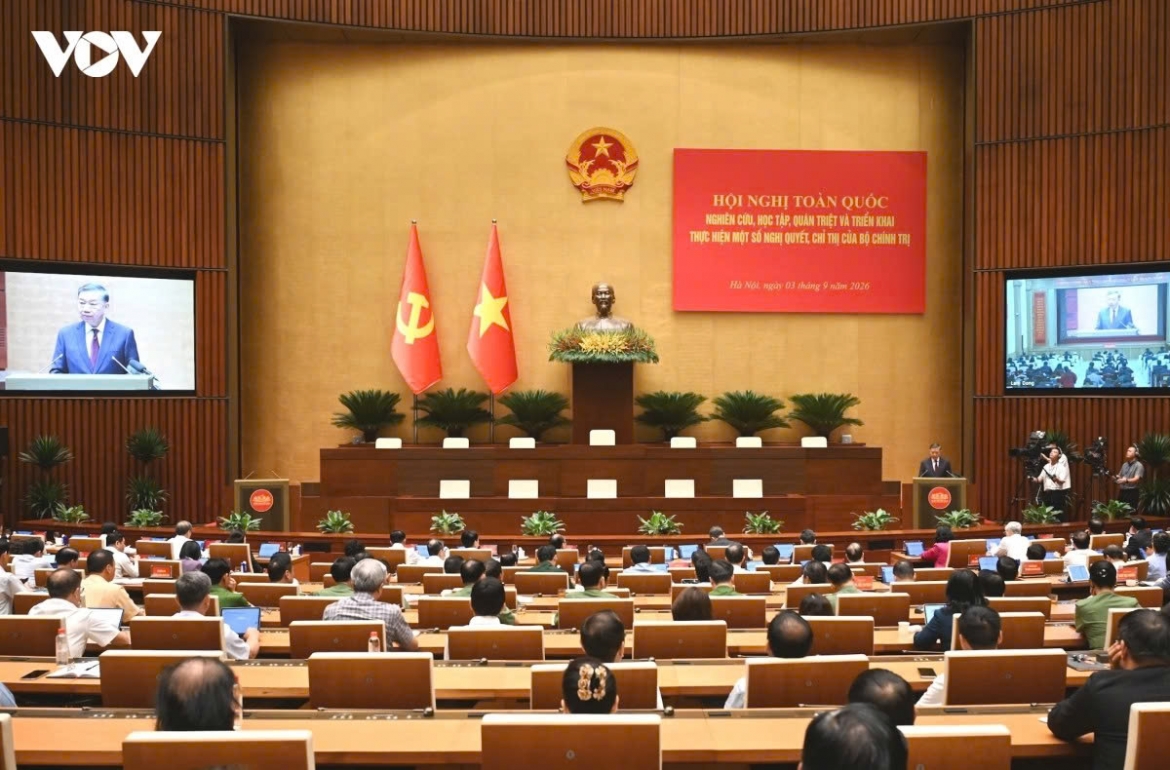
From institutional reform and delegation of authority, the top leader turned to officials and the culture of implementation, identifying these as decisive factors in translating resolutions and directives into results.
A sound resolution and sufficient resources will not prevent stagnation if officials hesitate or avoid responsibility, he argued. Officials must therefore be selected according to the tasks at hand, given assignments that test their capacity, and evaluated, appointed or screened based on results.
Those who take initiative and deliver tangible results should be recognised, protected and given greater responsibility. Those who avoid responsibility, pass tasks to others or work half-heartedly should be screened out or replaced.
Personnel assessments must be linked to job positions, deliverables, timelines, effectiveness, the ability to remove bottlenecks, reputation, and public trust.
For leaders, setting an example must be demonstrated through actions, decisions and results. The top leader held that heads of agencies and localities must directly lead major and difficult tasks, go to grassroots areas, engage in dialogue with officials, residents and businesses, identify whether obstacles stem from institutions or people, and take responsibility through to the end.
This approach also applies to the organisation of development space and resources. Regional development should be viewed as “a way of organising national growth,” rather than simply adding together local development plans, he said.
For inter-regional projects, the leader called for an end to the situation in which each locality concentrates only on its own interests, urging authorities to “discuss together, decide together, contribute resources together, share responsibility and share benefits.”
In tourism development, the focus should shift from visitor numbers to quality, added value and competitiveness, with greater emphasis on culture, identity and experiences, as well as science and technology, innovation, digital transformation and green transformation.
With more than 6.5 million Vietnamese living in over 130 countries and territories, the top leader suggested a shift from mobilisation and support toward “partnership, enabling mechanisms and resource connections,” linking specific needs for experts, technology, capital, networks and markets with projects in which overseas Vietnamese can participate.
In ideological work and policy communications, he called for greater explanation, dialogue and listening, describing cyberspace as both a key area of communication and a channel for listening to the people. Inspection and supervision should begin from the outset and focus on key tasks, major resources and issues of public concern.
Most importantly, he stressed, “The people must participate, benefit and have the final say in assessing the results.”
Turning resolutions into concrete results
Concluding his remarks, Party General Secretary and State President To Lam instructed Party committees, agencies, localities and their leaders to immediately identify key tasks, assign them to the right people with sufficient authority and resources, and set clear deliverables, timelines and responsibilities.
“When a task is clear, it must be done immediately; when it falls within one’s authority, a decision must be made; when it exceeds one’s authority, it must be reported together with a solution,” he analysed.
As President Ho Chi Minh once taught, “One for the plan, ten for the measures, twenty for determination.” The saying underscores that having a good plan is only the starting point; successful implementation requires far greater effort, concrete measures and determination.
Quoting President Ho Chi Minh’s teaching, the top leader said the documents examined at the conference have clearly set out their orientations and objectives. The decisive factor now is implementation and the responsibility of those in charge.
“Each document must be translated into concrete tasks with clearly assigned responsibility and verified through results,” he concluded.
The conference focused on the key and core contents of five Politburo resolutions and one directive, covering ideological work in the new context; the study and practice of President Ho Chi Minh’s thought, ethics, methods and lifestyle; the pioneering and exemplary role of officials and Party members; work concerning overseas Vietnamese; regional development and the organisation of national development space; and the development of tourism into a spearhead economic sector in the new era.
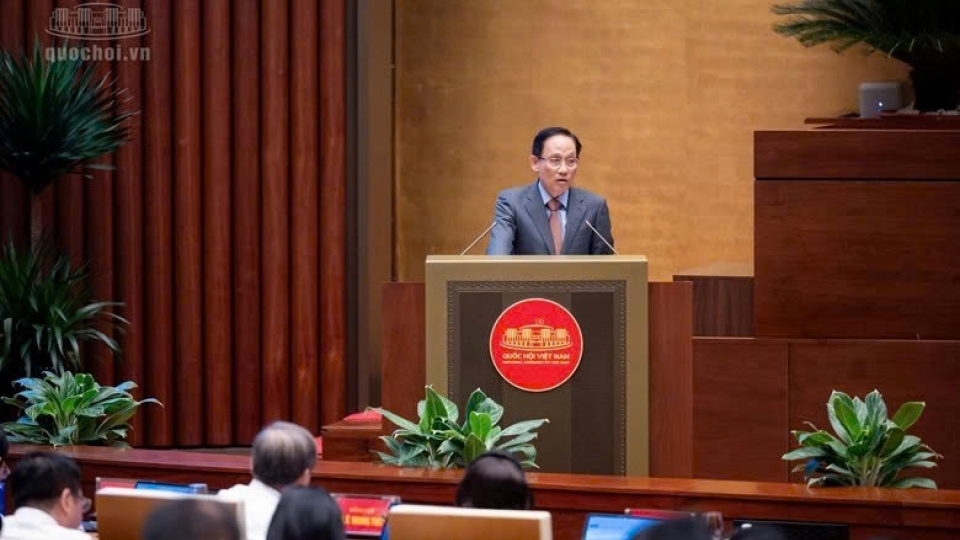
Resolution 23 puts overseas Vietnamese at the heart of national development
VOV.VN - The Politburo’s Resolution 23 calls for a new approach to the overseas Vietnamese community, strengthening ties with more than 6.5 million Vietnamese people abroad and harnessing their knowledge, resources and connections for national development.


