Basic science seen as foundation for Vietnam’s innovation-driven growth

VOV.VN - As Vietnam seeks to drive growth through science, technology, innovation and digital transformation, strengthening the foundation of basic science has emerged as a strategic priority.

At a recent meeting of the Central Steering Committee for Science, Technology, Innovation and Digital Transformation Development, Party General Secretary and State President To Lam stressed the need to clearly define development goals for basic scientific research in the new era and remove bottlenecks hindering long-term knowledge creation for the country’s rapid and sustainable development.
Associate Professor Dr. Dao Ngoc Chien, director of the National Foundation for Science and Technology Development (NAFOSTED), affirmed in an interview recently granted to VOV.VN that the message reflects a long-term strategic vision for science and technology development.
He noted that the history of global development has shown that every major technological breakthrough originates from achievements in basic science. Artificial intelligence, semiconductor technology, quantum technology, biotechnology and advanced materials are all built on the knowledge generated by fundamental research.
For Vietnam, investment in basic science is not only an investment in knowledge, but also an investment in the country’s long-term competitiveness, Chien said. Basic science helps develop high-quality human resources, generate new ideas, open up emerging technological directions and strengthen the country’s capacity to absorb and master advanced global technologies.
This vision was also reflected in top leader To Lam’s statement that basic science serves as the foundation of national innovation capacity. Chien believed the message reaffirms the central role of basic science within the broader science and technology ecosystem while encouraging scientists to pursue long-term foundational research.
One of the most notable points in the Party and State leader’s direction was the call to reform investment and funding mechanisms and adopt a more open approach toward research risks, marking a significant shift in science governance.
“Scientific research, especially basic research, is inherently associated with risk. Many breakthrough ideas cannot guarantee immediate success. If management mechanisms focus solely on controlling risks without accepting the possibility of failure, transformative discoveries will be difficult to achieve,” the NAFOSTED director argued.
In his view, the orientation toward flexible funding mechanisms, reasonable risk acceptance and evaluation based on substantive scientific value is consistent with international practice. It also provides a basis for research funding agencies to continue improving operations in a more competitive, transparent and internationally peer-reviewed manner.

The NAFOSTED director said these orientations have been incorporated into the draft decree on the organisation and operation of the National Foundation for Science and Technology Development.
A key new point is the principle of accepting scientific and technological risks within controlled limits, managing funding activities based on outputs and practical impacts, and allowing flexible funding mechanisms depending on the risk level of each research project.
According to the director, the new framework will create favourable conditions for pioneering research ideas and encourage scientists to pursue major and highly challenging scientific questions.
Beyond emphasising the role of basic science and investment reform, the top leader also called for the development of strong research groups and internationally competitive centres of excellence.
Reflecting on more than 15 years of implementing internationally standardised funding mechanisms for basic research, Chien said Vietnam has built many reputable research groups in mathematics, physics, chemistry, materials science, life sciences, information technology, as well as several social sciences and humanities disciplines.
Many Vietnamese scientists have published research in leading international journals, participated in global research networks and trained a new generation of high-quality young researchers. These achievements provide an important foundation for establishing internationally competitive research centers in the future.
However, he pointed out, the greatest challenge remains ensuring stable, long-term and adequately scaled investment. Other priorities include improving institutional autonomy, upgrading research infrastructure, expanding international cooperation and developing policies capable of attracting and retaining top scientific talent.
He stressed that internationally competitive research centres cannot be built through short-term projects, but require a long-term investment vision sustained over many years.
From a science governance perspective, Chien underscored that the most important task now is shifting from an administrative management mindset to modern scientific governance. Scientists should be granted greater autonomy in selecting research directions, organizing projects and utilising research resources. Evaluation systems should focus more on the quality and impact of research outcomes rather than excessive administrative procedures or formalistic indicators.
According to him, basic research is a long-term process of knowledge accumulation, and major discoveries may take years to emerge. Therefore, policy stability, sustained investment and a healthy academic environment are essential conditions for scientific development.
Overall, if Vietnam aims to master technology, build a knowledge-based economy and strengthen its national position in the 21st century, it must begin with investment in basic science. Such investment is not only about creating knowledge for today, but also about strengthening national competitiveness and ensuring sustainable development for decades to come.
Science and technology development must not lag behind reality: NA Chairman
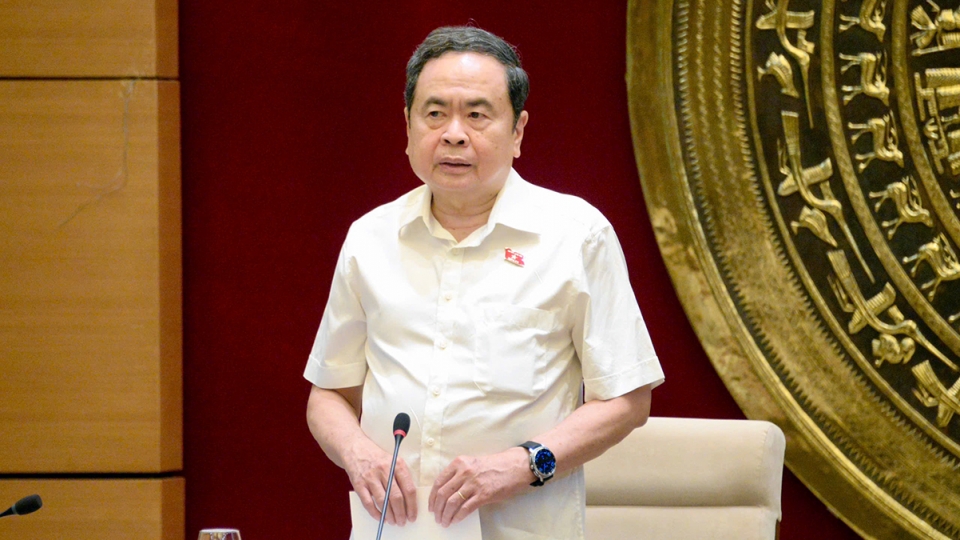
VOV.VN - National Assembly Chairman Tran Thanh Man has stressed that science and technology development, innovation, and digital transformation must move ahead of practical demands rather than lag behind them, describing the issue as a strategic requirement for Vietnam’s future growth.