Vietnam voices ASEAN’s push for int’l cooperation on radiation safety

VOV.VN - Vietnam, speaking on behalf of ASEAN at the United Nations, has urged stronger international cooperation, broader scientific data-sharing and adequate resources to support the independent work of the UN Scientific Committee on the Effects of Atomic Radiation (UNSCEAR).
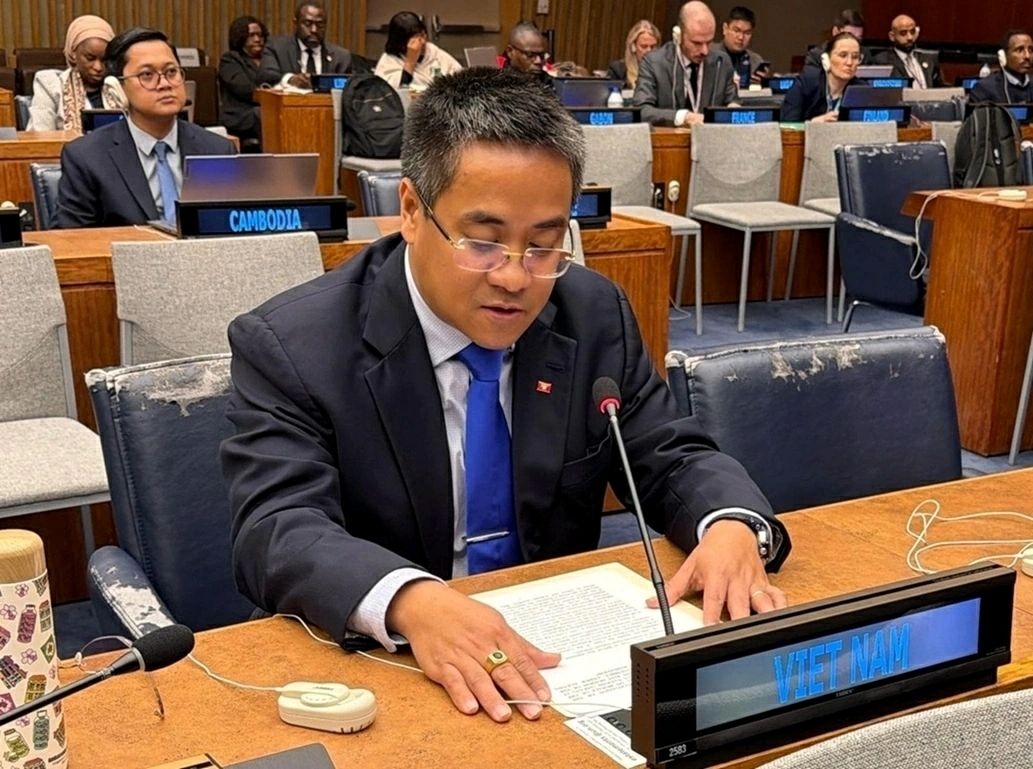
The appeal came as the UN General Assembly’s Special Political and Decolonization Committee (Fourth Committee) considered the agenda item “Effects of atomic radiation” at its 81st session on October 21.
Minister Counsellor Nguyen Hai Luu, Deputy Permanent Representative of Vietnam to the United Nations, delivered the statement on behalf of ASEAN, reaffirming the bloc’s support for UNSCEAR’s scientific independence, impartiality and objectivity.
In his presentation, Luu noted that ASEAN acknowledges UNSCEAR’s contribution and role in advancing scientific understanding of the sources, levels, effects and risks of exposure to ionizing radiation. Its independent, evidence-based assessments provide a scientific foundation for international frameworks and standards on radiation protection and safety, including those developed by the International Atomic Energy Agency (IAEA), helping safeguard human health and the environment.
ASEAN encourages countries to continue contributing scientific data, strengthen international collaboration and participate more widely in global surveys, including those on medical exposure to ionizing radiation. At the regional level, the bloc reaffirms its commitment to advancing nuclear and radiation safety cooperation through mechanisms such as the ASEAN Network of Regulatory Bodies on Atomic Energy (ASEANTOM). It also highlights the importance of exchanging information and expertise and working with relevant international organisations in line with their respective mandates.
A further concern was the financial and operational pressure affecting UNSCEAR’s work. ASEAN emphasises the need for adequate and predictable resources, together with appropriate support, to enable the Committee to fulfil its mandate effectively while safeguarding its scientific independence.
During the discussion, several countries also voiced support for UNSCEAR’s work, emphasising scientific independence, international cooperation and the need to secure sufficient resources for the Committee. Belgium, acting as coordinator, introduced draft resolution A/C.4/81/L.6, which addresses organisational support arrangements for UNSCEAR and the possibility of considering an expansion of its membership in the future.
At the conclusion of the meeting, the Fourth Committee approved draft resolution A/C.4/81/L.6 without a vote.
Strategy approved for peaceful development, application of atomic energy
Deputy Prime Minister Nguyen Chi Dung has signed a decision to approve the strategy for the development and application of atomic energy for peaceful purposes through 2035, with a vision to 2050.