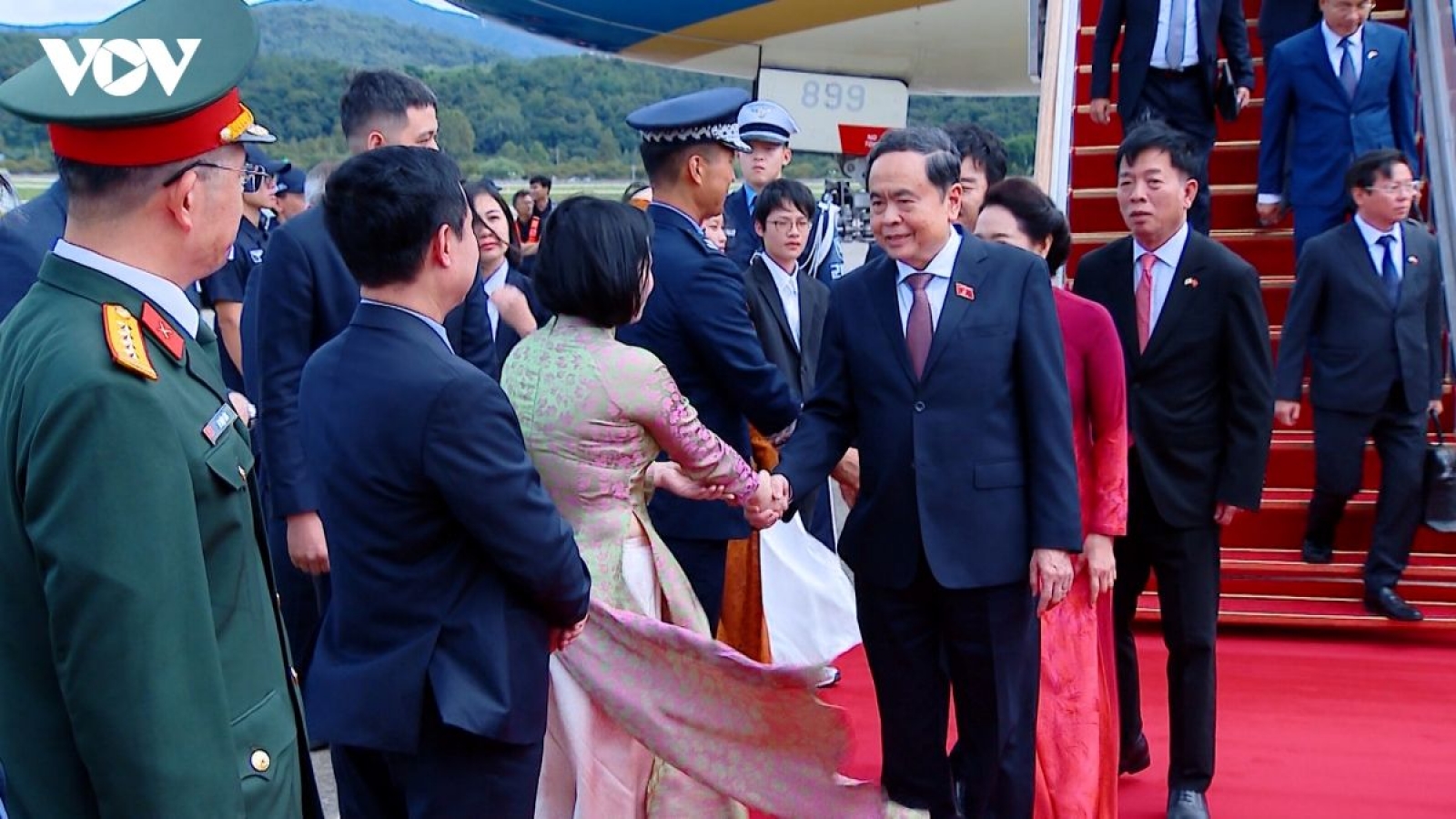
Vietnam Innovation Network in Korea encouraged to serve as tech bridge for Vietnam

VOV.VN - National Assembly President Tran Thanh Man has requested the Vietnam Innovation Network in Korea (VINK) serve as a bridge bringing knowledge, technology and international expertise back to address Vietnam’s development needs, particularly in science and technology, innovation and digital transformation.
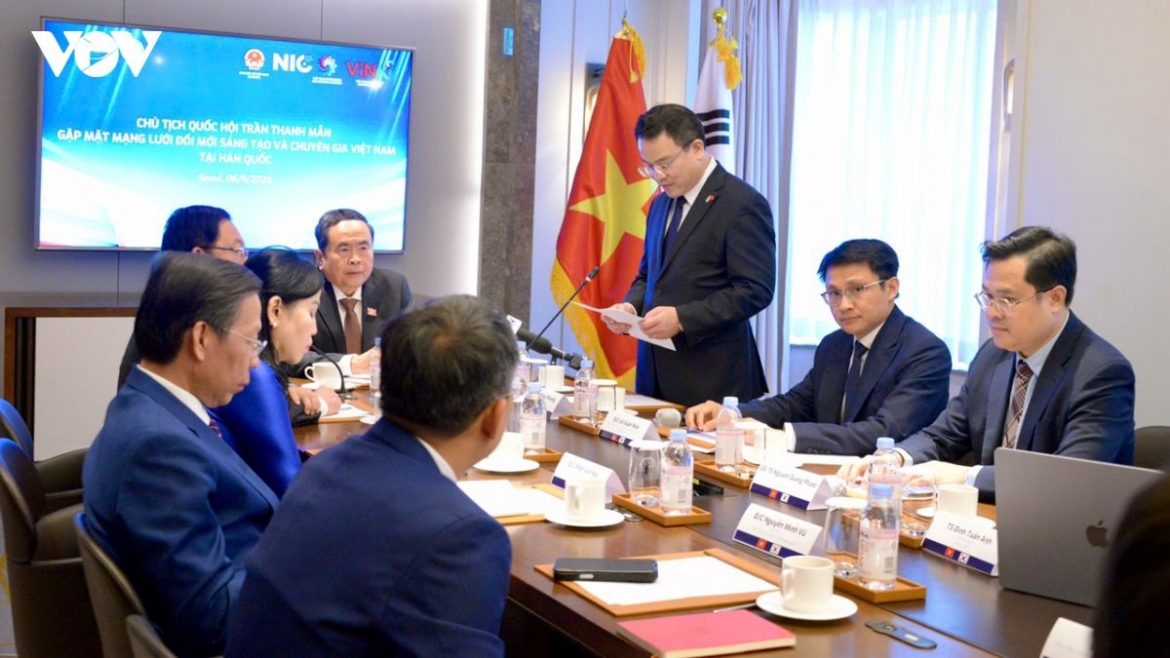
To fulfil this role, he called on VINK to focus on sharing and transferring knowledge and international experience, especially the Republic of Korea’s experience in developing, mastering and commercialising technologies, while proactively working with domestic agencies to identify priority areas and problems requiring solutions.
“The Vietnam Innovation Network in Korea needs to become an extended arm of the country in intelligence and technology,” National Assembly President Man said during his meeting with VINK leaders and experts in Seoul on September 6 as part of his official visit to the Republic of Korea.
Turning Korean expertise into resources for Vietnam
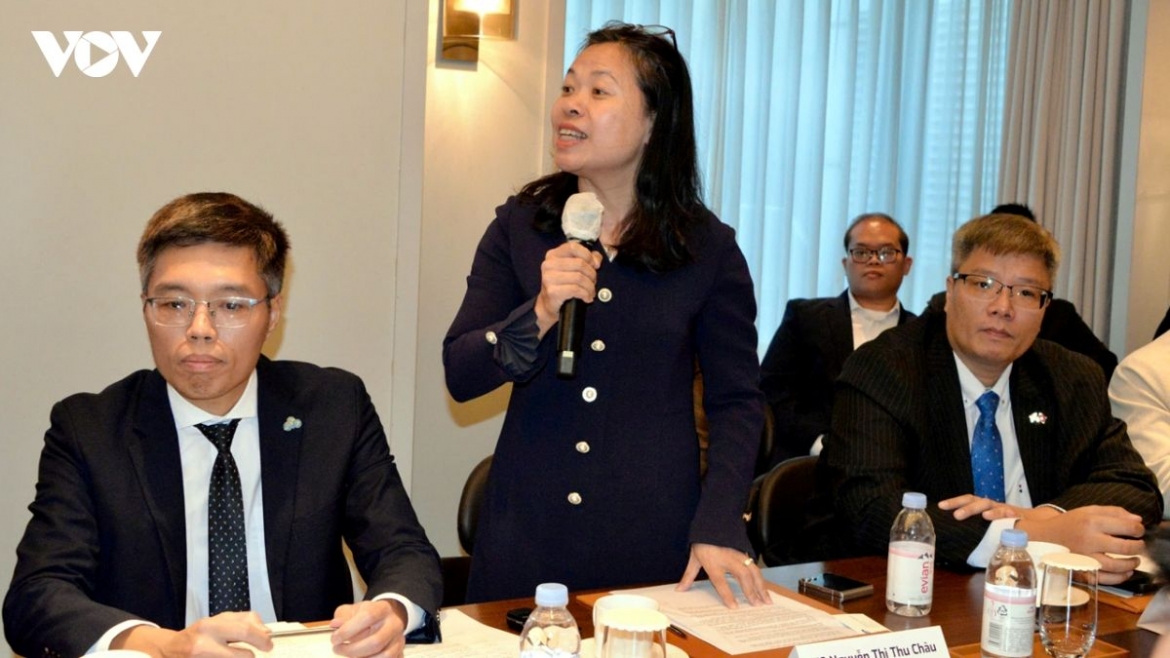
VINK members at the meeting shared experience and proposed solutions to promote key economic sectors, science and technology, innovation and digital transformation in Vietnam.
One issue of particular concern was how to train, attract and retain high-quality technology talent.
Engineer Do Van Huong, who specialises in chip design at ASICLAND, proposed a “three doors” model for Vietnam. In his view, it’s important to open a door for students to gain access to real chips while still at university; to create a “door for top talent” to attract leading experts from around the world; and to build a “door to the world” to expand international technology networks.
To attract high-quality experts, Vietnam needs policies covering visas, personal income tax, mentorship programmes and an internationally competitive working environment, he said. This would help create a continuous flow from domestic talent development and expert recruitment to broader global cooperation.
The proposals show that the challenge is not simply to increase the pool of technology talent, but also to connect human resources, technology and markets to build new capabilities at home.
Against this backdrop, National Assembly President Man suggested that VINK’s role should go beyond sharing experience and turn external knowledge into resources that directly serve Vietnam’s development.
The network should “turn other people’s knowledge into our knowledge and other people’s intelligence into our intelligence,” he said, stressing the importance of transferring international knowledge and experience, particularly Korea’s experience in developing, mastering and commercialising technologies.
More importantly, experts should work with domestic agencies to identify the right priority areas, the right problems and the right resource needs, helping ensure that initiatives move beyond discussions and exchanges.
Turning expert ideas into concrete tasks
To ensure that recommendations from the expert community translate into practice, National Assembly President Tran Thanh Man requested that relevant ministries and agencies consider turning VINK’s proposals and ideas into specific tasks, programmes and products, with clear lead agencies, implementation mechanisms and timelines.
This would also strengthen links between Vietnamese experts overseas and the country’s development process, particularly in priority fields such as science and technology, innovation, digital transformation, artificial intelligence and strategic technologies.
According to the top legislator, Vietnam has issued a number of resolutions on science and technology and innovation, the private sector, international integration, lawmaking and overseas Vietnamese affairs. The National Assembly is also accelerating digital transformation and the use of artificial intelligence in lawmaking, oversight and decision-making on major national issues.
In developing AI, Vietnam is focusing on domestic computing infrastructure and data, investing in supercomputers, green data centres and national data infrastructure, while encouraging technology companies to develop Vietnamese-language large language models and AI solutions suited to the country’s cultural, legal and governance context.
Digital and AI skills are also being promoted through the “Digital Literacy for All” programme, alongside training initiatives spanning general education, universities and the existing workforce.
In this context, he said, Vietnamese experts in the Republic of Korea can serve as a link between the Republic of Korea’s technological development experience and the specific challenges facing Vietnam.
The top legislator affirmed that the National Assembly would continue to help build a modern and open institutional framework and strengthen oversight of implementation, particularly in science, innovation and digital transformation.
Bringing knowledge and technology home
The expectations placed on VINK are also linked to the broader role of the Vietnamese community overseas in the country’s development.
National Assembly President Tran Thanh Man called on VINK members to maintain strong ties with their homeland, connect knowledge and technology resources in the Republic of Korea with domestic needs, and contribute to the goals of making Vietnam an upper-middle-income country by 2030 and a high-income country by 2045.
From proposals on chip-engineer training and attracting top experts to developing AI and innovation ecosystems, the meeting highlighted that the task is not simply to bring talented people back to Vietnam, but also to establish mechanisms that effectively connect the knowledge, technology and international networks of Vietnamese people overseas with the country’s development process.
This is also the meaning behind the ‘extended arm’ image that National Assembly President Tran Thanh Man has placed at the heart of his expectations for the Vietnam Innovation Network in Korea.
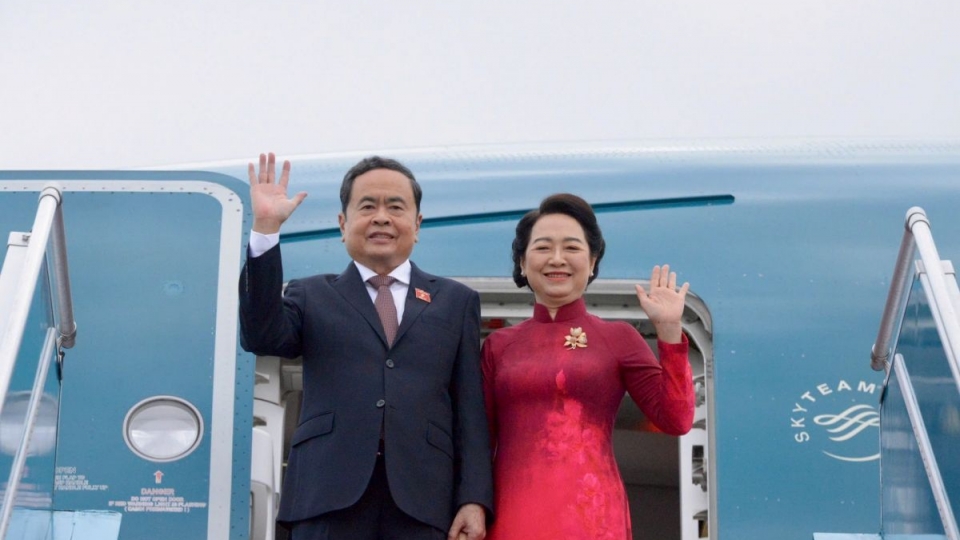
National Assembly President Tran Thanh Man begins official visit to RoK
VOV.VN - National Assembly President Tran Thanh Man and his spouse Nguyen Thi Thanh Nga left Hanoi on September 6 for an official visit to the Republic of Korea to realise Vietnam’s foreign policy priorities and enhance the role of parliamentary diplomacy.