


Deputy PM orders removal of five bottlenecks in agricultural technology

VOV.VN - Deputy Prime Minister Ho Quoc Dung has called for removing five bottlenecks and accelerating the application and commercialization of research results to establish science, technology, innovation, and digital transformation as key drivers for sustainable agricultural growth.
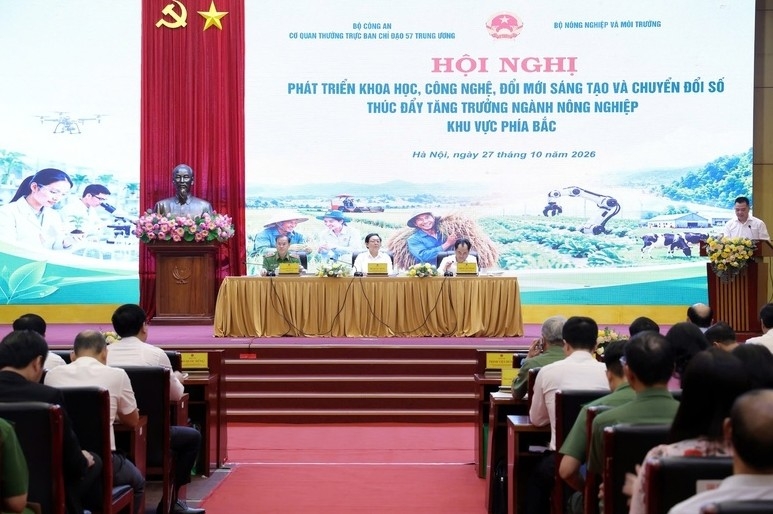
Deputy Prime Minister Ho Quoc Dung on October 27 attended a conference on science, technology, innovation, and digital transformation boosting agricultural growth in the northern region, co-organized by the Ministry of Agriculture and Environment and the Ministry of Public Security.
The conference was attended by Minister of Agriculture and Environment Trinh Viet Hung, Deputy Minister of Public Security Nguyen Van Long, alongside 450 delegates representing ministries, agencies, localities, research institutes, universities, enterprises, and relevant organizations.
Removing five bottlenecks to advance agricultural production
Opening the conference, Minister Trinh Viet Hung emphasized that the agricultural sector must transition from extensive to intensive growth, leveraging science and technology, innovation, and digital transformation as drivers to enhance productivity, quality, efficiency, and added value.
While the northern region houses numerous research institutes and universities, linkages between research and production, technology transfer, and application remain limited. The conference aims to evaluate current realities, identify bottlenecks, and propose solutions to boost growth.
Deputy Minister of Agriculture and Environment Dang Ngoc Diep reported that in 2025, agricultural growth reached 3.78%, with export turnover of ago-forestry- fishery products hitting US$70.63 billion. During the nine-month period of 2026, growth reached 4.02%, and export turnover totaled US$56.3 billion.
The application of new crop varieties, biotechnology, mechanization, and advanced farming practices increased new rice variety productivity by approximately 9.9%, raised output by an estimated 2.4 million tonnes annually, and generated an added economic value of about VND12 trillion ( more than US$470 million). Veterinary vaccine research, forestry crop breeding, aquaculture, and deep processing also achieved positive results.
However, the sector continues to face five major bottlenecks: small-scale and fragmented production; scattered research and technology transfer; limitations in seed and input technologies; shortages in preservation and deep-processing technologies; and unlinked data alongside weak digital human resources.
The Ministry of Agriculture and Environment proposed concentrating resources on high-quality seeds, biotechnology, automation, deep processing, and traceability; reforming research to align with enterprise and market demands; and strengthening linkages among research institutes, universities, enterprises, and localities to improve application efficiency and commercialization.
Majority of agricultural science and technology products unapplied
Deputy Minister of Public Security Nguyen Van Long said that according to compilations by the Ministry of Public Security as the Permanent Body of the Central Steering Committee 57, 34 localities reported 916 tasks linked to 908 science, technology, and innovation products. Among these, the agricultural sector accounts for 451 products, nearly 50%.
Notably, 341 out of 451 products, approximately 76%, are still in the research phase. The application and commercialization rate stands at a modest 24%.
Deputy Minister Nguyen Van Long suggested that the Ministry of Agriculture and Environment identify priority growth challenges, select sectors with high added-value potential, and connect local practical demands with the research and application capacities of research institutes, universities, and enterprises.
Tackling major challenges and commercializing research results
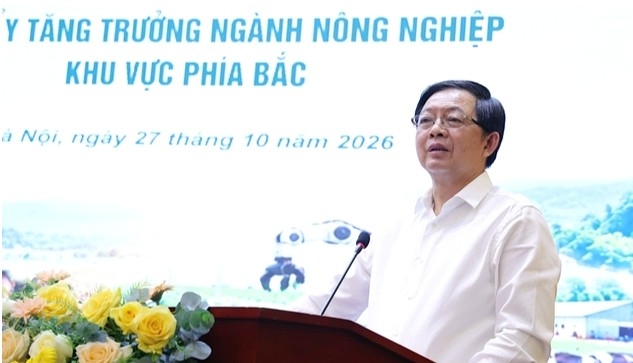
Concluding the conference, Deputy Prime Minister Ho Quoc Dung assessed that the agricultural sector retains significant growth potential and room for development but requires resolving existing shortcomings so that science, technology, innovation, and digital transformation genuinely serve as development drivers.
The Deputy Prime Minister emphasized that agriculture plays a vital role in ensuring social security and serves as an economic bedrock. Applying science and technology in agriculture represents a rapid and effective pathway toward sustainable development.
He requested the Ministry of Agriculture and Environment to lead, in coordination with the Ministry of Public Security and the Ministry of Science and Technology, a comprehensive review of scientific and technological activities within the sector, identifying major issues to address in alignment with regional advantages and development requirements.
Priority areas include plant and animal varieties; fertilizers, animal feed, and pesticides linked to disease prevention and control; mechanization in agriculture, forestry, and fishery; agricultural product traceability; and production linked to environmental protection and circular economy.
The Deputy PM called for reforming linkages among the State, scientists, enterprises, cooperatives, and farming households along value chains, addressing the gap where research results are not yet transferred, applied, or commercialized commensurate with investment resources.
Fine-tuning science and technology task commissioning mechanisms
According to reports presented at the conference, over the past five years, only about 12% of research projects maintained connections with enterprises. Nationwide, 242 research institutes and universities operate with over 4,800 research tasks funded by tens of trillions of VND from the state budget, yet bringing results to the market continues to encounter major difficulties.
The Deputy Prime Minister instructed the Ministry of Agriculture and Environment to strengthen coordination and linkage between sector and locality demands and enterprises; promote value-chain linkages across sectors including seed development, smart farming, deep processing, biosecure livestock production, high-tech aquaculture, large timber forest development, and medicinal plants. Simultaneously, the ministry must build databases on land, water resources, meteorology, and disaster warning to support production.
The Ministry of Science and Technology was tasked with reviewing research projects, selecting feasible results to support application and commercialization, promoting linkages between research and production, and developing shared laboratories and research centers.
Dung also mandated removing institutional, financial, and shared infrastructure bottlenecks; perfecting mechanisms for science and technology task commissioning, piloting, transfer, and commercialization of research results; pricing intellectual property assets; and mobilizing socialized resources.
Ministries and sectors were urged to accelerate the digitization, standardization, connection, and sharing of agricultural data, first and foremost land data, traceability data, and information serving direct production and management.
The Deputy PM required ministries and agencies to promptly review and provide concrete responses to business petitions without delay, while emphasizing that agencies, localities, research institutes, and enterprises must act with strong determination to make science, technology, innovation, and digital transformation the new development drivers for the
Agricultural sector targets US$18 billion in Q4 exports
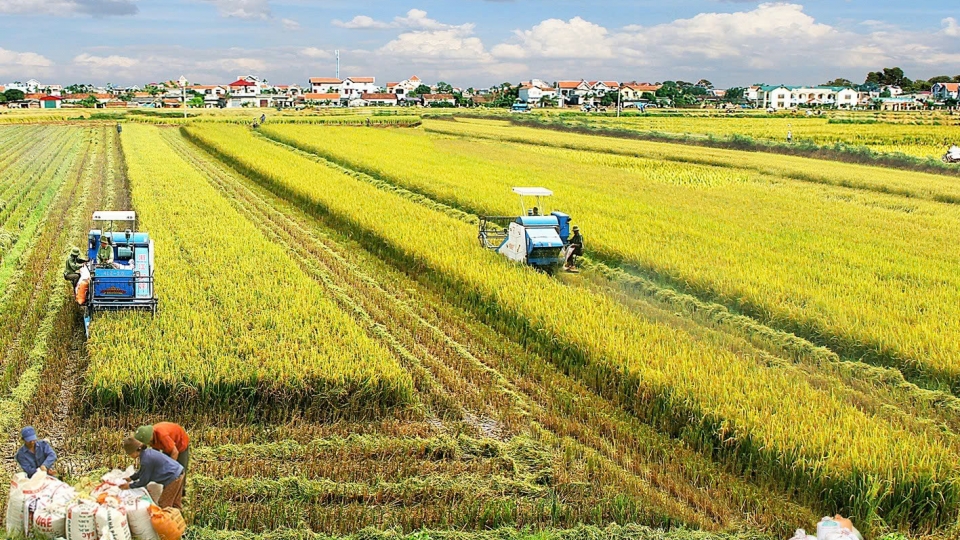
The agricultural sector aims to earn US$18 billion from exports of agro-forestry-fishery products in the final three months of 2026, requiring monthly shipments of nearly US$6 billion to achieve the annual target of at least US$74 billion.
Agricultural sector aims for full-year export target of US$74 billion
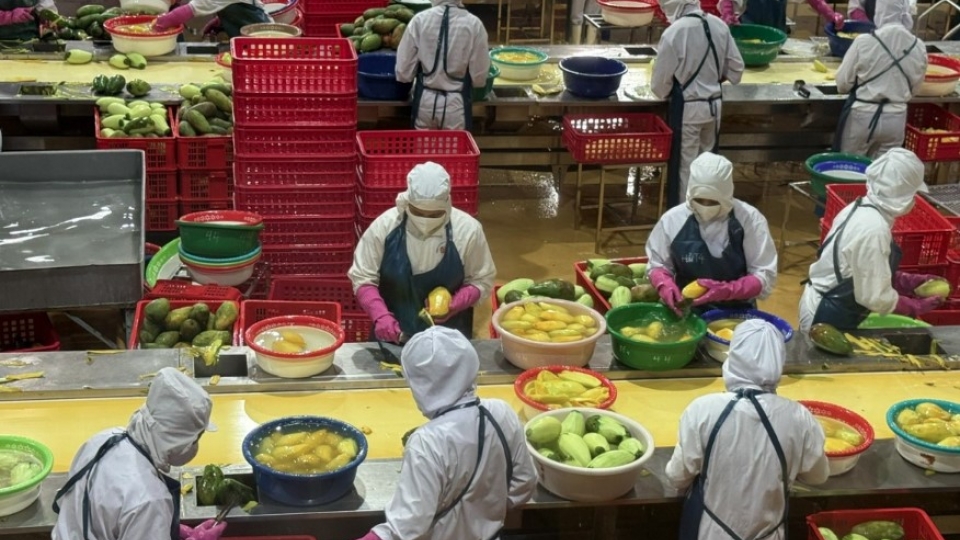
VOV.VN - Vietnam's agricultural sector must generate approximately US$24.9 billion over the final four months of the year, averaging US$6.23 billion monthly, to achieve its full-year export target of US$74 billion, according to the Ministry of Agriculture and Environment.
.


