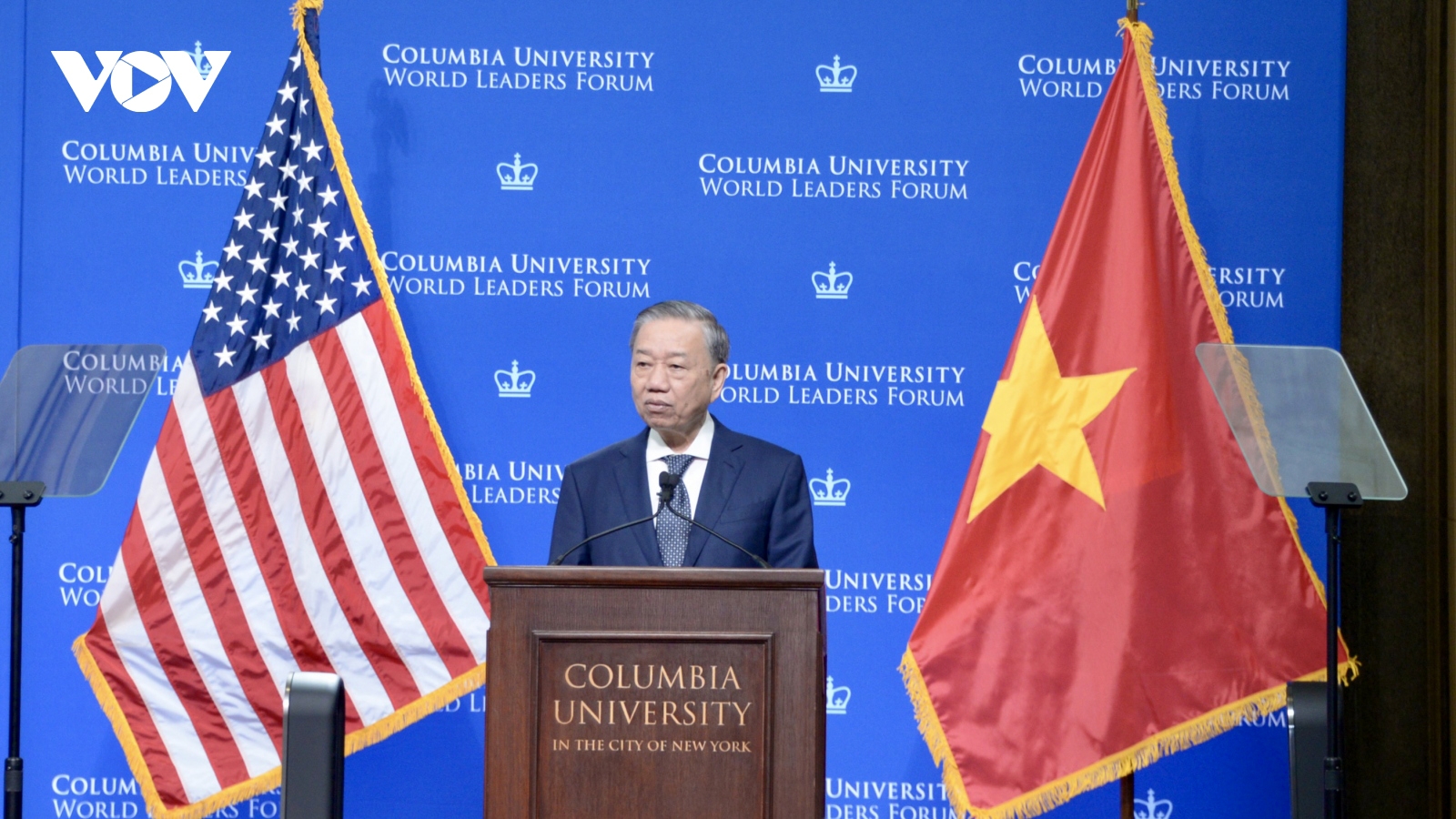
Columbia University experts hail Vietnam's dynamic development as major advantage

VOV.VN - Experts from Columbia University consider Vietnam's dynamic development a major advantage, drawing growing interest from the international business community, with many countries seeing Vietnam as an integral part of their regional development strategies.
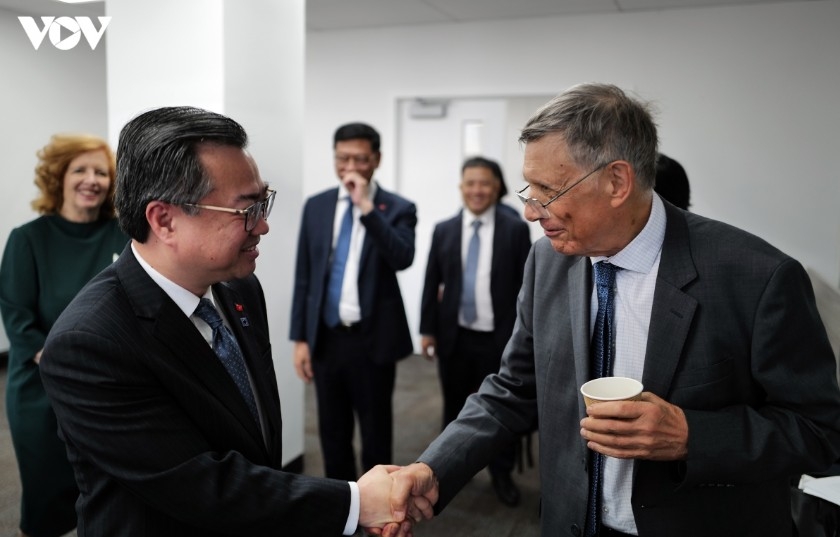
On the sidelines of UNGA 81 and bilateral activities in the US by General Secretary of the Communist Party of Vietnam Central Committee and President To Lam and the high-ranking Vietnamese delegation, Nguyen Thanh Nghi, Politburo member, Secretary of the Party Central Committee, and Head of the Party Central Committee’s Commission for Policy and Strategy, held a working session with leaders, experts, and scholars from Columbia University in New York on September 22.
Speaking at the session, Nguyen Thanh Nghi hailed the prestige and stature of Columbia University, one of the US' leading historic higher education institutions, which has trained numerous US presidents, heads of state, and prominent figures in scientific research, economics, and governance.
He acknowledged that Columbia University and the Weatherhead East Asian Institute have increasingly prioritized and strengthened cooperation with initiatives like the Vietnam Global Research Program and the Vietnam Leadership Program, which have expanded academic research, scholarly exchange, and human resource development.
He noted that Vietnam has entered a new phase of development, aiming to become a developed, high-income nation by 2045. To achieve these targets, the nation must simultaneously reform its development model, sustain high growth rates, boost productivity, and advance science, technology, and innovation.
In this context, the working delegation sought insights and evaluations from international experts on Vietnam's development model, alongside experience in enhancing economic autonomy and resilience against external shocks amid deep international integration.
Welcoming the Vietnamese delegation, Dr. Amy Hungerford, Executive Vice President of Columbia University praised Vietnam's economic achievements, highlighting its ability to maintain high growth and deepen integration with international institutions, thereby elevating its regional and global standing.
Both sides exchanged views on suitable development models for Vietnam to achieve its target of becoming a developed, high-income nation by 2045. They also discussed major global geopolitical and geoeconomic trends over the next five to ten years, the capabilities Vietnam needs to prepare right from the present, and the imperative to enhance the economy's autonomy and resilience amid fluctuating international situation.

Columbia University experts emphasized that Vietnam's dynamic growth presents a major competitive edge, attracting great attention from global corporations, while many nations incorporate Vietnam into their regional strategies.
They noted that Vietnam has opportunities to integrate deeper into new supply chains, but must formulate strategies for data governance, artificial intelligence, and appropriate technological capability development. Special attention must be paid to policies ensuring economic security, energy security, science and technology advancement, and enterprise development, including small and medium-sized enterprises, along with addressing environmental protection, resource conservation, and human capital development to create momentum for rapid growth and a foundation for sustainable development in the medium and long term.
Thanking the Columbia University experts for their profound insights, Nguyen Thanh Nghi affirmed that Vietnam's development model cannot be viewed in isolation from profound global shifts.
He stated that Vietnam is upgrading its growth model to rely primarily on productivity, science, technology, and innovation. The country will continue mobilizing domestic and international resources to foster technological capabilities, human resources, supply chains, and domestic enterprises, steadily elevating its capacity to generate and capture value within global value chains."
Along with continuous and extensive international integration, Vietnam also focuses on enhancing its economic autonomy, adaptability, and resilience against external fluctuations.
Based on shared areas of interest, Nguyen Thanh Nghi noted that the Commission for Policy and Strategy and Columbia University hold great potential to build a substantive and long-term cooperation framework. He proposed that Columbia University study the establishment of a regular dialogue channel with the commission on strategic development issues, with the Weatherhead East Asian Institute serving as a key focal point.
He also suggested establishing an expert network between the two sides, stepping up expert exchange programs, organizing policy seminars, and cooperating in training research personnel and strategic advisory staff.
Both sides agreed to continue discussions to realize the proposed cooperation initiatives, thereby enhancing the sharing of governance experience and policy research.
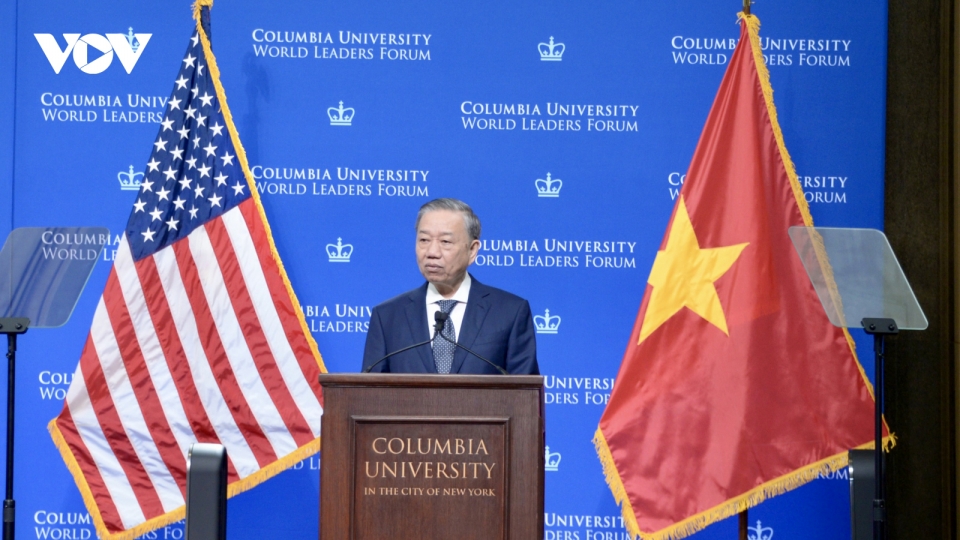
Party leader sheds light on Vietnam policy line during Columbia University speech
VOV.VN - Party General Secretary and President To Lam of Vietnam delivered an important policy speech at Columbia University on September 23 (local time), as part of his ongoing working trip to the United States for the High-Level Week of the 79th session of the United Nations General Assembly.