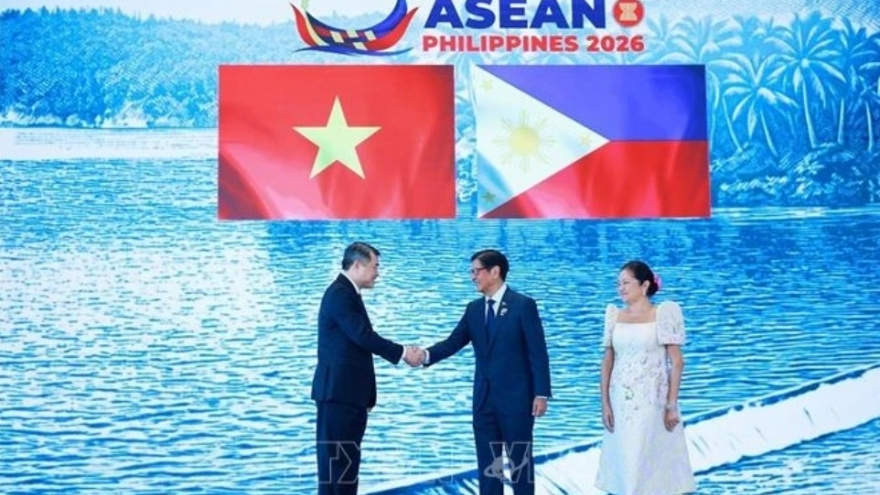
ASEAN need to ensure energy, food and human security, PM Hung says

VOV.VN - ASEAN should focus on ensuring energy, food and human security while reinforcing solidarity to effectively respond to global fluctuations, Prime Minister Le Minh Hung has said at the 48th ASEAN Summit in the Philippines.
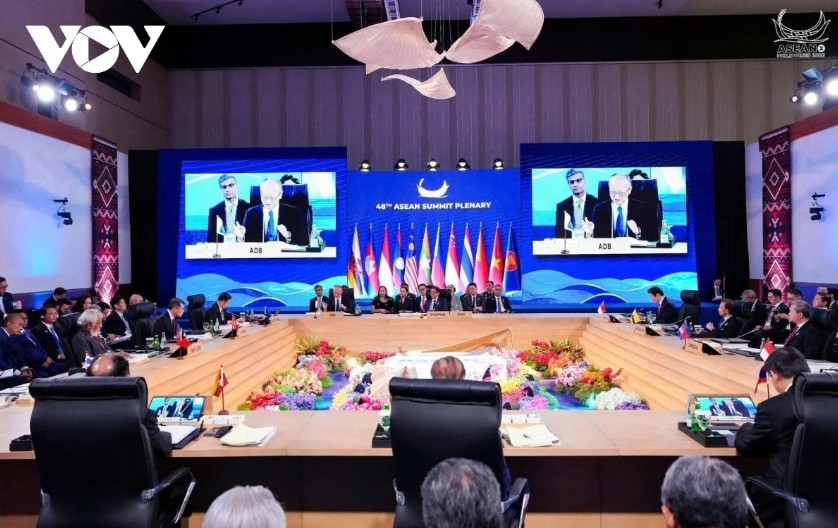
The opening ceremony and plenary session of the 48th ASEAN Summit took place in Cebu, the Philippines, on the morning of May 8.
Addressing the summit, Prime Minister Le Minh Hung said ASEAN needs to concentrate resources on ensuring essential security requirements, including energy security, food security and human security, including through the ratification and effective implementation of the ASEAN Petroleum Security Agreement.
In his opening remarks, Philippine President Ferdinand Marcos Jr. highlighted the significance of the summit as ASEAN enters a new stage of development based on the ASEAN Community Vision 2045.
Amid increasingly complex global developments, the summit provided an important occasion for ASEAN leaders to exchange assessments and practical measures to help ASEAN and its member states respond to multidimensional challenges, the Philippine president said.
President Marcos reaffirmed the Philippines’ commitment, as ASEAN Chair for 2026, to continue working with member states to strengthen solidarity and resilience, uphold ASEAN centrality and the spirit of mutual support, and deepen coordination among member states and with partners to effectively address challenges, sustain cooperation momentum and realise the goals set out in the ASEAN Community Vision.
At the plenary session following the opening ceremony, ASEAN leaders shared assessments of the negative impacts of complex geopolitical developments around the world, particularly the conflict in the Middle East, on peace, stability and international energy supply chains, as well as threats to civilian lives. They laid stress on the importance of maintaining peace and stability and upholding the principles of dialogue and peaceful settlement on the basis of international law and the United Nations Charter.
The leaders also expressed support for the Philippines’ priorities for ASEAN cooperation in 2026 under the theme “Navigating Our Future, Together”, which focuses on three major pillars: cooperation in dealing with non-traditional challenges as an anchor for regional peace and stability; promoting economic connectivity, digitalisation, and inclusive and sustainable development as drivers of prosperity corridors; and placing ASEAN people at the centre of Community-building efforts.
ASEAN leaders also stressed that amid current challenges, member states need to continue strengthening solidarity and ASEAN centrality, expand cooperation with partners, and improve the effectiveness of implementing cooperation plans and programmes, particularly in ensuring energy and food security, maintaining economic stability, safeguarding supply chains and supporting ASEAN citizens.
Addressing the plenary session, PM Hung reaffirmed Vietnam’s support and commitment to working with the Philippines as ASEAN Chair and other member states to realise the Philippines’ priorities and initiatives for 2026.
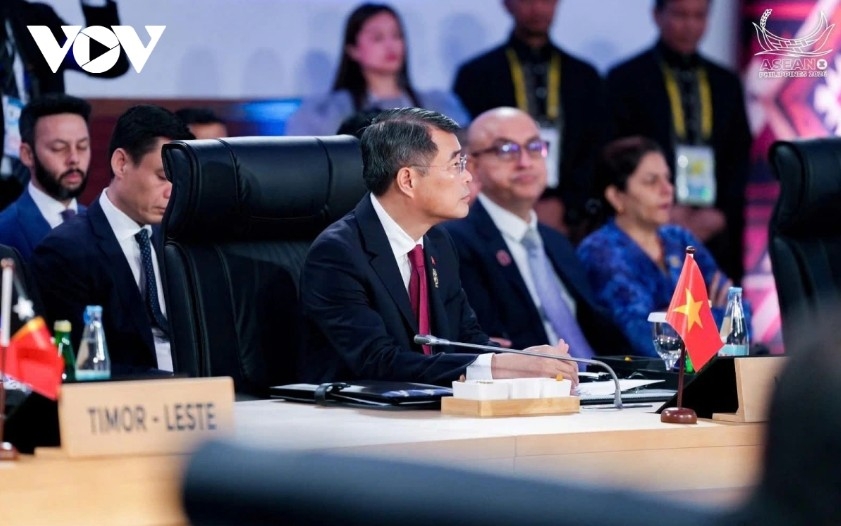
Emphasising that ASEAN is facing interconnected and multidimensional challenges, the Vietnamese Government chief said the question for ASEAN is not whether it will be affected, but how it will respond and how member states will respond together. He then put forward three major proposals.
First, PM Hung said ASEAN should focus resources on ensuring essential security needs, including energy security, food security and human security. This includes ratifying and effectively carrying out the ASEAN Petroleum Security Agreement; implementing the ASEAN Plan of Action for Energy Cooperation for 2026-2030, the ASEAN Power Grid and the Trans-ASEAN Gas Pipeline system; diversifying energy sources; promoting energy transition; and improving access to green finance and advanced technologies.
He also called for improving the effectiveness of existing food security frameworks and agreements, strengthening strategic reserves, and establishing dedicated emergency reserve mechanisms for rice and other essential goods. The Government leader affirmed that Vietnam stands ready to provide food assistance in emergency situations, share relevant experience with ASEAN member states and continue close coordination with ASEAN in supporting citizens.
Hung also proposed bolstering substantive cooperation to enhance ASEAN’s internal capacity and resilience. In this regard, he called for the effective implementation of the ASEAN Trade in Goods Agreement (ATIGA) and the early conclusion of the ASEAN Digital Economy Framework Agreement (DEFA).
He also called for stronger ASEAN coordination and solidarity, including improving the effectiveness of inter-sectoral consultation and coordination in emergency situations, while continuing to boost the coordinating role of the ASEAN Secretariat to ensure regional commitments are realized consistently, in a coordinated manner and effectively.
Vietnam’s proposals were welcomed and highly valued by ASEAN leaders for both their substance and timeliness. Based on Vietnam’s proposals, the summit discussed and agreed on ASEAN Leaders’ Statement on Priority Actions for Regional Resilience in Response to the Implications of the Situation in the Middle East on the Region.
The statement reflects ASEAN’s political stance on the implications of the Middle East situation, the leaders’ vision for ASEAN’s place in the regional architecture, and common response strategies and measures with a strong focus on action and implementation.
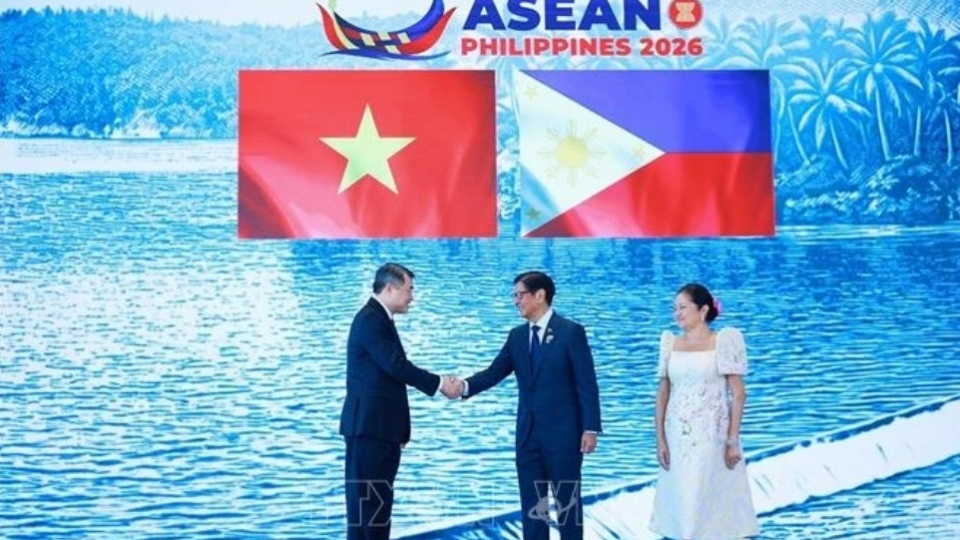
Government chief attends opening session of 48th ASEAN Summit in Cebu
VOV.VN - Prime Minister Le Minh Hung led a high-level Vietnamese delegation to the opening session of the 48th ASEAN Summit on May 8 at the Mactan Expo Center in Cebu, the Philippines.
Vietnam calls for stronger ASEAN unity, coordination ahead of 48th Summit
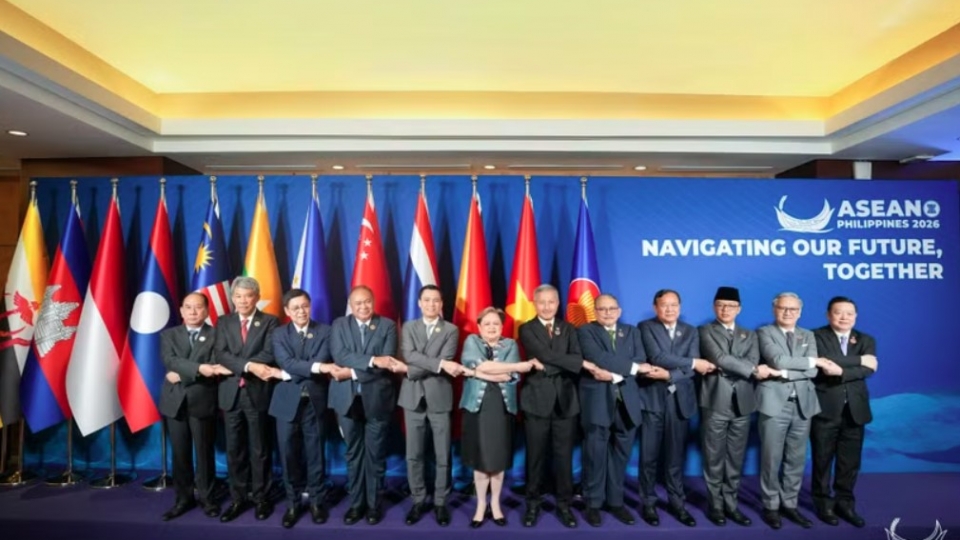
Authorised by Foreign Minister (FM) Le Hoai Trung, Deputy FM Dang Hoang Giang, Head of ASEAN SOM Vietnam, led a Vietnamese delegation to a series of ASEAN foreign ministerial meetings in Cebu, the Philippines, on May 7 which finalised preparations for the 48th ASEAN Summit.