1975 Spring Victory offers lessons for unlocking development resources: insiders

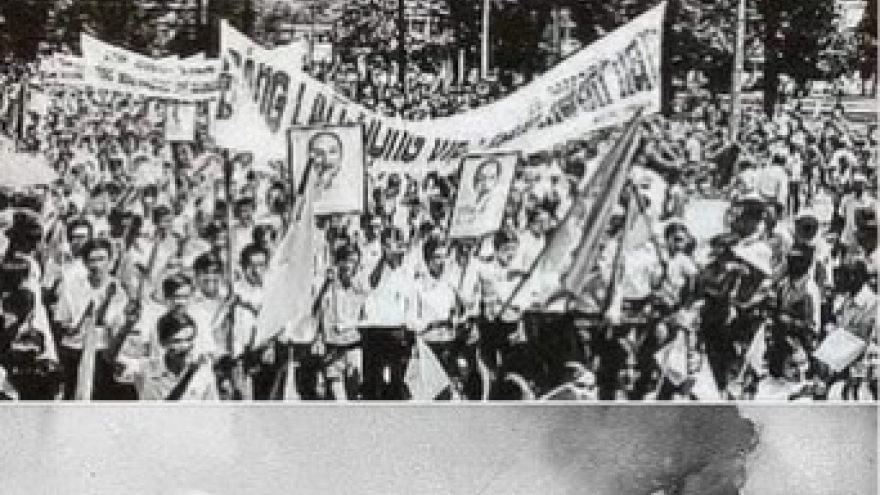
The 1975 Great Spring Victory not only ended the resistance war against the US, liberated the South, and reunified the country, but also demonstrated the nation’s ability to mobilise collective strength, a lesson experts say remains highly relevant as Vietnam seeks to unlock resources, remove institutional bottlenecks.

Insiders stressed that the strategic lessons of 1975 offer direct guidance for Vietnam’s current development journey, particularly as growth increasingly depends on innovation, human capital and effective governance.
Linking diaspora resources to unleash national strength
Dr. Pham Thi Hong Ha from the Institute of History under the Vietnam Academy of Social Sciences (VASS) said one of the victory’s core lessons was the effective combination of domestic and international resources, a principle that remains relevant in tapping the potential of overseas Vietnamese (OVs).
With their large and highly skilled community and extensive international networks, Vietnamese expats hold important resources in knowledge, technology and market connectivity that remain in short supply at home, she said.
In recent years, many OV intellectuals have directly engaged in innovation programmes, technology transfer, and cooperation with domestic firms to help expand markets. Some collaboration models linking Vietnamese experts abroad with innovation centres at home have begun to yield positive results, contributing to improving businesses’ competitiveness.
However, Ha noted that these resources have yet to be fully utilised due to institutional constraints, including rigid administrative procedures, limited flexibility in research financing and fragmented coordination mechanisms.
To turn diaspora resources into a stronger growth driver, Ha called for more breakthrough policies, including project-based recruitment of experts, performance-based incentives, greater autonomy for scientific institutions, and pilot mechanisms for emerging technologies. Improving regulations on intellectual property, technology transfer and investment incentives is also essential, she added.
Removing institutional bottlenecks, she said, is key to transforming available resources into real development momentum while applying the historical lesson of combining national strength with international opportunities.
Tapping internal strength, putting people at centre
According to Master Hoang Thi Thu Hang from VASS’s Institute of Cultural Studies, the 1975 victory embodied the nation’s will for independence, self-reliance, resilience, and the strength of great national unity. It remains not only a historic legacy but also an enduring spiritual foundation underpinning the country’s renewal and development.
In the current context, internal strength is no longer measured by natural resources or low-cost labour, but by the quality of human resources and innovation capacity, making putting people at the centre of development more critical than ever, she said.
She pointed to major policy orientations, including Resolution 57-NQ/TW, which identifies science, technology, innovation and digital transformation as key drivers of growth, but said the challenge lies in translating them into effective and practical results.
Complicated support mechanisms for innovation, ineffective talent evaluation systems and research environments that remain insufficiently attractive to retain skilled professionals continue to constrain breakthroughs, Hang noted.
Some localities and organisations have begun fostering innovation ecosystems through stronger links among research institutes, businesses and management agencies, while innovation hubs and startup support programmes have shown early results. Yet these models remain fragmented and lack a strong institutional foundation for broader impact.
Drawing from the lessons of the 1975 Great Spring Victory, Hang said Vietnam should shift from a broad-based approach to a more focused allocation of resources toward breakthrough sectors such as artificial intelligence, semiconductors, digital transformation and green energy.
She also called for governance mechanisms that genuinely encourage creativity, give intellectuals greater autonomy and ensure transparent legal frameworks. In modern conditions, she added, the concept of national solidarity should extend beyond social cohesion to stronger links between public and private sectors, and between domestic and international partners.

Italian researcher highlights significance of Great 1975 Spring Victory
The Great 1975 Spring Victory of Vietnam spread the spirit of optimism to all oppressed nations, according to Honourary Consul of Vietnam in Turin and Genoa Sandra Scagliotti, who is an expert on Vietnamese studies.