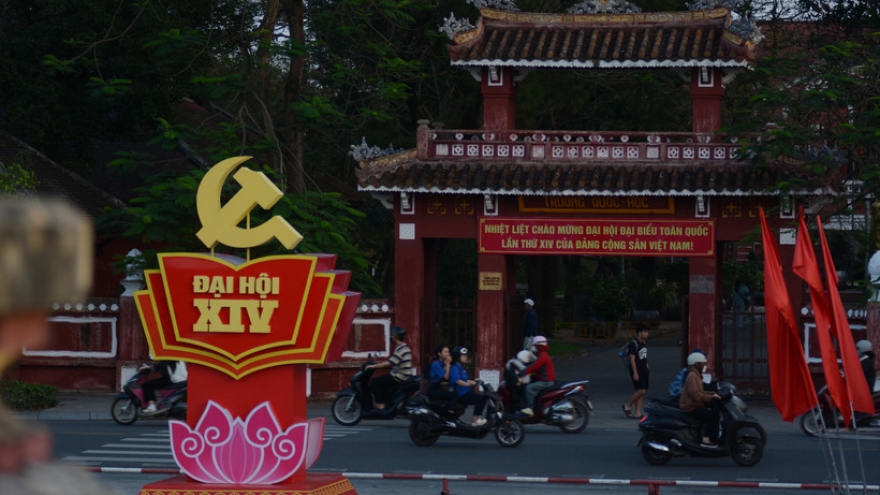
14th National Party Congress: Austrian expert impressed by Vietnam’s achievements

VOV.VN - Professor Carl Thayer, a leading expert on Vietnam at the Australian Defence Force Academy (University of New South Wales), has said that during the five-year term of the 13th National Party Congress, the Communist Party of Vietnam (CPV) played a key role in enabling the country to achieve notable results.
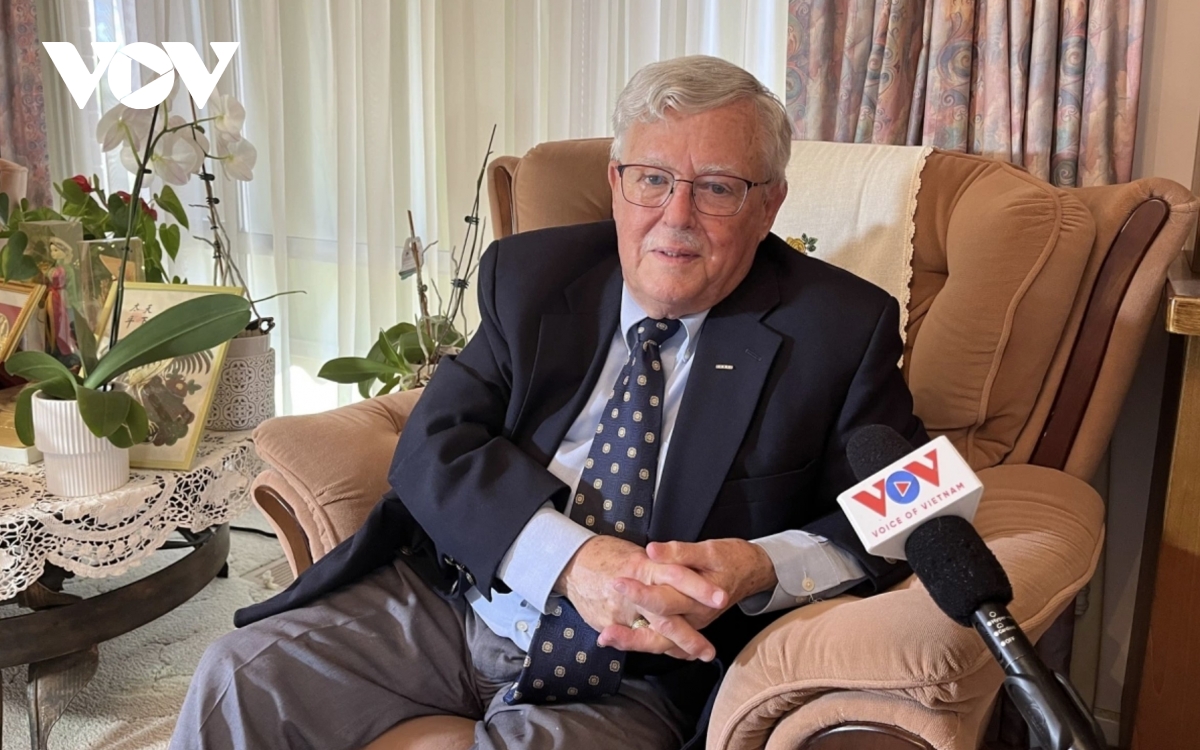
The 14th National Party Congress has drawn close attention not only from the Vietnamese public but also from international experts. Professor Carl Thayer, who has researched Vietnam for many years, said he has consistently followed developments in the country.
In a recent interview with a VOV correspondent in Australia, Professor Thayer said that during the 13th National Party Congress term, the Communist Party of Vietnam played an important role in helping the country record major achievements. Among these were the post-pandemic economic recovery, which placed Vietnam among the fastest-growing economies in the region. He also noted substantial improvements in education quality, along with marked progress in gender equality.
According to Professor Thayer, these outcomes showed impressive achievements Vietnam has recorded in recent years. He said economic performance had improved alongside rising living standards and longer average life expectancy. On foreign affairs, Vietnam had expanded its network of comprehensive partners, strategic partners and comprehensive strategic partners.
He referred to the Lowy Institute’s annual Asia Power Index, which ranked Vietnam 12th among 27 countries in the region. He also cited a new Lowy Institute index on economic management skills that assesses how well countries meet the needs of their people, in which Vietnam ranked fourth.
Professor Thayer said the Party’s standing had continued to strengthen thanks to the strong resolve shown by leaders at all levels, unity among Party members, and policies that responded to public aspirations.
From a Western perspective, he said this was reflected in effectiveness, credibility, and the ability to meet people’s needs and expectations. Beyond Vietnam’s successful management of the Covid-19 pandemic, he pointed to public health policies, the provision of quality education, and ongoing infrastructure development. He cited plans for metro lines in Hanoi and future high-speed rail projects, and added that anti-corruption efforts had also contributed to strengthening the Party’s credibility.
Recent achievements, together with strong public support for the Party and its policy directions, have created high expectations for the Party’s leadership in the coming years. In this context, in 2024 and 2025 the Party issued a series of major resolutions across a wide range of areas, from restructuring government apparatuses and decentralising governance to setting development goals in science and technology, energy, and education.
Professor Thayer said these resolutions clearly demonstrated the Party’s vision of integrating Vietnam into global supply chains and advancing the country toward developed status. The CPV had outlined the changes and reforms needed to raise the country’s technological capacity, combined with foreign investment to produce goods such as computer chips and electronic equipment for global markets, he added.
To achieve these goals, Professor Thayer said the CPV should work closely with its 14 comprehensive strategic partners, making use of the strengths of individual countries or groups of countries to support Vietnam’s development needs. He described these partners, particularly comprehensive strategic partners, as an important source of support in helping Vietnam realise its objectives.
Developments at the global, regional and national levels are placing Vietnam at a new juncture. The 14th National Party Congress, scheduled to take place in the coming days, is expected to create a breakthrough enabling Vietnam to seize opportunities and achieve stronger growth in the period ahead.
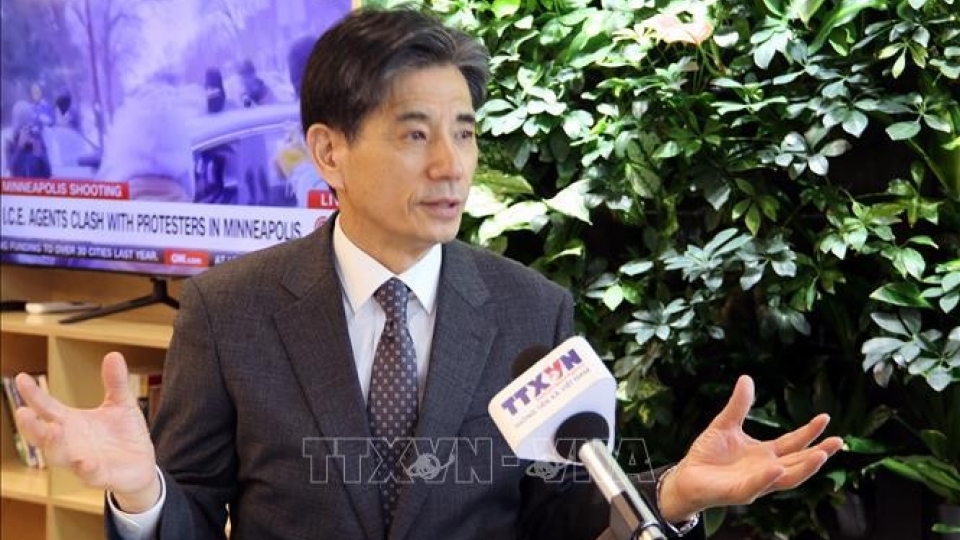
14th National Party Congress: Vietnam - reliable, flexible yet principled partner
The 14th National Congress of the Communist Party of Vietnam is drawing particular attention from the business community of the Republic of Korea (RoK), which views Vietnam as a reliable, flexible yet principled partner amid an increasingly complex global environment.