


Year-end export order outlook diverges for Vietnamese garment makers

VOV.VN - Vietnam’s garment export growth has slowed in recent months, pointing to a tougher path toward the full-year target of US$48-49 billion amid a sharp divergence in order availability among manufacturers.
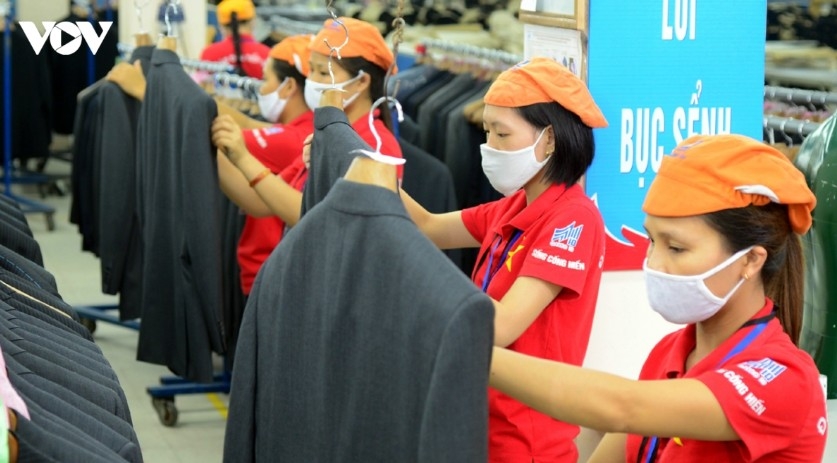
Garment exports reached US$22.86 billion in the January-July period of 2026, up 1.1% year-on-year. Including yarn, fiber, and raw materials, total sector export turnover exceeded US$27 billion.
Notably, order trends vary significantly across enterprises for the remainder of the year. Southern Textile and Garment Corporation – Vinatex (VSC) said it has secured actual production orders through the end of September and enough book orders to run through the fourth quarter, requiring overtime shifts of two to three days per week for urgent deliveries.
At Hue Textile Garment JSC, yarn and garment segments are moving in opposite directions. The yarn division secured sufficient orders for August, but September plans are only 50% filled. Meanwhile, garment transactions slowed sharply after July 20 as buyers grew cautious over US tax policy shifts, leaving knitwear orders slated for September and October at risk of cancellation or reallocation. Rising material costs are also squeezing margins as clients resist sharing extra expenses.
Hanoi Textile and Garment JSC (Hanosimex) reported full orders through September and 70% coverage for October, but November and December coverage stands at just 30%. Buyers are mostly checking prices rather than committing to large volumes, leaving the fourth-quarter outlook uncertain.
According to Hanosimex, the order structure is also shifting significantly. While 2025 mainly involved items with simple technical requirements, buyers now favor products with more complex sewing specifications integrating multiple processes such as printing, embroidery, and embellishments, requiring manufacturers to enhance their production organization capacity.
Hoa Tho Textile-Garment JSC in Da Nang has secured orders through October, though fourth-quarter bookings have slowed as buyers monitor tariff policies. A bright spot is Japan, where knitwear orders are fully booked through year-end, with higher output expected in 2027.
Conversely, EU orders for workwear and jackets remain flat, as clients are slow to sign contracts yet demand faster delivery.
Hoa Tho General Director Nguyen Ngoc Binh noted that the garment sector faces continuous price pressure, with fierce competition in FOB workwear and price cuts in fashion and sportswear as excess capacity leads to order fragmentation.
Overall, order volumes stay sufficient to sustain production through late 2026, though coverage thins out from October. Buyer caution, price pressures, input costs, and shifting tariff policies make long-term commitments difficult.
Heading into 2027, challenges are expected to intensify as buyers diversify supply chains, split orders, and demand better pricing, quality, and delivery speed. Success will increasingly depend on flexibility, value-added capabilities, and cost control.
Additionally, delayed deliveries of fabrics and accessories are lengthening production cycles, while rising raw material, supply, and freight costs continue to pressure margins.
According to Nguyen Hong Lien, General Director of Hue Textile Garment, frequent price checking has yielded low contract closing rates, while long-term orders are yet to materialize. Although production plans are secured through late 2026, first-quarter 2027 orders will likely only take shape by late August or September.
In response, Hue Textile Garment is focusing on preserving jobs, reorganizing production schedules, improving working conditions, and limiting excessive overtime to retain skilled labor, thereby building a foundation for late-year operations and peak season preparations.
As for Hoa Tho, the company will closely track tariff changes and order shifts, work more closely with clients, and offer flexible pricing while prioritizing high-value-added orders in Japan and the EU. At the same time, it will tighten control over material supply schedules, boost labor productivity, reduce costs, optimize production, and maintain a stable workforce to enhance competitiveness in 2027.
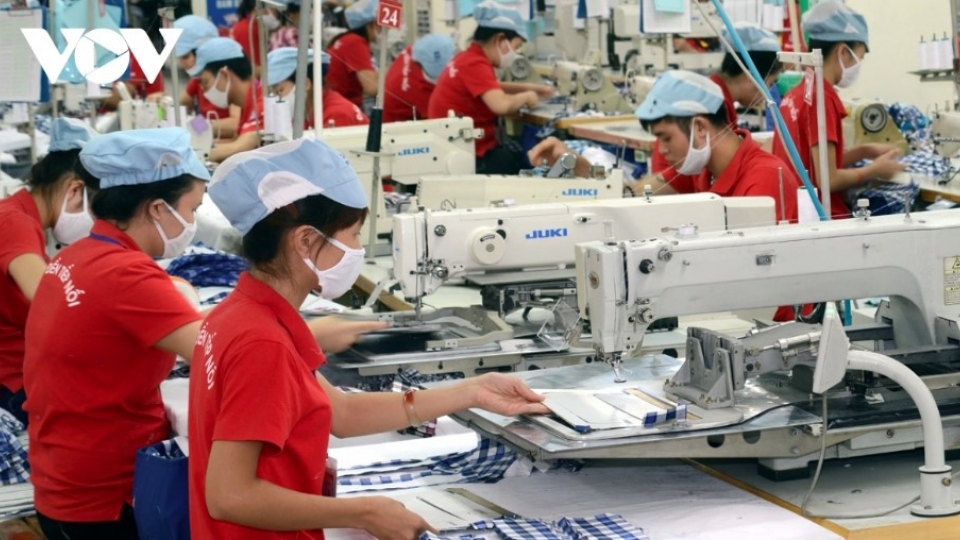
Textile and garment exports lose momentum as growth remains modest
VOV.VN - Vietnam’s textile and garment exports posted only marginal growth in early 2026, indicating a slower recovery in global demand despite maintaining an overall upward trend.
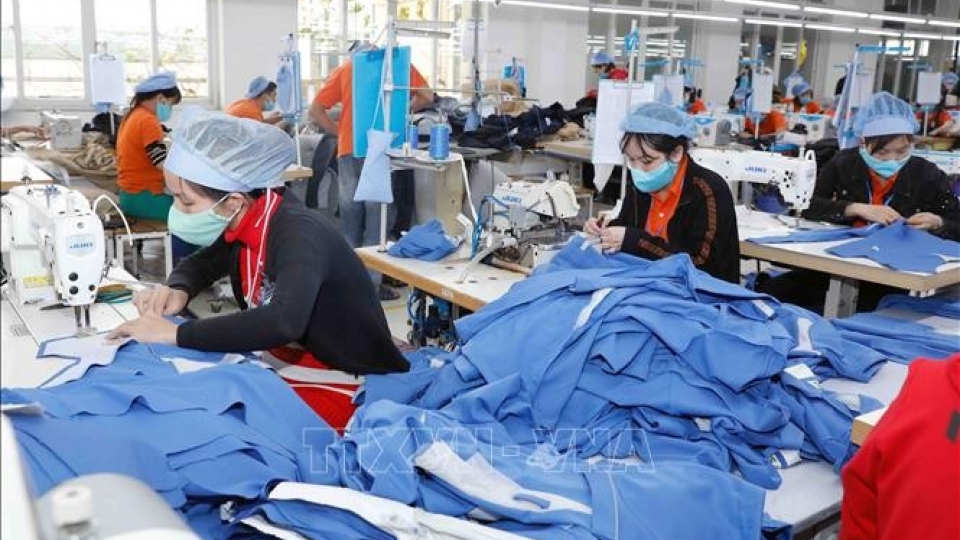
Textile-garment sector enjoys 9% export growth in seven months
Vietnam’s textile and garment industry has reported good progress in the first seven months of 2025, with export turnover surpassing US$26.33 billion, an increase of US$5.3 billion, equivalent to 9%, compared to the same period last year.

