World-standard workforce crucial to building int’l financial centre

As developing an international financial centre is considered a strategic step for Vietnam in new stage of development, alongside efforts in institutional perfection, infrastructure improvement and investment attraction, a decisive factor is the availability of a financial workforce that meets international standards.

Experts said that while institutional frameworks can be modelled after those of established financial hubs worldwide and policies designed in line with international practices, building a qualified workforce – from regulators and financial experts to investors – requires a long period of training and experience accumulation.
Permanent Deputy Prime Minister Nguyen Hoa Binh, Chairman of the Executive Council of the Vietnam International Financial Centre, said the IFC establishment is closely linked to the transformation of Vietnam’s growth model. To sustain fast and stable growth, the country needs to move towards a model driven by high productivity, innovation, institutional quality, and more efficient mobilisation and allocation of resources.
He perceived that a modern financial centre will help Vietnam upgrade its capital market, connect directly with global capital flows, diversify financial products, and advance green and digital finance – all critical to long-term growth.
However, deeper financial integration also entails risks. Global experience shows that some countries failed when opening their financial markets without adequate preparation in institutional frameworks, supervisory capacity and macroeconomic risk governance.
Given this, Binh stressed that the IFC development should rest on five core factors: global connectivity; a stable, transparent and advanced legal framework; high-quality human resources; international-standard governance and management capacity; and a development-enabling ecosystem that includes both an attractive investment environment and a high quality of life.
These five elements form a unified whole, ensuring the safe and efficient operation of the IFC. Among them, the human element plays a decisive role, he emphasised, elaborating that without a management team knowledgeable about the international financial market, and without experts capable of designing products, operating trading infrastructure and monitoring risks, even advanced mechanisms and policies will be difficult to be carried out.
Sharing this view, Hubertus Vaeth, Managing Director of Frankfurt Main Finance and Founding Vice Chairman of the World Alliance of International Financial Centres, said human resources are the top priority for any emerging financial hub, covering both regulatory capacity and operational expertise.
He noted that a financial centre requires not only strong operational capacity but also effective supervision and enforcement. As finance is increasingly driven by technology, expertise in developing software, risk management systems and fintech platforms is becoming essential.
Dr Ha Thuc Vien, Vice President of the Vietnamese-German University, said participation in the global financial system requires a workforce that understands both the domestic market and international practices.
As a new financial centre, Vietnam should not simply replicate the products of established hubs but develop distinctive financial products to create competitive advantages, which needs strong professional competence and innovation capacity, he added.
Human resources must be developed in advance
Human resources development for the IFC of Vietnam is being promoted through a combination of short-term training for professionals already working in the sector and long-term education at undergraduate and postgraduate levels.
A number of specialised programmes have been launched, including courses run by the Vietnamese-German University with input from German experts.
Deputy Minister of Education and Training Nguyen Van Phuc said workforce training for the IFC should be implemented at multiple levels, from personnel directly operating the centre to those working in financial institutions. As the financial market and technologies evolve rapidly, training programmes must be regularly updated and strengthened through cooperation with businesses and international partners.
Deputy PM Binh said that Vietnam must develop a workforce meeting international standards, particularly in regulatory and dispute settlement institutions. In the initial phase, when domestic human resources remain limited, the country should attract experienced executives and leading experts from international financial institutions while building a methodical training roadmap to transfer expertise to domestic personnel.
In the competition among global financial centres, human resources are often the long-term and most-difficult-to-replicate advantage. Singapore, Hong Kong (China), and Dubai (the UAE) have all invested heavily in financial education and attracted international talent. For Vietnam – an emerging financial centre, preparing human resources is viewed as not just a task for the education sector alone, but a crucial cornerstone for its ability to engage more deeply in the global financial value chain for decades to come.
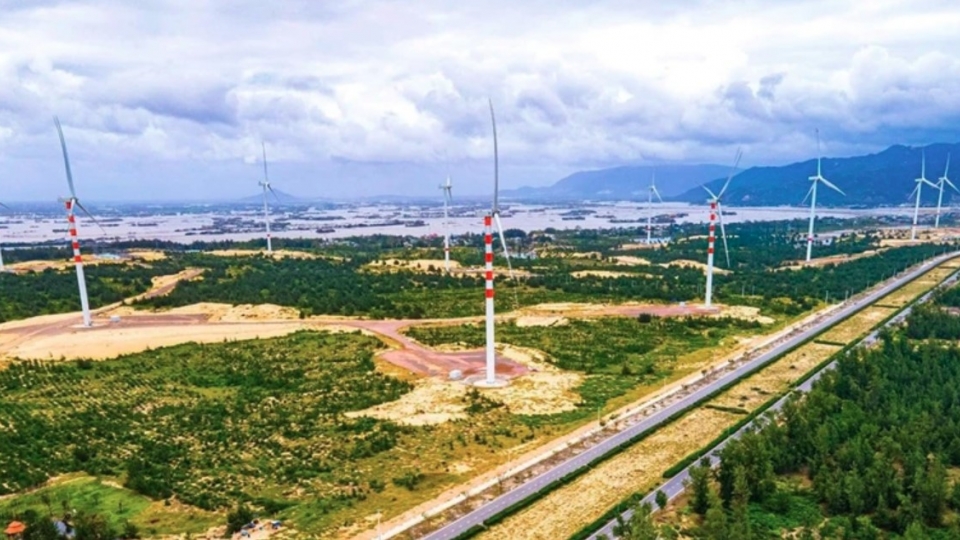
Germany invests US$50 million in renewable energy workforce training in Vietnam
Germany's GEO Group has announced a US$50 million investment to establish a renewable energy workforce training and development centre in the central province of Binh Dinh.